

Herbal teas can really help soothe a sore throat. Ginger tea's natural anti-inflammatory properties offer warmth and immediate relief. Chamomile tea, known for its soothing effects, helps ease pain while promoting better sleep. Licorice root tea coats your throat, reducing irritation and loosening mucus. Turmeric tea supports your immune system and boosts wellness. You'll also find peppermint tea invigorating, with menthol that cools and soothes. For maximum benefits, consider adding honey. Each tea has unique advantages, so experimenting with combinations may enhance your relief experience. Keep going to discover more about these comforting herbal options!
Understanding Sore Throat Causes

A sore throat can stem from several causes, with the most common being viral infections like the cold or flu. When you catch a virus, your throat may become inflamed, leading to discomfort and pain.
Allergies can also trigger a sore throat, as your body reacts to pollen, dust, or pet dander, causing irritation.
Additionally, bacterial infections, such as strep throat, can be a culprit. If you're experiencing severe pain, difficulty swallowing, or fever, it's crucial to see a healthcare provider for a proper diagnosis and treatment.
Dry air, often prevalent in winter months or in heated indoor environments, can contribute to throat discomfort by drying out your mucous membranes.
Reflux disease is another common cause; stomach acid can irritate your throat, especially when lying down.
Smoking or exposure to secondhand smoke can further exacerbate throat irritation, making it even harder for you to find relief.
Benefits of Herbal Tea
Herbal tea offers remarkable benefits that can help soothe your sore throat.
With its natural anti-inflammatory properties, it can reduce swelling and discomfort.
Plus, it supports your immune system, giving you a better chance to fight off illness.
Natural Anti-Inflammatory Properties
Many people turn to herbal teas for their soothing effects, but they also offer impressive natural anti-inflammatory properties. When you sip on herbal teas like ginger, chamomile, or turmeric, you're not just enjoying a warm beverage; you're also harnessing the power of nature to reduce inflammation in your throat and body.
Ginger tea, for instance, contains compounds called gingerols that help decrease inflammation, making it a great choice if you're feeling discomfort.
Chamomile tea is another excellent option, known for its anti-inflammatory effects that can help soothe irritation.
Turmeric, often used in golden milk, boasts curcumin, a potent anti-inflammatory agent that can alleviate throat pain.
Adding honey to these herbal teas can enhance their soothing qualities while providing additional anti-inflammatory benefits.
Immune System Support
Sipping on herbal teas not only helps reduce inflammation but also boosts your immune system. When you choose teas like echinacea, ginger, and elderberry, you're giving your body the support it needs to fend off infections.
Echinacea, in particular, is renowned for its ability to enhance your immune response, helping you combat colds and flu effectively.
Ginger tea, with its warming properties, not only soothes your throat but also promotes circulation, which is essential for delivering immune cells throughout your body. Elderberry is packed with antioxidants and has been shown to shorten the duration of respiratory infections.
Additionally, herbs like peppermint and chamomile can provide calming effects, reducing stress that may weaken your immune function.
When you brew a cup and inhale the steam, you're also opening up your sinuses, making it easier for your body to fight off pathogens.
Chamomile Tea

Chamomile tea is a fantastic choice when you're dealing with a sore throat.
Its anti-inflammatory properties can help reduce swelling, while its calming effects soothe irritation in your throat.
You'll find that sipping on chamomile not only provides relief but also promotes relaxation.
Anti-inflammatory Properties
With its rich history in herbal medicine, chamomile tea stands out for its impressive anti-inflammatory properties. When you sip on chamomile tea, you're not just enjoying a comforting beverage; you're also benefiting from its ability to reduce inflammation in your throat. This reduction can help alleviate the pain and irritation associated with sore throats, making it a great choice for relief.
Here's a quick overview of chamomile tea's anti-inflammatory benefits:
| Benefit | Description | How It Helps |
|---|---|---|
| Anti-inflammatory compounds | Contains antioxidants like apigenin and quercetin | Reduces swelling |
| Soothing effects | Provides a mild, soothing sensation | Eases throat pain |
| Immune support | Enhances immune response | Fights infections |
| Antibacterial properties | May inhibit bacterial growth | Prevents throat infections |
| Natural remedy | Offers a safe alternative to over-the-counter meds | Gentle on the body |
Incorporating chamomile tea into your routine can be a simple yet effective way to combat throat inflammation. So, next time you feel that scratchiness, brew a cup and enjoy the soothing, healing properties it brings!
Calming Effects on Throat
The calming effects of chamomile tea extend beyond its anti-inflammatory benefits, providing a soothing balm for an irritated throat. When you sip on chamomile, you're not just enjoying a warm beverage; you're also embracing a gentle remedy that can help ease discomfort.
Its natural properties work together to create a calming effect that can be especially beneficial when you're feeling under the weather.
Here are some key benefits of chamomile tea for your throat:
- Muscle Relaxation: Chamomile helps relax the muscles in your throat, reducing tension and discomfort.
- Mild Sedative Effects: The tea promotes relaxation, which can help you get better sleep during recovery.
- Antioxidant Content: Chamomile is rich in antioxidants that support your immune system.
- Moisturizing Properties: Drinking chamomile can help keep your throat hydrated, alleviating dryness.
- Flavorful Comfort: The pleasant taste makes it easy to enjoy, enhancing your overall experience.
Incorporating chamomile tea into your routine can turn a simple drink into a comforting ally against throat irritation.
Ginger Tea
Ginger tea is a soothing remedy that can provide relief for a sore throat. This warm beverage not only eases discomfort but also boasts anti-inflammatory properties. When you sip ginger tea, you're helping to reduce swelling in your throat, allowing you to feel more comfortable.
Here's a quick overview of the benefits you can expect from ginger tea:
| Benefits | How it Helps |
|---|---|
| Anti-inflammatory | Reduces swelling and irritation |
| Antioxidants | Fights off infections |
| Soothing warmth | Provides immediate relief |
To make ginger tea, simply slice fresh ginger and steep it in hot water for about 10 minutes. You can enhance the flavor and benefits by adding honey or lemon. Honey coats your throat, while lemon provides vitamin C, helping you recover faster.
If you're looking for a natural way to ease a sore throat, ginger tea's warming effects and powerful properties make it a great choice. Enjoy a cup whenever you need that soothing touch, and you'll likely find yourself feeling better in no time.
Licorice Root Tea

Have you ever considered the soothing properties of licorice root tea for your sore throat? This herbal tea is known for its natural anti-inflammatory and demulcent qualities, making it a great option to alleviate throat discomfort.
When you sip on licorice root tea, you're not just enjoying its sweet flavor; you're also providing your throat with a layer of relief.
Here are some benefits of licorice root tea for a sore throat:
- Anti-inflammatory effects: Helps reduce swelling and irritation.
- Antimicrobial properties: May fight off infections that can worsen your throat pain.
- Soothing sensation: Coats the throat, providing immediate comfort.
- Expectorant qualities: Aids in loosening mucus, making it easier to clear your throat.
- Rich in antioxidants: Supports overall health and may boost your immune system.
To prepare licorice root tea, simply steep dried licorice root in hot water for about 10 minutes.
Sweeten it with honey if you like, and enjoy a warm cup as you soothe your sore throat. It's a simple yet effective remedy that can make a real difference in your comfort.
Marshmallow Root Tea
Marshmallow root tea offers soothing benefits for your sore throat, thanks to its mucilage content that coats and protects irritated tissues.
You'll want to know how to prepare this herbal remedy effectively, as well as be aware of any potential side effects it might have.
Let's explore these essential points to help you make the most of marshmallow root tea.
Benefits of Marshmallow Root
When you're dealing with a sore throat, marshmallow root tea can be a soothing remedy worth considering. This herbal tea is packed with benefits that can help ease your discomfort.
Marshmallow root contains mucilage, a gel-like substance that coats and soothes the throat, reducing irritation. Here are some key benefits you can enjoy:
- Soothing Effect: It provides a calming effect on inflamed tissues in your throat.
- Hydration: Drinking marshmallow root tea keeps you hydrated, which is essential for recovery.
- Anti-inflammatory Properties: It helps reduce inflammation, making it easier to swallow and speak.
- Natural Expectoration: The tea may assist in loosening mucus, helping you clear your throat.
- Rich in Antioxidants: Marshmallow root is packed with antioxidants that support your overall health.
Incorporating marshmallow root tea into your routine can offer relief and comfort when you need it most.
Whether you're sipping it hot or letting it cool, this herbal remedy is a delightful way to nurture your throat back to health.
Preparation Methods Explained
How can you easily prepare marshmallow root tea to maximize its soothing benefits? First, gather your ingredients: dried marshmallow root, water, and honey if you want a touch of sweetness. Begin by boiling about 2 cups of water. Once boiling, add 1 to 2 teaspoons of the dried marshmallow root. Allow it to steep for 10 to 15 minutes, letting the soothing properties infuse into the water. Strain the tea into your favorite mug, and if you like, stir in honey to enhance the flavor and add extra soothing benefits.
| Step | Description |
|---|---|
| Gather Ingredients | Dried marshmallow root, water, honey (optional) |
| Boil Water | Bring 2 cups of water to a rolling boil |
| Steep | Add marshmallow root and steep for 10-15 minutes |
| Strain & Serve | Strain into a mug, add honey if desired |
Enjoy your warm cup of marshmallow root tea, savoring its comforting qualities as it soothes your sore throat. You'll love how this simple preparation can bring relief and warmth when you need it most.
Potential Side Effects
While marshmallow root tea is generally safe for most people, it's important to be aware of potential side effects. Though rare, some individuals may experience certain reactions when consuming this herbal tea. Here are a few things to keep in mind:
- Allergic Reactions: Some people might be allergic to marshmallow root, leading to symptoms like itching or swelling.
- Digestive Issues: You could experience mild gastrointestinal discomfort, including bloating or gas.
- Blood Sugar Levels: Marshmallow root may lower blood sugar; if you have diabetes, monitor your levels closely.
- Medication Interactions: If you're on medications, especially for blood sugar or blood thinners, consult your healthcare provider before use.
- Pregnancy and Breastfeeding: There's limited information on the safety of marshmallow root during pregnancy or breastfeeding, so it's best to err on the side of caution.
Always listen to your body and discontinue use if you notice any adverse effects.
If you're unsure, talking to a healthcare professional can help you make informed decisions about adding marshmallow root tea to your routine.
Peppermint Tea
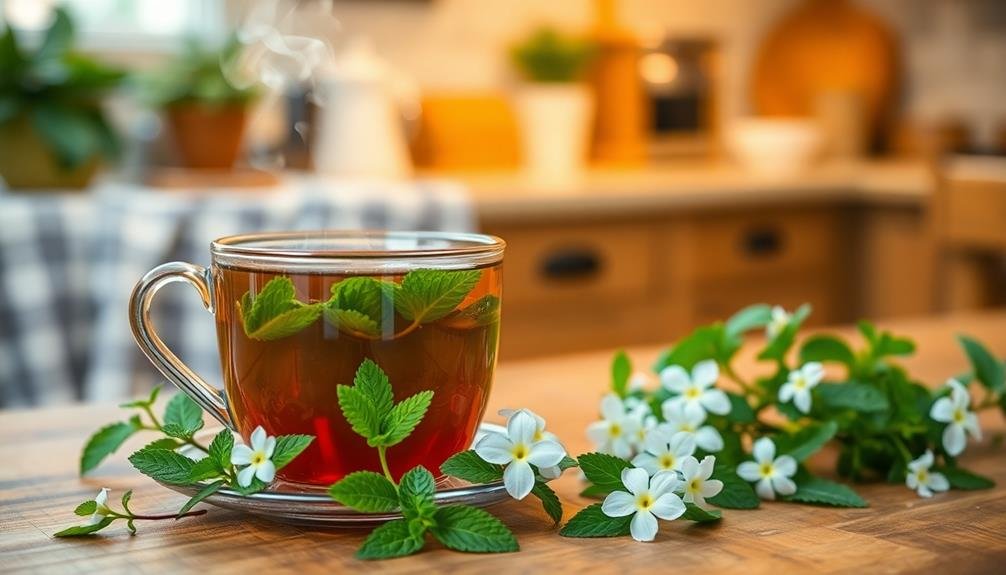
Peppermint tea stands out as a soothing remedy for sore throats, thanks to its natural antiseptic and anti-inflammatory properties. When you sip on this invigorating brew, you're not just treating your throat; you're also enjoying a burst of flavor that can help ease discomfort.
The menthol in peppermint acts as a natural cooling agent, providing immediate relief by numbing the throat area, which can feel especially comforting when you're dealing with irritation.
Brewing peppermint tea is simple. Just steep a teaspoon of dried leaves or a peppermint tea bag in hot water for about five to ten minutes. Sweetening it with honey can enhance its soothing effects, as honey also has its own throat-soothing properties.
You might find that the steam from the tea helps clear your sinuses, making it easier to breathe while you recover.
Drinking peppermint tea regularly during a sore throat can help reduce inflammation, making it easier for your body to heal.
Thyme Tea
Thyme tea is another powerful ally in soothing a sore throat. This herbal remedy not only tastes great but also offers several benefits that can help you feel better.
Thyme is known for its antimicrobial properties, which can assist in fighting off infections that cause throat irritation. When you brew a cup of thyme tea, you're giving your body a natural boost.
Here are some key benefits of thyme tea for a sore throat:
- Antimicrobial Properties: Helps combat bacteria and viruses.
- Anti-Inflammatory Effects: Reduces inflammation in the throat.
- Expectorant Qualities: Aids in clearing mucus and phlegm.
- Rich in Antioxidants: Supports overall health and immune function.
- Soothing Aroma: Provides a calming effect, promoting relaxation.
To prepare thyme tea, steep fresh or dried thyme leaves in hot water for about 10 minutes. You can enhance the flavor and benefits by adding honey or lemon.
Sipping on this warm beverage can provide immediate relief and make your throat feel more comfortable. So, next time you're dealing with a sore throat, consider reaching for a comforting cup of thyme tea.
Lemon Balm Tea

When you're seeking relief from a sore throat, lemon balm tea can be a revitalizing choice. This herbal tea, known for its soothing properties, offers a gentle way to alleviate discomfort. Lemon balm, a member of the mint family, has been traditionally used to calm inflammation and reduce stress, both of which can exacerbate throat pain.
Here's a quick overview of the benefits of lemon balm tea:
| Benefit | Details |
|---|---|
| Antiviral Properties | Helps combat viral infections |
| Anti-inflammatory | Reduces swelling and irritation |
| Calming Effects | Eases stress and promotes relaxation |
| Antioxidants | Supports immune function |
| Easy to Prepare | Simple to brew at home |
To enjoy the benefits, steep fresh or dried lemon balm leaves in hot water for about 5 to 10 minutes. You can add honey for extra sweetness and additional soothing properties. Drinking lemon balm tea not only helps with throat discomfort but also offers a moment of calm during a hectic day. So, sip away and let the soothing properties work their magic!
Turmeric Tea
In the quest for relief from a sore throat, turmeric tea stands out as a powerful ally. Packed with curcumin, an active compound known for its anti-inflammatory properties, turmeric can help soothe your throat and reduce discomfort.
When you brew a cup of turmeric tea, you're not just enjoying a warm beverage; you're also tapping into a natural remedy that's been used for centuries.
Here are some benefits of turmeric tea for your sore throat:
- Anti-inflammatory effects: Reduces swelling and irritation in your throat.
- Antioxidant properties: Helps combat free radicals and supports overall health.
- Antimicrobial action: May help fight off infections that cause sore throats.
- Boosts immunity: Strengthens your body's defenses against illnesses.
- Soothing warmth: Provides comfort and relief through warm consumption.
To make turmeric tea, combine turmeric powder or fresh turmeric with hot water, and consider adding a pinch of black pepper to enhance absorption.
Enjoy it plain or with a splash of lemon for added flavor. This simple remedy could be just what you need to feel better!
Honey and Herbal Tea

Combining honey with herbal tea can enhance your sore throat relief even further. Honey not only adds a natural sweetness but also has soothing and anti-inflammatory properties. When you mix it with herbal teas, you create a comforting drink that can help alleviate irritation.
Here's a quick look at some popular herbal teas and how honey complements them:
| Herbal Tea | Benefits of Adding Honey |
|---|---|
| Chamomile | Reduces inflammation and soothes the throat. |
| Peppermint | Eases congestion and provides a cooling effect. |
| Ginger | Supports the immune system and adds warmth. |
| Licorice Root | Offers additional throat-soothing properties. |
To enjoy the full benefits, stir in a teaspoon of honey while your tea is still warm. This combination not only helps with your sore throat but also provides a delightful flavor. So, next time you brew a cup of herbal tea, don't forget to add honey for that extra boost of relief and sweetness!
Preparing Herbal Tea Blends
Creating your own herbal tea blends can be a fun and rewarding experience, especially when you're looking to soothe a sore throat. By combining various herbs, you can tailor your blend to suit your taste and desired healing properties. Here's how to start:
- Choose a base herb: Opt for soothing options like chamomile, licorice root, or marshmallow root.
- Add flavor: Include herbs such as peppermint or ginger for a revitalizing twist.
- Incorporate throat-soothing ingredients: Honey and lemon zest can enhance both flavor and soothing effects.
- Experiment with ratios: Start with a 1:1 ratio of base herb to flavoring herb, then adjust based on your preferences.
- Steep properly: Use boiling water and steep the blend for 5-10 minutes to extract all the beneficial properties.
Once you've perfected your blend, you can enjoy it hot or cold.
Additional Tips for Relief

Several simple strategies can enhance your relief from a sore throat beyond enjoying herbal teas. First, stay hydrated. Drinking plenty of water helps keep your throat moist and reduces irritation. You might also consider warm broths or clear soups for added nourishment.
Next, try using a humidifier in your room. Moist air can soothe your throat and ease discomfort, especially during dry seasons. Make sure to keep the humidifier clean to avoid bacteria buildup.
Over-the-counter pain relievers, like ibuprofen or acetaminophen, can provide quick relief as well. Just follow the recommended dosages, and consult your doctor if you have any concerns.
Gargling with warm salt water is another effective remedy. Mix about half a teaspoon of salt in a glass of warm water and gargle several times a day to reduce swelling and kill bacteria.
Lastly, avoid irritants such as smoke and strong fragrances, which can worsen throat discomfort. Resting your voice can also be beneficial; try to speak softly and limit talking when possible.
Combining these tips with herbal teas can help you feel better faster and soothe your sore throat effectively.
Frequently Asked Questions
Can Children Drink Herbal Teas for Sore Throats?
Yes, children can drink herbal teas for sore throats, but you should choose mild options like chamomile or honey-infused teas. Always check for allergies and consult a pediatrician if you're unsure about specific herbs.
Are There Any Side Effects of Herbal Teas?
Herbal teas can have side effects like allergies or interactions with medications. You should watch for symptoms like nausea or dizziness. Always consult a healthcare professional before trying new herbal remedies to guarantee they're safe for you.
How Often Can I Drink Herbal Tea for Relief?
You can drink herbal tea several times a day, especially if you're seeking relief. Just listen to your body; if you feel any discomfort, it's best to reduce the frequency or consult a professional.
Is It Safe to Combine Different Herbal Teas?
It's generally safe to combine different herbal teas, but you should check for any potential interactions. Always listen to your body, and if something doesn't feel right, consider sticking to one type at a time.
Can I Use Herbal Teas Alongside Medication?
You can use herbal teas alongside medication, but it is crucial to consult your healthcare provider first. Some herbs may interact with your meds, potentially diminishing their effectiveness or causing unwanted side effects. Stay safe!
In Summary
Incorporating herbal teas into your routine can provide soothing relief for a sore throat. Chamomile, ginger, licorice root, and turmeric teas each offer unique benefits that can help ease discomfort. Don't forget to add honey for extra soothing properties and flavor. Preparing your own herbal blends is simple and allows you to customize your relief. Remember, staying hydrated and resting is just as important. So, sip on your favorite tea and feel better soon!




Leave a Reply