

If you're looking for soothing herbal teas to ease your headache, consider trying peppermint, ginger, or chamomile tea. Peppermint's menthol can alleviate sinus pressure, while ginger reduces inflammation and may help prevent headaches altogether. Chamomile has calming effects that ease tension and promote relaxation. Don't overlook lavender for its anxiety-reducing properties, or willow bark, which has been used for over 4,000 years for pain relief. Feverfew and rooibos are also excellent options, offering anti-inflammatory and stress-reducing benefits. There's more to explore about each tea, including how to prepare them perfectly.
Peppermint Tea
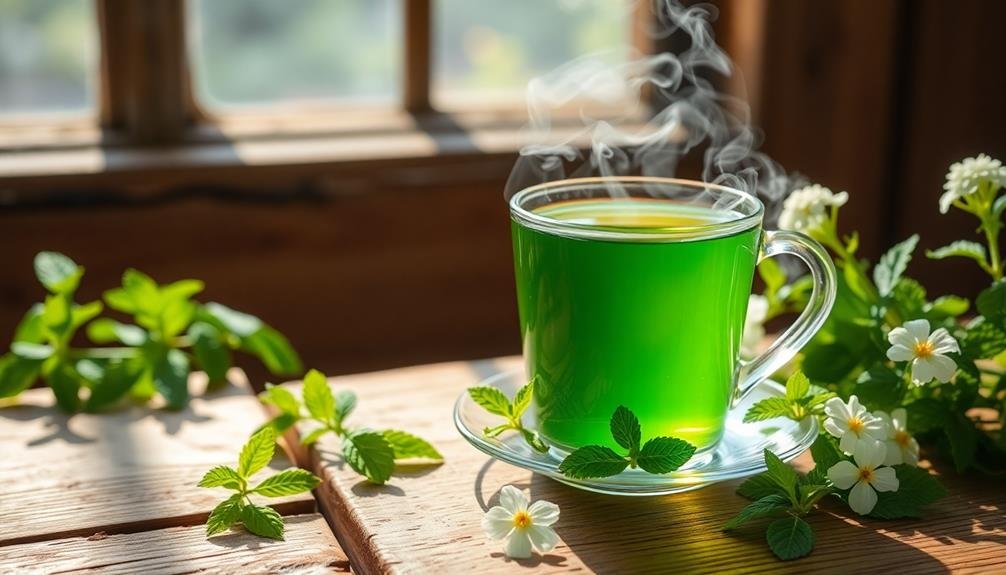
When you're battling a headache, sipping on a warm cup of peppermint tea can be a game-changer. The soothing aroma and invigorating flavor can instantly lift your mood and help ease tension. Peppermint contains menthol, which can widen your blood vessels and promote better circulation. This can reduce the intensity of your headache and provide a sense of relief.
To prepare peppermint tea, simply steep fresh or dried peppermint leaves in hot water for about 5 to 10 minutes. If you prefer, you can add a bit of honey for sweetness or lemon for an extra zing. As you sip, take slow, deep breaths to fully enjoy the calming effects.
The cooling sensation of peppermint can also help relieve sinus pressure, which often accompanies headaches. By inhaling the steam from your tea, you can clear your sinuses while enjoying your drink.
Plus, it's caffeine-free, so you won't have to worry about any jitters or crashes afterward.
Incorporating peppermint tea into your routine can be a natural and effective way to combat headaches. Next time you feel one coming on, reach for this soothing herbal remedy.
Ginger Tea
If you're looking for another herbal remedy to help with headaches, ginger tea is a fantastic option. This spicy brew not only adds warmth to your day but also offers potential relief from headache discomfort.
Ginger contains anti-inflammatory properties that can help reduce the severity of headaches, particularly tension headaches and migraines.
To make ginger tea, you can slice fresh ginger root and steep it in boiling water for about 10 minutes. You can also add honey or lemon for additional flavor and health benefits.
Drinking this tea regularly may help prevent headaches from occurring, thanks to ginger's ability to improve circulation and reduce inflammation.
As you sip your ginger tea, take a moment to relax and breathe deeply. The soothing warmth can create a calming atmosphere that may further help in alleviating pain.
Plus, ginger tea is easy to prepare, making it a convenient choice in your wellness routine.
Chamomile Tea

Sipping chamomile tea can be a gentle way to ease headache tension and promote relaxation. This herbal tea is renowned for its calming properties, making it an excellent choice when you're feeling overwhelmed or stressed.
Chamomile contains apigenin, an antioxidant that binds to specific receptors in your brain, helping to reduce anxiety and induce sleepiness.
When you brew a cup of chamomile tea, you're not just enjoying a soothing beverage; you're also giving your body a chance to unwind. The warmth of the tea can help soothe tense muscles, which may contribute to your headache.
Try drinking it in a quiet space, allowing the aroma to envelop you as you take slow, deep breaths.
You can sweeten your chamomile tea with honey or a slice of lemon if you prefer, but it's delicious on its own too. Aim to sip it slowly to fully appreciate its calming effects.
Lavender Tea
When you think of relaxation, lavender tea often comes to mind due to its calming properties.
Brewing the perfect cup can enhance its soothing effects, making it a fantastic choice for easing headaches.
Besides its headache-relieving benefits, lavender offers a range of other advantages that you won't want to miss.
Lavender's Calming Properties
Lavender's calming properties create a soothing experience that can help alleviate headaches and promote relaxation. When you sip on lavender tea, you're not just enjoying a fragrant beverage; you're also tapping into its natural ability to ease tension and stress.
The gentle aroma of lavender has been shown to reduce anxiety, which is often a contributing factor to headaches. You may find that inhaling the scent while drinking the tea enhances its calming effects, allowing you to unwind.
This herbal tea is rich in antioxidants and compounds that work to soothe the nervous system, helping to quiet the mind. If you're feeling overwhelmed or on the edge of a headache, brewing a cup of lavender tea can be a simple yet effective remedy.
Moreover, its mild sedative effects can improve your sleep quality, leading to fewer headaches in the long run. So, whether you're winding down after a long day or seeking relief from a headache, lavender tea can be your go-to companion.
Embrace its calming properties, and let the soothing warmth wash over you, easing your discomfort and promoting a sense of tranquility.
Brewing the Perfect Tea
To fully enjoy the calming benefits of lavender tea, brewing it just right is key. Start by selecting high-quality dried lavender buds. You'll find these at health food stores or online. Measure about one to two teaspoons of the buds for each cup of tea you want to make.
Next, boil fresh water in a kettle. Once it reaches a rolling boil, let it cool for about 30 seconds. Lavender thrives best in water that's around 200°F, so avoid pouring boiling water directly over the buds.
Place the lavender in a teapot or infuser, then pour the hot water over it. Cover and let the tea steep for about 5 to 10 minutes. The longer you steep, the more robust the flavor.
After steeping, strain the tea into your favorite cup. You can enjoy it plain or add a touch of honey to enhance the sweetness. For an extra calming effect, consider adding a slice of lemon or a sprinkle of chamomile.
Sip your lavender tea slowly, allowing its soothing properties to wash over you, bringing relief to your headache and relaxation to your mind.
Other Benefits of Lavender
What makes lavender tea a favorite among herbal remedies? Its soothing aroma and calming properties are just the beginning. When you brew a cup of lavender tea, you're not only easing headaches; you're also indulging in a variety of additional benefits that enhance your overall well-being.
Here are some key advantages of lavender tea you might appreciate:
- Stress Reduction: Lavender is well-known for its ability to reduce anxiety and promote relaxation, making it perfect for unwinding after a long day.
- Improved Sleep: Drinking lavender tea before bed can help you achieve a more restful night's sleep, thanks to its mild sedative effects.
- Digestive Aid: Lavender tea may help alleviate digestive issues, such as bloating and gas, providing relief after meals.
- Skin Health: The anti-inflammatory properties of lavender can support skin health when consumed, potentially reducing irritation and promoting a clearer complexion.
Incorporating lavender tea into your daily routine could be a delightful way to tap into these benefits while enjoying a delicious and aromatic experience.
Willow Bark Tea

Willow bark tea has a rich history as a natural remedy for pain relief, dating back to ancient civilizations.
You'll find that its active compounds, particularly salicin, play a key role in its effectiveness against headaches.
As you explore preparation and usage tips, you'll discover how to make the most of this soothing herbal tea.
History of Willow Bark
For centuries, people have turned to willow bark as a natural remedy for pain relief, particularly headaches. Its use dates back to ancient civilizations, where herbalists and healers recognized its therapeutic properties. You might be surprised to learn how deeply rooted this tradition goes.
- Ancient Egypt: Records show that willow bark was utilized over 4,000 years ago for its pain-relieving effects.
- Greek and Roman Influence: Hippocrates and Dioscorides documented its use in their writings, highlighting its efficacy in treating various ailments, including headaches.
- Middle Ages: During this time, willow bark found its way into the herbal medicine cabinets of Europe, often combined with other herbs for enhanced effects.
- 19th Century: Willow bark gained recognition in the medical community, leading to the extraction of its active compounds and the eventual development of aspirin.
Today, you can enjoy willow bark tea as a nod to this rich history. By sipping this herbal infusion, you're connecting with an age-old tradition of natural healing, honoring the wisdom of those who came before you.
It's a simple yet powerful way to ease your headaches.
Active Compounds Explained
Understanding the active compounds in willow bark tea can enhance your appreciation for its therapeutic effects. The primary active compound in willow bark is salicin, which your body converts into salicylic acid. This compound is similar to aspirin and provides anti-inflammatory and analgesic properties, making willow bark tea an excellent natural remedy for headaches.
In addition to salicin, willow bark also contains flavonoids and polyphenols. These compounds contribute to the tea's antioxidant effects, helping to reduce oxidative stress in your body. By combating free radicals, these antioxidants support overall health and may alleviate headache symptoms.
Moreover, the presence of tannins in willow bark can aid in digestion and promote a calming effect, which can be beneficial if your headache is stress-related. The synergistic action of these compounds works together to reduce pain and inflammation, making willow bark tea a versatile choice for headache relief.
When you sip on willow bark tea, you're not just enjoying a warm beverage; you're also tapping into a wealth of natural compounds that have been used for centuries to soothe discomfort and promote wellness. This understanding can help you choose willow bark tea confidently for your headache relief.
Preparation and Usage Tips
When you're ready to prepare willow bark tea, start by gathering the right ingredients and tools. You'll need dried willow bark, water, a pot, and a strainer. Follow these simple steps to make your tea effectively.
- Measure the Bark: Use about 1 to 2 teaspoons of dried willow bark per cup of water. Adjust based on your taste preference.
- Boil the Water: Bring your water to a rolling boil in a pot. This guarantees that the medicinal properties of the willow bark are extracted properly.
- Steep the Bark: Once the water is boiling, add the willow bark. Reduce the heat and let it simmer for about 10 to 15 minutes. This allows the beneficial compounds to infuse into the water.
- Strain and Serve: After steeping, strain the tea into a cup to remove the solid pieces. You can sweeten it with honey or add lemon for flavor if you like.
Now you're ready to enjoy your willow bark tea! Sip it slowly, and let its soothing properties work on your headache.
Feverfew Tea
Many people turn to feverfew tea as a natural remedy for headaches, thanks to its potent anti-inflammatory properties. This herbal tea is derived from the leaves of the feverfew plant, which has been used for centuries to alleviate pain and discomfort. When you sip on feverfew tea, you're not just enjoying a warm beverage; you're potentially reducing the frequency and intensity of your headaches.
Here's a quick comparison of feverfew tea's benefits:
| Benefit | How It Helps | Usage Tips |
|---|---|---|
| Pain Relief | Reduces headache symptoms | Drink 1-2 cups daily |
| Anti-inflammatory | Lowers inflammation in the body | Steep leaves for 10-15 minutes |
| Digestive Aid | Eases stomach discomfort | Can be enjoyed after meals |
| Stress Reduction | Promotes relaxation | Combine with calming herbs |
To brew feverfew tea, steep fresh or dried leaves in boiling water. You can enhance the flavor with honey or lemon if you like. Just remember, it's best to consult a healthcare professional before starting any new herbal remedies, especially if you're on medication. Enjoy your soothing cup of feverfew tea!
Rooibos Tea

Rooibos tea offers a caffeine-free alternative that can help soothe headaches while providing a wealth of health benefits. This South African herbal tea is rich in antioxidants and has anti-inflammatory properties, making it a great choice for managing headache symptoms.
When you sip on rooibos tea, you can experience relief in several ways:
- Reduces Inflammation: The antioxidants in rooibos can help decrease inflammation, which may contribute to headache pain.
- Alleviates Stress: Rooibos has calming effects that might help ease tension and stress, often triggers for headaches.
- Hydration: Staying hydrated is essential for headache prevention. Rooibos tea is a hydrating option that can help maintain your fluid balance.
- Supports Digestive Health: If headaches stem from digestive issues, rooibos can aid digestion and relieve discomfort.
To enjoy rooibos tea, steep a tea bag or loose leaf in hot water for about 5-7 minutes. You can drink it plain or add a bit of honey for sweetness.
Incorporating this soothing tea into your routine may provide the relief you need when headaches strike.
Frequently Asked Questions
Can Herbal Teas Interact With Prescription Medications?
Yes, herbal teas can interact with prescription medications. It's essential to consult your healthcare provider before combining them, as certain herbs may affect how your medications work, leading to unexpected side effects or reduced effectiveness.
How Often Can I Drink Herbal Teas for Headaches?
You can drink herbal teas daily for headaches, but it's wise to limit intake to 2-3 cups. Pay attention to how your body responds, and consult a healthcare professional if you're uncertain.
Are There Any Side Effects From These Herbal Teas?
Yes, there can be side effects from herbal teas. You might experience nausea, allergic reactions, or interactions with medications. It's best to consult a healthcare professional if you have concerns about specific ingredients or your health.
Can Children Safely Consume These Herbal Teas?
You should always consult a pediatrician before giving herbal teas to children. While some may be safe, others can cause side effects or interact with medications. It's best to prioritize their health and safety.
What Is the Best Way to Brew Herbal Teas for Maximum Benefits?
To brew herbal teas for maximum benefits, steep the herbs in boiling water for 5-10 minutes. Use fresh, high-quality ingredients, and cover the cup to trap essential oils. Enjoy it while sipping slowly for best effects.
In Summary
Incorporating these soothing herbal teas into your routine can be a gentle way to ease headaches. Whether you opt for the invigorating taste of peppermint or the calming properties of chamomile, each tea offers unique benefits. Don't hesitate to experiment and find the one that works best for you. Remember, staying hydrated and managing stress are also key in headache relief. So, brew a cup, sit back, and let nature's remedies help you find comfort.




Leave a Reply