

Boost your gut health with calendula flower tea, a natural remedy for digestive issues. Choose organic, vibrant petals and brew at 190-200°F for 5-10 minutes. Drink 1-2 cups daily, ideally 30 minutes before meals. Pair with chamomile or peppermint for enhanced benefits. Start with small amounts to assess tolerance, and don't exceed 3 cups per day. Store dried flowers in a cool, dark place for freshness. Experiment with flavors by adding honey or citrus. Be aware of potential allergic reactions, especially if you're sensitive to the Asteraceae family. Incorporating this soothing tea into your routine can be a game-changer for your digestive wellness.
Benefits of Calendula for Digestion
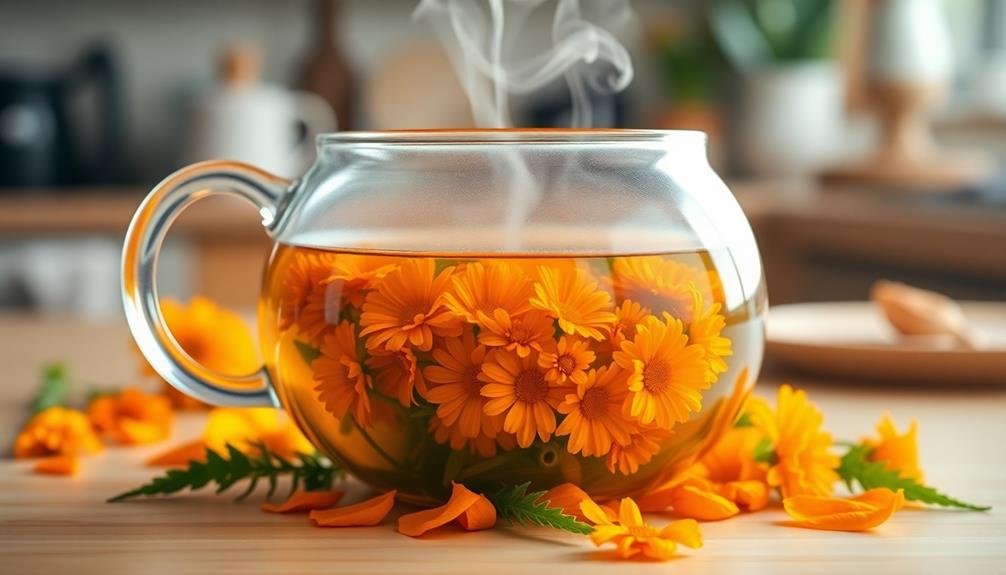
Numerous studies have shown that calendula flower tea can provide significant benefits for digestive health. This vibrant orange flower contains powerful anti-inflammatory and antispasmodic properties that can soothe your digestive tract and reduce inflammation.
When you drink calendula tea, you're helping to calm stomach cramps, bloating, and discomfort.
Calendula's antimicrobial properties can also help combat harmful bacteria in your gut, promoting a healthier balance of microflora. This can lead to improved digestion and nutrient absorption.
The tea's gentle laxative effect may aid in relieving constipation and promoting regular bowel movements.
You'll find that calendula tea can help protect your stomach lining from irritation and ulcers. Its mucilage content forms a protective layer over the stomach and intestinal walls, reducing the risk of gastric issues.
Additionally, calendula's ability to stimulate bile production can enhance your body's fat digestion process.
Selecting Quality Calendula Flowers
To fully harness the digestive benefits of calendula tea, you'll need to start with high-quality flowers. When selecting calendula, look for vibrant orange or yellow petals with a fresh, slightly sweet aroma. Avoid flowers that appear discolored, wilted, or have a musty smell.
Opt for organic calendula whenever possible to guarantee you're not consuming pesticides or other harmful chemicals. You can find dried calendula flowers at health food stores, herbal shops, or online retailers. If you're growing your own, harvest the flowers when they're fully open and dry them in a well-ventilated area away from direct sunlight.
Here's a quick guide to help you choose the best calendula flowers:
| Characteristic | Good Quality | Poor Quality |
|---|---|---|
| Color | Bright orange/yellow | Faded or brown |
| Aroma | Fresh, slightly sweet | Musty or odorless |
| Texture | Crisp, dry petals | Damp or slimy |
| Source | Organic, reputable | Unknown origin |
| Appearance | Whole flowers | Crushed or powdered |
Proper Tea Brewing Techniques

To brew the perfect gut-boosting calendula tea, you'll need to master the correct steeping time and temperature.
You'll also want to determine the right dosage and frequency for your needs.
Consider combining calendula with other beneficial herbs to enhance its gut-supporting properties.
Steeping Time and Temperature
Mastering the art of brewing calendula flower tea requires attention to steeping time and temperature. For best results, steep your calendula flowers in water that's just below boiling point, around 190-200°F (88-93°C). This temperature helps extract the beneficial compounds without damaging them or releasing bitter flavors.
Let the flowers steep for 5-10 minutes, depending on your desired strength.
To guarantee you're brewing the perfect cup of gut-boosting calendula tea, keep these tips in mind:
- Use a timer to avoid over-steeping, which can result in a bitter taste
- Cover your brewing vessel to retain heat and aromatic compounds
- Strain the flowers immediately after steeping to prevent over-extraction
Dosage and Frequency
When it comes to dosage and frequency, it's important to strike the right balance with calendula flower tea. For general digestive health, start with one cup (8 ounces) per day. You can gradually increase this to two or three cups daily if you tolerate it well. It's best to space out your intake throughout the day, perhaps having a cup in the morning and another in the evening.
If you're using calendula tea to address specific digestive issues, you might drink it 15-30 minutes before meals to stimulate digestion. For ongoing gut health maintenance, consuming it between meals can be beneficial.
Remember, everyone's body is different, so pay attention to how you feel and adjust accordingly.
Don't exceed four cups per day, as excessive consumption may lead to side effects like drowsiness or interact with certain medications. If you're pregnant, nursing, or have any medical conditions, consult your healthcare provider before incorporating calendula tea into your routine.
It's also wise to take occasional breaks from daily consumption to prevent your body from becoming too accustomed to its effects. This practice helps maintain the tea's effectiveness over time.
Combining With Other Herbs
Calendula flower tea's benefits can be enhanced by combining it with other herbs. When you're looking to boost your gut health, think about pairing calendula with complementary herbs that support digestion.
Chamomile, for instance, can add a soothing effect to your blend, helping to calm an upset stomach. Peppermint is another excellent choice, as it may aid in reducing bloating and improving overall digestive function.
To create a powerful gut-boosting blend, experiment with different herb combinations. Start with a base of calendula and add small amounts of other herbs to find your perfect mix. Remember to think about the flavor profile as well as the health benefits when crafting your blend.
Here are some key points to keep in mind when combining calendula with other herbs:
- Always use high-quality, organic herbs to guarantee maximum potency and avoid potential contaminants.
- Start with small quantities of additional herbs and adjust to taste.
- Be aware of potential interactions between herbs and any medications you're taking.
Optimal Consumption Time
To harness the full gut-boosting benefits of calendula flower tea, timing is essential. You'll want to consume this herbal brew strategically throughout the day for ideal digestive support. Start your morning with a warm cup of calendula tea about 30 minutes before breakfast. This primes your digestive system and helps stimulate appetite.
For ongoing gut health, drink a cup between meals, ideally mid-morning and mid-afternoon. This timing allows the tea's anti-inflammatory properties to work without interfering with nutrient absorption from your main meals.
If you're dealing with specific digestive issues, sip calendula tea 15-20 minutes before meals to soothe your stomach and prepare it for food.
In the evening, enjoy a cup about an hour before bedtime. This gives your body time to process the tea without disrupting sleep. However, if you're sensitive to liquids at night, stick to daytime consumption.
Remember, consistency is key. Aim for 2-3 cups daily, spaced throughout your waking hours. Don't exceed 4 cups per day, as excessive intake may lead to mild side effects.
Complementary Herbs for Gut Health

Several herbs pair wonderfully with calendula to enhance its gut-boosting effects. Consider combining calendula with chamomile for its soothing properties, peppermint for its ability to ease digestive discomfort, or ginger for its anti-inflammatory benefits.
These herbs can work synergistically to support your digestive health and amplify the positive effects of calendula tea.
When selecting complementary herbs, keep in mind your specific gut health goals. For example, if you're dealing with bloating, fennel might be an excellent addition. If you're looking to improve overall digestive function, marshmallow root could be beneficial.
Don't hesitate to experiment with different combinations to find what works best for you.
To maximize the benefits of your herbal blend, consider:
- Rotating herbs seasonally to address changing digestive needs
- Consulting with a herbalist for personalized recommendations
- Starting with small amounts of new herbs to gauge your body's response
Frequency and Dosage Guidelines
To boost your gut health with calendula flower tea, aim for 1-3 cups daily.
You'll want to space out your consumption throughout the day, perhaps having a cup in the morning and another in the evening.
Remember to start with a lower dose and gradually increase it to gauge your body's response and tolerance.
Recommended Daily Intake
When it comes to enjoying calendula flower tea, moderation is key. While it's generally safe for most people, it's crucial to follow recommended daily intake guidelines to maximize its benefits and avoid potential side effects. Aim to consume 1-2 cups of calendula tea per day, with each cup containing about 1-2 grams of dried calendula flowers steeped in hot water for 10-15 minutes.
If you're new to calendula tea, start with a lower dose and gradually increase it to assess your tolerance. It's best to space out your intake throughout the day, perhaps enjoying one cup in the morning and another in the evening. Remember that everyone's body reacts differently, so pay attention to how you feel after drinking the tea.
Here are some important points to keep in mind:
- Don't exceed 3 cups of calendula tea per day without consulting a healthcare professional.
- Pregnant or breastfeeding women should avoid calendula tea or consult their doctor before use.
- If you're taking medications, check with your healthcare provider for potential interactions before incorporating calendula tea into your routine.
Timing Your Consumption
Building on the recommended daily intake, let's explore the ideal timing for consuming calendula flower tea. To maximize its gut-boosting benefits, you'll want to time your consumption strategically throughout the day.
Start your morning with a cup of calendula tea on an empty stomach, about 30 minutes before breakfast. This allows the tea's anti-inflammatory properties to work on your digestive system before you introduce food. You can have another cup mid-morning if you're experiencing any digestive discomfort.
For best results, drink a cup about 30 minutes before lunch and dinner. This primes your digestive system for incoming food, potentially reducing bloating and indigestion. If you're prone to heartburn, you might find it helpful to sip calendula tea after meals instead.
Don't forget to space out your tea consumption, allowing at least two hours between cups. This guarantees you're not overwhelming your system and gives your body time to absorb the tea's beneficial compounds.
Avoid drinking calendula tea right before bedtime, as it may increase nighttime bathroom visits. Instead, have your last cup at least two hours before sleep to support overnight gut repair without disrupting your rest.
Potential Side Effects
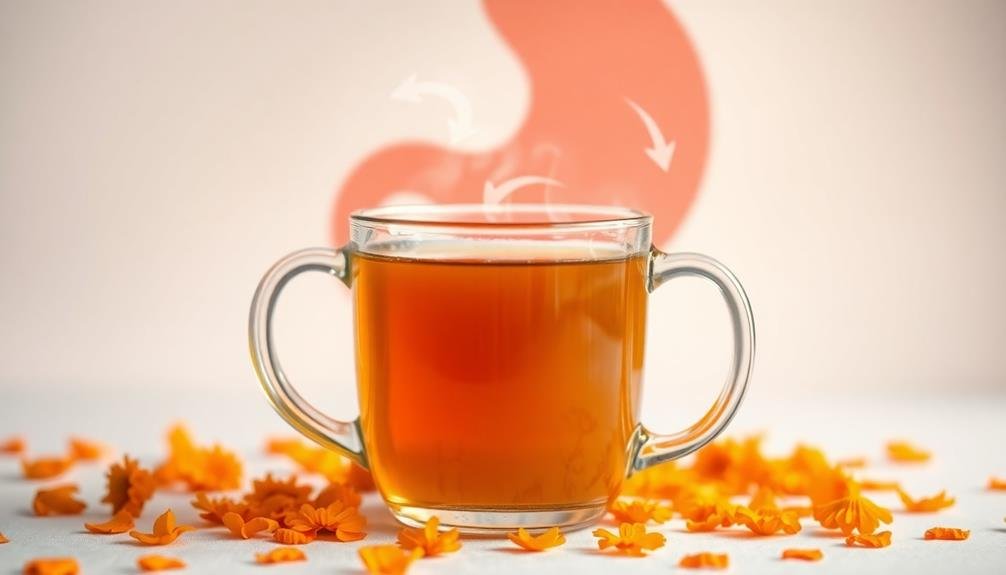
While calendula flower tea is generally considered safe, it's important to be aware of potential side effects. Some people may experience allergic reactions, especially if they're sensitive to plants in the Asteraceae family, which includes daisies and chrysanthemums.
If you notice any signs of an allergic reaction, such as itching, swelling, or difficulty breathing, discontinue use immediately and seek medical attention.
Calendula can also interact with certain medications, particularly blood thinners and sedatives. If you're taking any prescription drugs, consult your healthcare provider before incorporating calendula tea into your routine.
Additionally, pregnant and breastfeeding women should avoid consuming calendula tea, as its effects on fetal development and infants aren't well-studied.
To guarantee you're using calendula tea safely:
- Start with small amounts to test your tolerance
- Pay attention to any unusual symptoms or changes in your body
- Purchase calendula tea from reputable sources to avoid contamination
Calendula Tea Recipe Variations
Creativity in the kitchen can transform a simple cup of calendula tea into a delightful and diverse beverage experience. You can experiment with various ingredients to enhance the flavor and potential health benefits of your calendula tea. Try combining calendula flowers with other herbs like chamomile, mint, or lemon balm for a unique taste profile. For a revitalizing twist, add a splash of citrus juice or a few slices of fresh ginger.
To sweeten your tea naturally, consider using honey, stevia, or a touch of cinnamon. You can also create iced versions by cooling the tea and adding fresh fruit or herbs. For a more indulgent treat, try a calendula latte by mixing the tea with your favorite milk alternative and a dash of vanilla extract.
Here's a table with some inspiring calendula tea variations:
| Base | Add-ins | Sweetener |
|---|---|---|
| Calendula | Chamomile | Honey |
| Calendula | Mint | Stevia |
| Calendula | Lemon Balm | Cinnamon |
| Calendula | Ginger | Maple Syrup |
Remember to adjust the steeping time and temperature based on the additional ingredients you're using. These variations can help you enjoy the benefits of calendula tea while keeping your taste buds excited.
Storage and Shelf Life
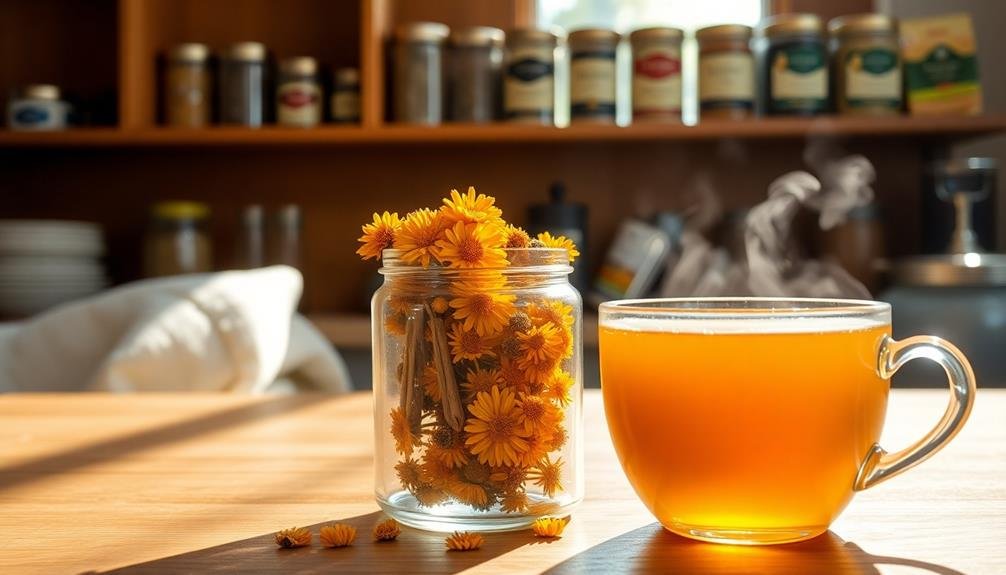
Proper storage is essential for maintaining the quality and potency of your calendula tea. Keep your dried calendula flowers in an airtight container, away from direct sunlight and moisture. This will help preserve their flavor, color, and medicinal properties.
Store the container in a cool, dark place like a pantry or cupboard.
Once you've brewed your calendula tea, it's best to consume it within 24 hours for ideal freshness and benefits. If you've made a larger batch, you can refrigerate it for up to 3-4 days. However, be sure to store it in a clean, sealed glass container to prevent contamination and maintain its taste.
For long-term storage of dried calendula flowers, consider vacuum-sealing them in small portions. This method can extend their shelf life up to a year, ensuring you'll always have some on hand for your gut-boosting tea.
- Store dried flowers in an airtight container in a cool, dark place
- Consume brewed tea within 24 hours or refrigerate for up to 3-4 days
- Vacuum-seal dried flowers for long-term storage up to a year
Incorporating Into Daily Routine
To reap the full benefits of calendula flower tea for gut health, you'll want to make it a consistent part of your daily routine. Start by choosing a specific time each day to enjoy your tea, such as mid-morning or before bed. This will help you establish a habit and guarantee you don't forget to drink it.
Begin with one cup per day and gradually increase to two or three cups if desired. You can drink it hot or cold, depending on your preference and the season. For a revitalizing summer drink, brew a large batch and store it in the refrigerator for iced calendula tea.
Consider pairing your calendula tea with other gut-friendly habits, like taking probiotics or eating fermented foods. You can also use it as a replacement for less healthy beverages in your diet, such as sugary sodas or excessive caffeine.
If you're prone to forgetting, set reminders on your phone or leave notes in visible places. Keep calendula tea bags or dried flowers at work and home to guarantee you always have access.
Frequently Asked Questions
Can Calendula Tea Help With Specific Digestive Conditions Like IBS or Ulcers?
Calendula tea may help with IBS and ulcers. It's known for its anti-inflammatory properties, which can soothe your digestive tract. While it's not a cure-all, you might find relief from symptoms when drinking it regularly.
Is Calendula Tea Safe for Pregnant or Breastfeeding Women?
You should avoid calendula tea if you're pregnant or breastfeeding. It's not proven safe and may cause complications. Always consult your doctor before using any herbal remedies during pregnancy or while nursing your baby.
How Does Calendula Tea Compare to Other Gut-Health Supplements?
Compared to other gut-health supplements, you'll find calendula tea is a gentler, natural option. It's less potent than probiotics or digestive enzymes but offers anti-inflammatory benefits. You'll likely experience milder effects, but it's generally safer and cheaper.
Can I Use Calendula Essential Oil Instead of Dried Flowers for Tea?
You shouldn't use calendula essential oil for tea. It's highly concentrated and not safe for internal consumption. Stick to dried flowers for making calendula tea. Essential oils are meant for external use or aromatherapy, not ingestion.
Are There Any Drug Interactions to Be Aware of When Consuming Calendula Tea?
You should be cautious when drinking calendula tea if you're taking certain medications. It can interact with sedatives, blood thinners, and diabetes drugs. Always consult your doctor before adding calendula to your routine, especially if you're pregnant.
In Summary
You've now got the tools to harness calendula's digestive benefits. Remember to choose high-quality flowers, brew properly, and drink at ideal times. Don't forget to explore complementary herbs and recipe variations. Be aware of potential side effects and store your tea correctly. By incorporating calendula tea into your daily routine, you're taking a natural step towards better gut health. Start sipping and feel the difference in your digestion today!


Leave a Reply