
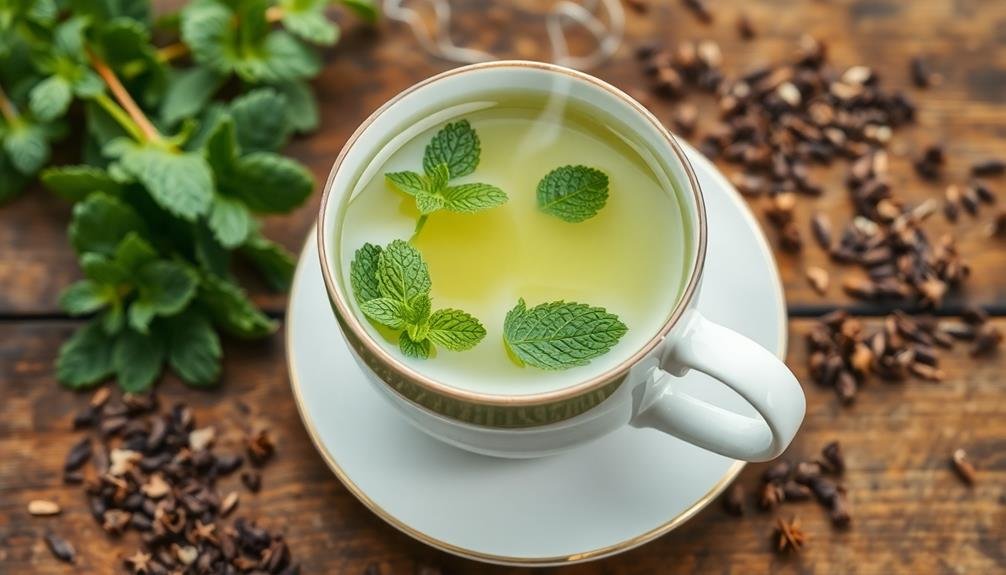
This invigorating peppermint-melissa tea blend offers a soothing digestive remedy you can easily make at home. You'll need fresh or dried peppermint and lemon balm (melissa) leaves, along with a tea infuser and kettle. Start with a 2:1 ratio of peppermint to lemon balm, adjusting to taste. Steep the herbs in hot water for 5-7 minutes, then strain and enjoy. The peppermint helps ease stomach cramps and bloating, while lemon balm promotes relaxation and reduces stress-related digestive issues. Add honey for sweetness if desired. Store your dried herb mixture in an airtight container away from light and moisture. Discover how to perfect your blend and maximize its benefits below.
Benefits of Peppermint-Melissa Tea
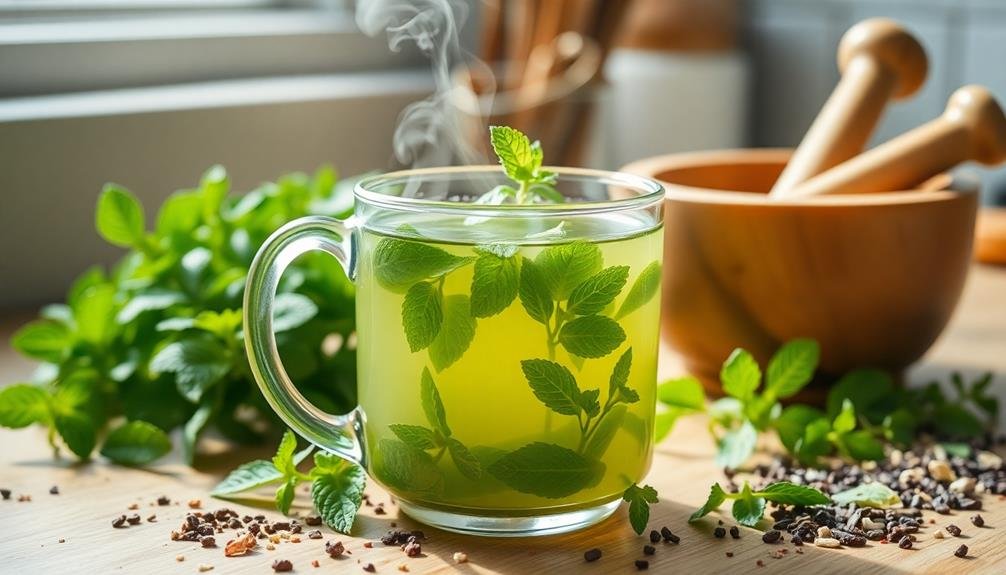
While many people enjoy peppermint tea for its invigorating taste, combining it with melissa (lemon balm) creates a powerful digestive blend. This herbal duo offers a range of benefits that can help soothe your stomach and improve overall digestion.
Peppermint's menthol content acts as a natural antispasmodic, easing stomach cramps and reducing bloating. It can also alleviate nausea and relieve symptoms of irritable bowel syndrome (IBS).
Melissa, on the other hand, contains compounds that promote relaxation and reduce stress-induced digestive issues.
When combined, these herbs work synergistically to enhance their individual benefits. The blend can help increase bile production, aiding in the breakdown of fats and improving nutrient absorption.
You'll also benefit from its anti-inflammatory properties, which can reduce gut inflammation and support a healthy digestive system.
Drinking this tea regularly may help boost your immune system, thanks to its antioxidant content. It can also freshen your breath and promote better sleep quality.
If you're looking for a natural way to support your digestive health, this peppermint-melissa blend is an excellent choice.
Ingredients and Equipment
To create this homemade digestive blend, you'll need a few simple ingredients and some basic kitchen equipment. For the ingredients, gather fresh peppermint leaves and lemon balm (Melissa officinalis) leaves. If you can't find fresh herbs, dried versions will work too. You'll also need honey for sweetening, if desired.
As for equipment, you'll require a kettle or pot to boil water, a tea infuser or strainer, and a mug or teacup. If you're using fresh herbs, you'll also need a sharp knife and cutting board to chop them finely.
For storage, consider getting an airtight container if you plan to make a larger batch of the dried herb blend. This will help preserve the flavors and aromatic properties of the herbs.
If you're growing your own herbs, you'll need gardening tools like pruning shears for harvesting. A dehydrator can be useful for drying fresh herbs, but it's not essential – you can air-dry them as well.
Lastly, don't forget a timer to guarantee proper steeping time for your tea. With these ingredients and tools, you'll be ready to create your revitalizing peppermint-melissa digestive blend.
Harvesting and Drying Herbs
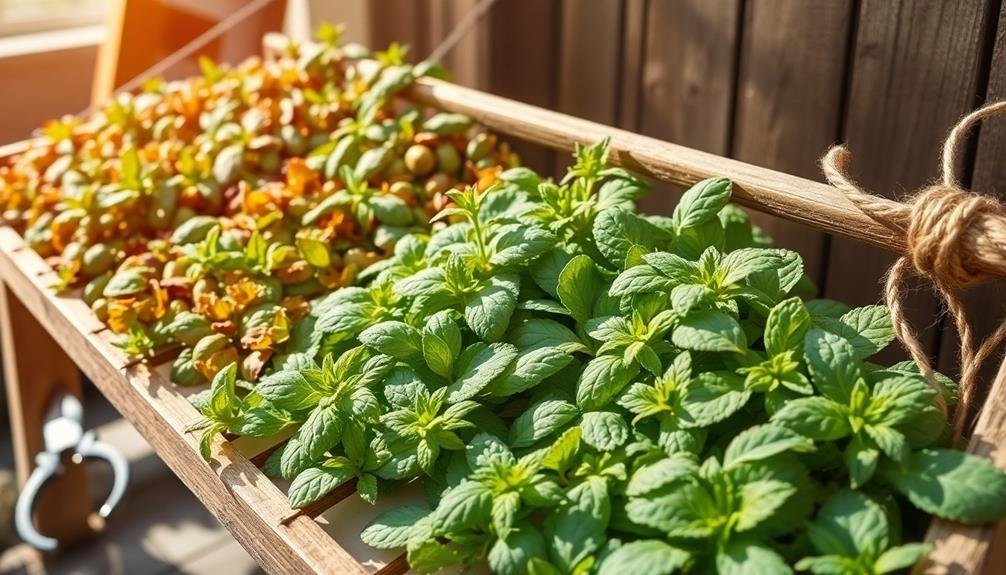
To create the best homemade digestive blend, you'll need to master the art of harvesting and drying herbs.
Start by picking your herbs in the morning after the dew has evaporated but before the sun gets too hot.
Properly dry your herbs by hanging them in small bundles in a well-ventilated, dark area or using a food dehydrator set to a low temperature.
Best Harvesting Practices
Proper harvesting and drying techniques are essential for preserving the potency and flavor of herbs in your homemade digestive blend. To guarantee the best quality, harvest your herbs in the morning after the dew has evaporated but before the sun becomes too intense. Choose healthy, pest-free plants and cut stems just above a leaf intersection to encourage new growth.
For peppermint and lemon balm (Melissa), harvest the leaves and tender stems before the plants flower. Pinch off the top 2-3 inches of growth, leaving at least 2/3 of the plant intact.
When harvesting chamomile, pick the flowers when they're fully open but before they start to wilt.
Rinse your herbs gently in cool water and pat them dry with a clean towel. To air-dry, bunch small stems together and hang them upside down in a warm, dry, and well-ventilated area away from direct sunlight.
Alternatively, use a food dehydrator set to a low temperature (95-115°F) for faster drying. Your herbs are ready when they're crisp and crumble easily. Store them in airtight containers in a cool, dark place to maintain their potency.
Proper Drying Techniques
After harvesting your herbs, drying them correctly is key to preserving their medicinal properties and flavors.
Begin by gently rinsing your peppermint and lemon balm leaves in cool water to remove any dirt or debris. Shake off excess water and pat them dry with a clean towel.
For small batches, you can use the hanging method. Gather the stems into small bundles and tie them with string. Hang these bundles upside down in a warm, dry, and well-ventilated area away from direct sunlight. A pantry or spare room works well.
If you're dealing with larger quantities, consider using a food dehydrator. Spread the leaves in a single layer on the trays, ensuring they don't overlap. Set the temperature to around 95°F (35°C) and let them dry for 2-4 hours.
Check your herbs regularly. They're ready when they crumble easily between your fingers.
Store them in airtight containers in a cool, dark place. Properly dried herbs will retain their potency for up to a year, ensuring you'll have a steady supply for your digestive tea blend.
Blending the Perfect Ratio
When creating your digestive herb blend, start by selecting high-quality, organic herbs from reputable sources.
You'll need to carefully balance the flavors and therapeutic benefits of each herb to achieve a well-rounded blend.
Don't hesitate to adjust the ratios to suit your personal taste preferences and digestive needs.
Choosing Quality Herb Sources
Selecting high-quality herbs is essential for creating an effective digestive blend. When sourcing your peppermint and lemon balm (Melissa officinalis), opt for organic varieties to guarantee they're free from pesticides and other harmful chemicals.
Look for reputable suppliers who specialize in medicinal herbs and provide information about their sourcing practices.
For dried herbs, check that they're still vibrant in color and aromatic. Fresh peppermint leaves should be bright green without any browning or wilting. Lemon balm leaves should have a fresh, lemony scent and appear crisp.
If you're growing your own, harvest the herbs just before they flower for peak potency.
Consider purchasing whole leaves rather than pre-ground herbs, as they retain their essential oils and medicinal properties longer. Store your herbs in airtight containers away from direct sunlight and heat to preserve their quality.
If possible, buy small quantities more frequently to maintain freshness.
Don't hesitate to ask your supplier about the herb's origin, harvest date, and processing methods. This information can help you gauge the quality and potency of the herbs you're using in your digestive blend.
Balancing Flavors and Benefits
Now that you've sourced high-quality herbs, it's time to blend them effectively. Balancing flavors and benefits is essential for creating a digestive tea that's both enjoyable and functional.
Start with a 2:1 ratio of peppermint to lemon balm (Melissa officinalis) as your base. This combination provides a revitalizing minty flavor while harnessing the calming effects of lemon balm.
To enhance digestive benefits, add a small amount of fennel seeds – about 1/4 the amount of peppermint. Fennel aids in reducing bloating and gas. For a subtle citrus note and vitamin C boost, incorporate a pinch of dried lemon peel, using about 1/8 the amount of peppermint.
If you prefer a stronger mint flavor, increase the peppermint ratio. For a more pronounced lemon taste, add more lemon balm or lemon peel. Remember, the key is to maintain a balance that suits your palate while maximizing digestive benefits.
Experiment with small batches, adjusting ratios until you find your perfect blend. Keep notes on each variation to replicate your favorite combination.
As you become more familiar with the herbs' properties, you'll develop an intuition for creating personalized, effective digestive blends.
Adjusting for Personal Preferences
Everyone's palate and digestive needs are unique, so it's crucial to adjust your herbal blend accordingly. Start with equal parts peppermint and lemon balm, then experiment with the ratio to find your perfect balance. If you prefer a stronger minty flavor, increase the peppermint content. For a more citrusy, calming effect, add more lemon balm.
Consider your specific digestive concerns when adjusting the blend. Peppermint is excellent for relieving gas and bloating, while lemon balm can help reduce stress-related digestive issues. If you're prone to heartburn, you might want to use less peppermint and more lemon balm.
Don't be afraid to introduce other complementary herbs to your blend. Chamomile can add a soothing element, while fennel seeds might enhance the digestive benefits. Ginger can provide a warming effect and additional digestive support. Start with small amounts of new ingredients and gradually increase them to suit your taste.
Remember to keep notes on your experiments, recording the ratios and your reactions to each blend. This will help you refine your perfect digestive tea over time, tailoring it to your unique preferences and needs.
Brewing Instructions
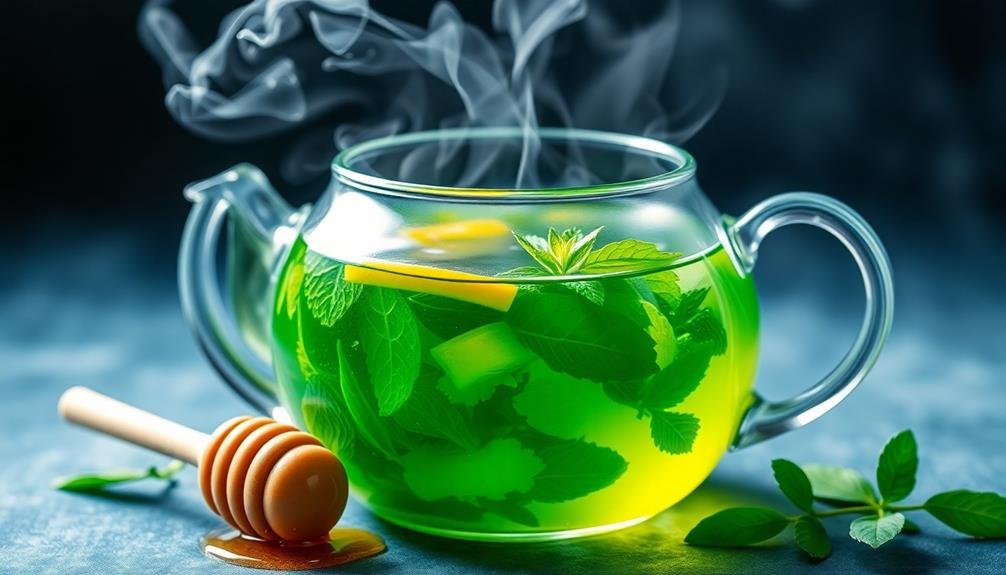
After gathering your ingredients, it's time to brew your homemade digestive blend.
Start by boiling fresh, filtered water in a kettle or pot. While the water heats, place 1 teaspoon of dried peppermint leaves and 1 teaspoon of dried lemon balm (melissa) leaves into a tea infuser or directly into your teapot.
Once the water reaches a rolling boil, remove it from heat and let it cool for about 30 seconds. This brief cooling period guarantees you won't scald the delicate herbs.
Pour the hot water over the herbs, filling your cup or teapot. Cover the brewing vessel to trap the aromatic oils and steep for 5-7 minutes.
If you're using loose herbs, strain the tea into your cup. For a stronger flavor, you can increase steeping time, but be cautious as over-steeping may result in a bitter taste.
Add honey or lemon to taste if desired. Sip your tea slowly, allowing its warmth and herbal properties to soothe your digestive system.
This blend is best enjoyed after meals or whenever you need digestive support.
Serving and Storage Tips
To get the most out of your homemade digestive blend, serve it in a warm mug or teacup to maintain its temperature and aroma. You can enhance the flavor by adding a small amount of honey or a slice of lemon, depending on your preference. For a revitalizing twist, try serving it over ice during warmer months.
When it comes to storing your peppermint-melissa tea blend, proper techniques will help preserve its quality and potency. Store the dry herb mixture in an airtight container, away from direct sunlight and moisture. Keep it in a cool, dark place like a pantry or cupboard. If stored correctly, your blend can last up to six months.
For convenient use, consider portioning the blend into tea bags or infusers. This makes it easy to brew a single cup whenever you need it.
Here are some additional storage tips:
- Use opaque containers to protect the herbs from light exposure
- Label the container with the blend's name and date of preparation
- Avoid storing near strong-smelling substances to prevent flavor contamination
- Check periodically for any signs of moisture or mold
Frequently Asked Questions
Can I Use Dried Herbs Instead of Fresh Ones?
Yes, you can use dried herbs instead of fresh ones. They're more concentrated, so you'll need less. Typically, use one-third the amount of dried herbs compared to fresh. Remember, dried herbs may have a slightly different flavor profile.
Is This Tea Safe for Pregnant Women or Children?
You should consult your doctor before drinking this tea if you're pregnant. For children, it's generally safe in moderation, but it's best to check with a pediatrician first. Always err on the side of caution.
How Long Does the Tea's Aroma and Flavor Last in Storage?
Your tea's aroma and flavor can last up to six months if stored properly. Keep it in an airtight container away from light and moisture. You'll notice the scent fading over time, signaling a decline in potency.
Can I Add Sweeteners or Other Herbs to the Blend?
Yes, you can add sweeteners or other herbs to your blend. Try honey, stevia, or agave for sweetness. Experiment with complementary herbs like chamomile, ginger, or lemon balm to enhance flavor and potential health benefits.
Are There Any Potential Side Effects of Drinking Peppermint-Melissa Tea Regularly?
You might experience mild side effects from regular peppermint-melissa tea consumption. These can include heartburn, headaches, or allergic reactions. If you're pregnant or have certain medical conditions, it's best to consult your doctor before drinking it regularly.
In Summary
You've now got all the knowledge to create your own invigorating peppermint-melissa tea blend. With its digestive benefits and soothing properties, you'll find it's a perfect addition to your daily routine. Remember to harvest and dry your herbs carefully, blend them in the right ratio, and store them properly. Enjoy your homemade tea hot or iced, and don't hesitate to experiment with other herbs to customize your blend. Happy brewing!


Leave a Reply