
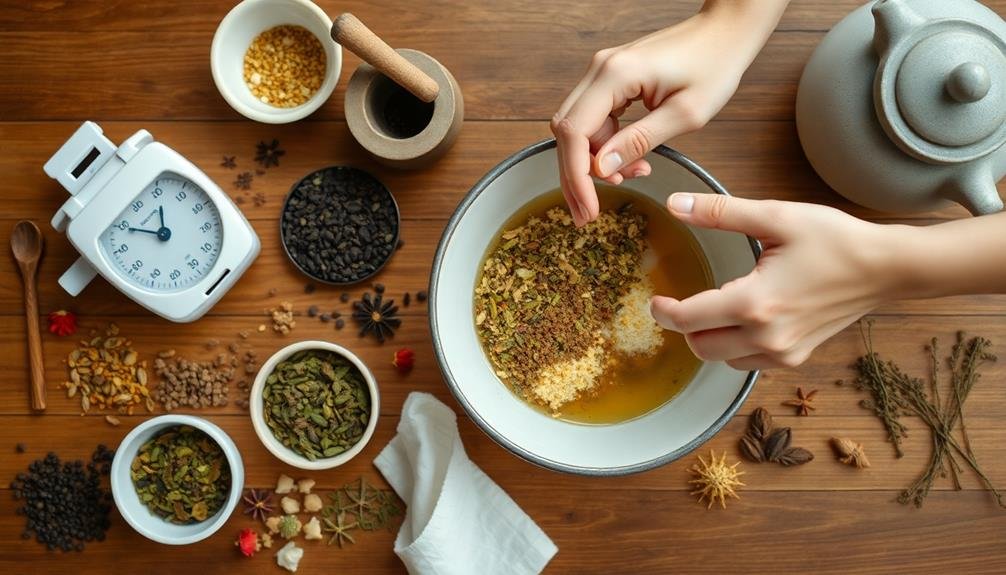
To master the art of tea blending, start by understanding tea varieties and selecting quality base teas. Explore complementary flavors and balance taste profiles to create harmonious blends. Experiment with herbs and spices to add depth and complexity. Perfect your blending ratios and master drying and storage techniques to preserve freshness. Develop signature blends that reflect your unique style and refine them through tasting sessions. Don't forget to encourage creativity and experimentation in your blending process. With practice and patience, you'll soon be crafting exquisite tea blends that delight the senses and showcase your skill as a tea artisan.
Understand Tea Varieties
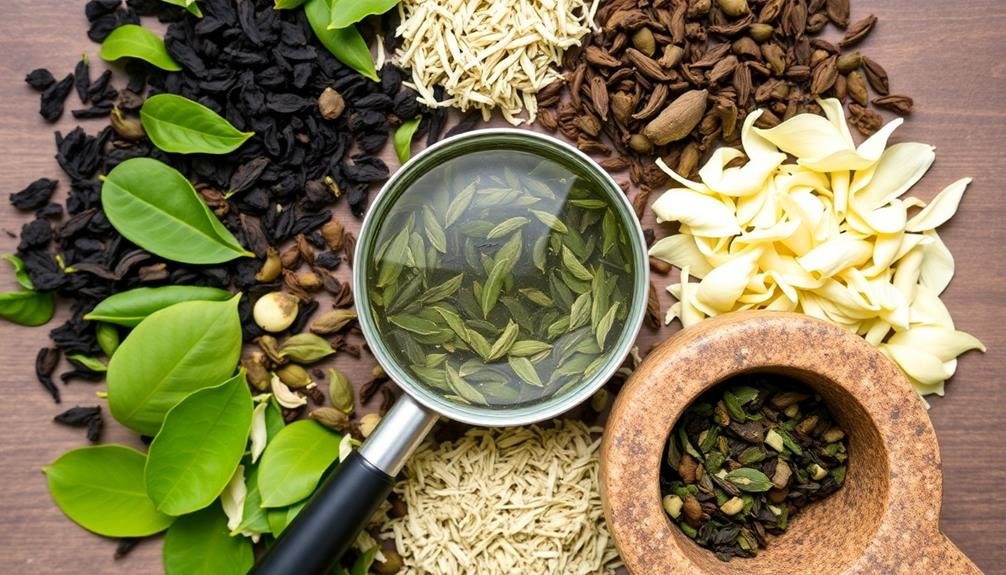
Tea's diverse world offers a rich palette for blending enthusiasts. To master the art of tea blending, you'll need to familiarize yourself with various tea types. Start by exploring the six main categories: white, green, yellow, oolong, black, and pu-erh. Each type has distinct flavors, aromas, and processing methods.
White teas are delicate with subtle, floral notes. Green teas offer fresh, grassy flavors. Yellow teas are rare and have a mellow, slightly sweet taste. Oolong teas range from light and floral to dark and roasted. Black teas are bold and full-bodied. Pu-erh teas are fermented, with earthy and complex flavors.
Within these categories, you'll find numerous varietals and regional specialties. For example, Chinese green teas like Longjing differ from Japanese Sencha. Indian Assam black tea contrasts with Chinese Keemun.
Learn about their unique characteristics, including taste profiles, caffeine content, and steeping requirements. This knowledge will help you create harmonious blends and balance flavors effectively.
Don't hesitate to sample teas from different regions to expand your palate and understanding of tea varieties.
Select Quality Base Teas
Armed with knowledge of tea varieties, you're ready to select quality base teas for your blends. Begin by sourcing teas from reputable suppliers who can provide detailed information about origin, processing, and harvest date. Opt for whole leaf teas rather than broken leaves or dust, as they offer superior flavor and aroma.
When evaluating base teas, use your senses. Examine the dry leaves for uniformity, color, and intactness. Smell the leaves to assess their aroma, which should be fresh and characteristic of the tea type. Brew a small sample and taste it, noting the flavor profile, body, and aftertaste.
Consider the purpose of your blend when selecting base teas. If you're aiming for a bold breakfast blend, choose full-bodied black teas like Assam or Ceylon. For a delicate floral blend, start with a light oolong or white tea. Don't overlook the importance of green teas, which can add freshness and vegetal notes to your creations.
Remember that the quality of your base teas will greatly impact the final blend. It's worth investing in high-grade teas to achieve exceptional results in your blending endeavors.
Explore Complementary Flavors
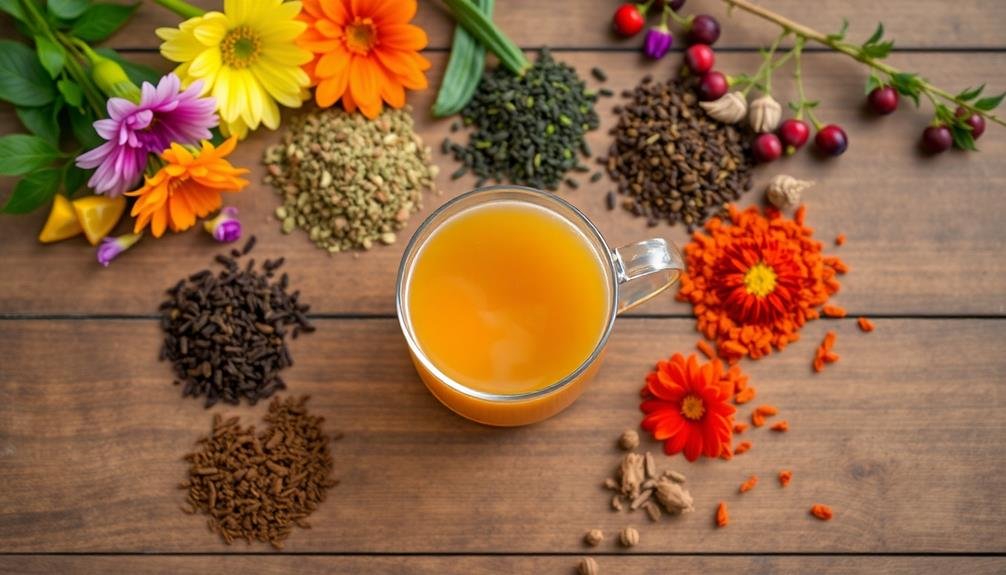
When exploring complementary flavors for tea blending, you'll want to identify the flavor profiles of your base teas.
Next, consider how to balance different taste elements like sweetness, acidity, and bitterness.
Don't be afraid to experiment with unexpected combinations to create unique and harmonious blends.
Identify Flavor Profiles
To create a harmonious tea blend, you'll need to identify and understand the flavor profiles of different teas. Start by tasting various teas individually, noting their distinct characteristics.
Black teas often have robust, malty flavors with hints of caramel or fruit. Green teas can range from grassy and vegetal to nutty and sweet. Oolong teas offer a spectrum of flavors, from light and floral to rich and roasted. White teas are typically delicate with subtle notes of honey or melon.
Pay attention to the tea's aroma, taste, and aftertaste. Consider factors like astringency, sweetness, bitterness, and body.
Categorize teas based on their dominant flavors: floral, fruity, spicy, earthy, or herbal. Don't forget to assess the intensity of each flavor profile, as this will impact how well it blends with others.
Keep a tasting journal to record your observations and develop your palate. As you become more familiar with different flavor profiles, you'll be better equipped to choose complementary teas for your blends.
This knowledge will also help you balance flavors and create unique combinations that appeal to various tastes.
Balance Taste Elements
Balancing taste elements is essential for creating a well-rounded tea blend. You'll need to carefully consider how different flavors interact and complement each other. Start by identifying the primary taste profile you want to achieve, such as floral, fruity, or spicy. Then, select complementary flavors that enhance and support this main profile.
Consider the five basic taste sensations: sweet, sour, salty, bitter, and umami. A well-balanced blend should incorporate at least two or three of these elements. For example, if you're working with a bitter green tea base, you might add sweet fruit notes or floral undertones to soften the bitterness.
Pay attention to intensity levels as well. Strong flavors can overpower delicate ones, so use bold ingredients sparingly. Experiment with ratios to find the perfect balance. You can also use neutral teas like white tea or light oolong as a base to let other flavors shine.
Don't forget about mouthfeel and aroma. These elements contribute considerably to the overall taste experience. Include ingredients that add texture, such as rose petals or citrus peel, and those that provide a pleasant scent, like lavender or jasmine.
Experiment With Combinations
Diving into the world of tea blending opens up endless possibilities for unique flavor combinations. You'll want to start by experimenting with different tea bases and complementary ingredients. Try pairing black tea with citrus fruits, green tea with mint, or white tea with delicate floral notes. Don't be afraid to mix different types of tea together, like combining oolong and rooibos for a complex flavor profile.
As you explore, keep track of your experiments and tasting notes. This will help you refine your blends and develop your palate. Remember, even small adjustments can greatly impact the final taste. Here's a table to inspire your creativity:
| Base Tea | Complementary Flavors |
|---|---|
| Black | Bergamot, Cinnamon |
| Green | Jasmine, Lemongrass |
| Oolong | Ginger, Peach |
| White | Rose, Vanilla |
Be open to unexpected pairings and trust your taste buds. You might discover a winning combination by chance. As you gain confidence, try incorporating herbs, spices, and dried fruits to add depth and complexity to your blends. Remember, the goal is to create a harmonious and enjoyable tea experience.
Balance Taste Profiles
The art of balancing taste profiles is at the heart of successful tea blending. You'll need to contemplate the unique characteristics of each tea component and how they interact with one another.
Start by identifying the dominant flavors in your base tea and then carefully select complementary or contrasting elements to enhance the overall experience.
When balancing taste profiles, keep these key factors in mind:
- Strength: Confirm that no single flavor overpowers the others
- Complexity: Layer flavors to create depth and interest
- Harmony: Aim for a smooth shift between different taste notes
As you blend, pay attention to the five basic taste sensations: sweet, sour, salty, bitter, and umami. These elements should work together to create a well-rounded and satisfying tea.
Don't forget about mouthfeel, which can greatly impact the overall perception of your blend. Experiment with different ratios of ingredients to find the perfect balance, and remember that subtle adjustments can make a significant difference.
Trust your palate and take detailed notes during the blending process to refine your skills and create consistently excellent tea blends.
Experiment With Herbs and Spices
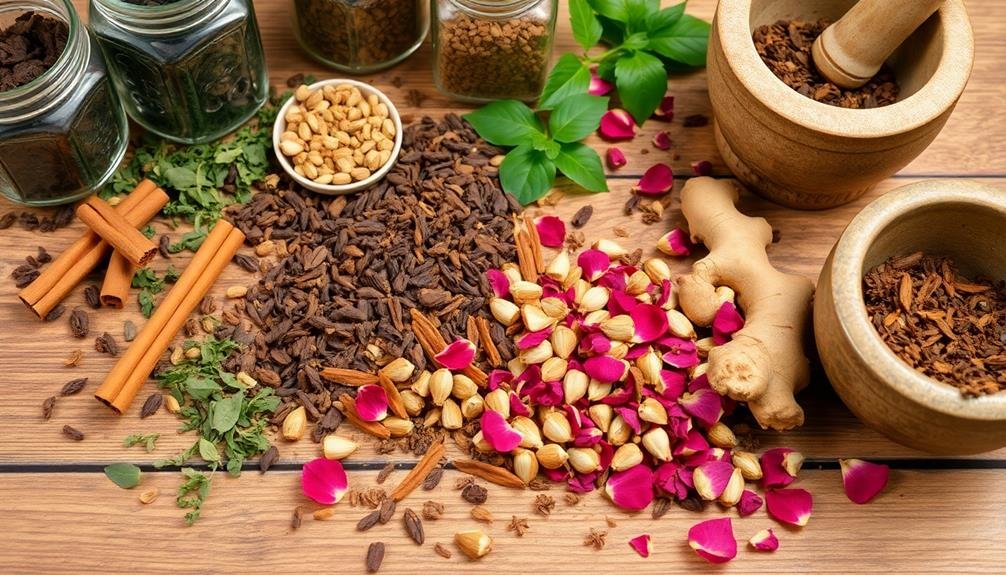
Along with traditional tea leaves, experimenting with herbs and spices can elevate your tea blends to new heights. Start by exploring common additions like mint, ginger, and cinnamon. These familiar flavors can complement various tea bases and offer a gateway to more adventurous combinations.
As you gain confidence, branch out to less conventional options. Try incorporating lavender, rosemary, or lemongrass for unique floral and citrus notes. Spices like cardamom, clove, and star anise can add warmth and complexity to your blends.
Don't forget about dried fruits, which can contribute natural sweetness and tanginess.
When experimenting, start with small amounts and gradually increase to find the right balance. Remember that some herbs and spices have potent flavors, so a little can go a long way. Keep detailed notes on your combinations, including measurements and steeping times, to replicate successful blends.
Consider the health benefits of your additions too. Many herbs and spices offer antioxidant properties or aid digestion. By thoughtfully selecting ingredients, you can create blends that not only taste great but also support your well-being.
Consider Aroma and Visual Appeal
Sensory experience plays an essential role in tea enjoyment, extending beyond taste to include aroma and visual appeal. When blending teas, consider how the scents of different ingredients will harmonize and create an inviting fragrance.
Pay attention to the visual composition of your blend, incorporating elements that are pleasing to the eye. A well-crafted tea blend should engage multiple senses, enhancing the overall experience.
To create an enticing aroma, experiment with floral notes, spices, and aromatic herbs. Lavender, rose petals, and jasmine can add a delightful floral scent, while cinnamon, cardamom, or ginger can introduce warm, spicy notes.
For visual appeal, consider incorporating ingredients with varied colors and textures. Dried fruits, flower petals, and colorful herbs can create a visually striking blend.
When considering aroma and visual appeal, keep these points in mind:
- Balance is key: Don't let strong scents overpower the blend
- Consider the dry and steeped appearance of your blend
- Choose ingredients that complement each other in both aroma and appearance
Remember that the visual and aromatic aspects of your tea blend contribute to the anticipation and enjoyment of the brewing process.
Perfect Blending Ratios
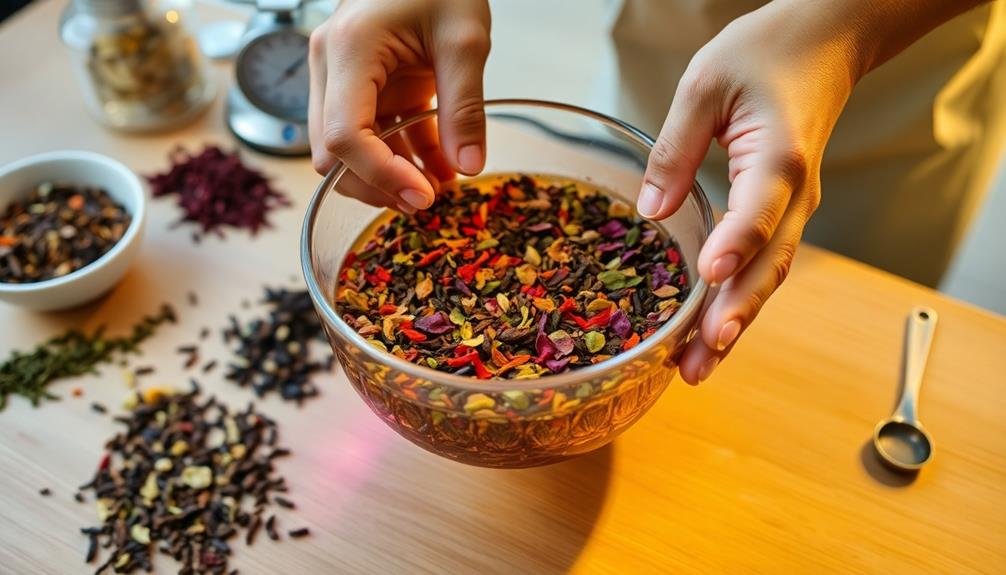
To create the perfect tea blend, you'll need to master the art of balancing flavor profiles.
Start by experimenting with different ratios of teas, adjusting the proportions until you achieve your desired taste.
You can improve your precision by using measuring spoons or a small digital scale to weigh your ingredients accurately.
Balancing Flavor Profiles
Blending tea to perfection hinges on striking the right balance between different flavor profiles. You'll need to take into account the characteristics of each tea type and how they interact. Start by identifying the dominant flavors you want in your blend, then add complementary or contrasting notes to create depth and complexity.
When balancing flavors, keep these principles in mind:
- Harmony: Make sure no single flavor overpowers the others
- Depth: Layer flavors to create a multi-dimensional experience
- Uniqueness: Aim for a distinctive taste that sets your blend apart
Begin with small batches, adjusting the ratios until you achieve the desired taste. Pay attention to the strength of each component, as some teas may require only a small amount to make a significant impact.
Don't be afraid to experiment with unexpected combinations, such as pairing a smoky black tea with a floral oolong or adding a hint of mint to a fruity blend.
Remember that temperature and steeping time can affect how flavors are expressed, so take these factors into account when fine-tuning your blend.
With practice and patience, you'll develop an intuitive understanding of how different teas interact, allowing you to create unique and balanced blends.
Measuring and Weighing Techniques
Once you've mastered the art of balancing flavors, it's time to focus on precision in your tea blending process. Accurate measurements are essential for creating consistent and replicable blends. Invest in a reliable digital scale that measures in grams, as even small variations can greatly impact the final taste.
Start by weighing your base tea, which typically makes up 60-80% of the blend. Then, measure your complementary teas and additives in smaller quantities. For delicate ingredients like flowers or spices, use measuring spoons for amounts less than a gram. Keep a log of your measurements to refine your recipes over time.
When working with larger batches, maintain the same proportions by using ratios. For example, if your blend uses 2 parts black tea to 1 part green tea, you can easily scale up while keeping the flavor profile consistent.
Don't forget to account for the density of different ingredients – lighter leaves will take up more volume than denser ones for the same weight. Always mix your ingredients thoroughly after measuring to guarantee an even distribution throughout the blend.
Master Drying and Storage Techniques
The art of drying and storing tea leaves is essential for preserving their flavor and aroma. After blending, you'll need to dry your tea mixture thoroughly to prevent mold growth and maintain quality. Use a food dehydrator or spread the leaves on a clean, dry surface in a well-ventilated area. Confirm the leaves are completely dry before storage, as any moisture can lead to spoilage.
Once dried, store your tea blend in an airtight container away from light, heat, and strong odors. Glass jars or tin canisters work well for this purpose. Label each container with the blend name and date to track freshness. Keep your tea in a cool, dark place to maximize its shelf life.
To maintain the quality of your blends, consider these additional tips:
- Avoid storing tea near spices or aromatic foods, as tea easily absorbs other scents.
- Use separate utensils and containers for different blends to prevent flavor contamination.
- Rotate your stock regularly, using older blends first to confirm freshness.
Develop Signature Blends
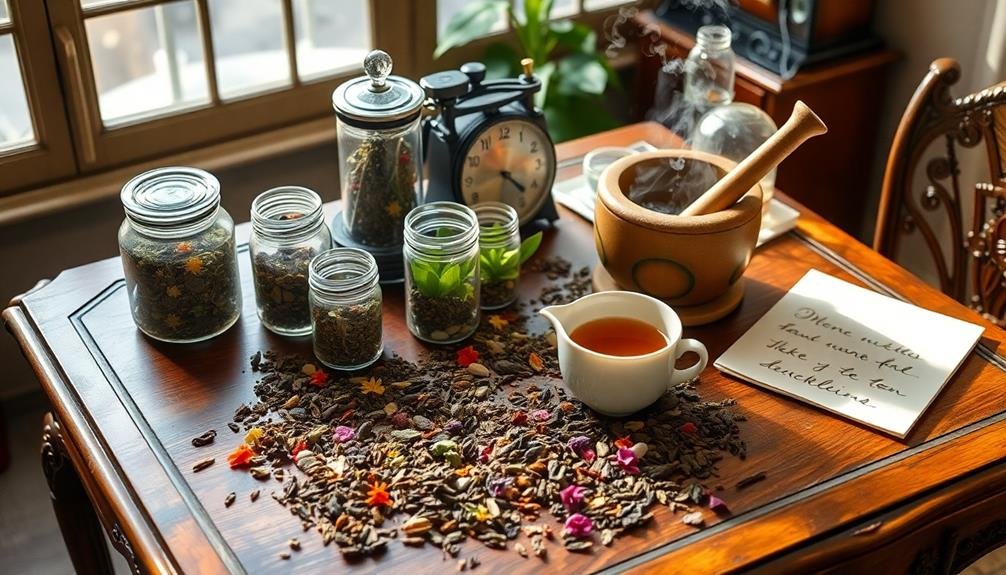
Creating your own signature tea blends is a rewarding way to express your creativity and develop unique flavors. To start, choose a base tea that'll form the foundation of your blend. This could be black, green, white, or oolong tea.
Next, select complementary ingredients like herbs, spices, flowers, or fruits to enhance the base tea's flavor profile.
Begin with small batches, carefully measuring and recording the proportions of each ingredient. You'll want to experiment with different ratios to find the ideal balance. As you blend, consider the aroma, taste, and visual appeal of your creation.
Don't be afraid to try unexpected combinations; sometimes, the most surprising pairings yield the best results.
Remember to taste your blends at various steeping times to determine the best brewing instructions. Keep detailed notes on your experiments, including successful and unsuccessful attempts. This will help you refine your blends over time.
As you develop your signature blends, consider your target audience and their preferences. Are you aiming for a calming bedtime tea or an energizing morning blend? Tailor your creations accordingly, and soon you'll have a range of unique tea blends to call your own.
Refine Through Tasting Sessions
After developing your initial tea blends, refining them through tasting sessions is essential for achieving the perfect flavor profile.
You'll want to organize structured tastings with a panel of trusted palates, including both tea experts and casual drinkers. During these sessions, you'll evaluate each blend's aroma, flavor, body, and aftertaste.
To conduct an effective tasting session:
- Prepare each blend consistently, using the same water temperature and steeping time
- Provide tasters with a standardized evaluation form to record their impressions
- Encourage open discussion and feedback after individual assessments
As you gather feedback, pay close attention to recurring comments and suggestions.
You may need to adjust the ratios of different teas or ingredients, or even introduce new elements to balance the flavors.
Don't be afraid to experiment with multiple iterations of a blend until you achieve the desired result.
Frequently Asked Questions
How Long Does It Take to Become Proficient in Tea Blending?
You'll find that becoming proficient in tea blending varies for everyone. It can take months or even years of practice, experimentation, and learning. You'll need to develop your palate, understand flavor profiles, and master blending techniques.
Are There Any Health Risks Associated With Certain Tea Blends?
You should be aware that certain tea blends can pose health risks. Some herbs may interact with medications or cause allergic reactions. It's best to consult a healthcare professional if you're unsure about a blend's safety.
What Equipment Is Essential for Beginners in Tea Blending?
You'll need some basic equipment to start blending tea. Get a digital scale, airtight containers, and a tea infuser. Don't forget measuring spoons, a notebook for recipes, and a variety of loose teas and herbs.
Can Tea Blending Be a Profitable Business Venture?
Yes, you can turn tea blending into a profitable business. It's a growing market with low startup costs. You'll need creativity, quality ingredients, and marketing skills. Don't forget to research regulations and build a unique brand identity.
How Do Seasonal Changes Affect Tea Blending Ingredients and Flavors?
You'll notice seasonal changes greatly impact tea blending. In spring and summer, you'll have fresher, lighter ingredients available. Fall and winter bring richer, warmer flavors. You'll need to adjust your blends accordingly throughout the year.
In Summary
You've now got the tools to become a true tea blending artist. Remember, practice makes perfect, so don't be afraid to experiment. Trust your palate and let your creativity shine. As you refine your skills, you'll discover unique flavor combinations that'll set your blends apart. Keep exploring, tasting, and learning. Soon, you'll be crafting exquisite tea blends that'll delight both you and your fellow tea enthusiasts.

Leave a Reply