

Creating your own floral tea blends is a delightful and rewarding experience. You'll need essential tools like a digital scale, airtight jars, and tea infusers to get started. Understanding floral flavor profiles is key to crafting balanced blends, as you mix different flowers with base teas. You'll learn proper drying techniques for fresh flowers and how to store your creations. Experiment with seasonal ingredients and discover the health benefits of various florals. By following steeping guidelines, you'll brew the perfect cup every time. This guide will open up a world of aromatic possibilities for your tea-drinking pleasure.
Essential Tools and Ingredients
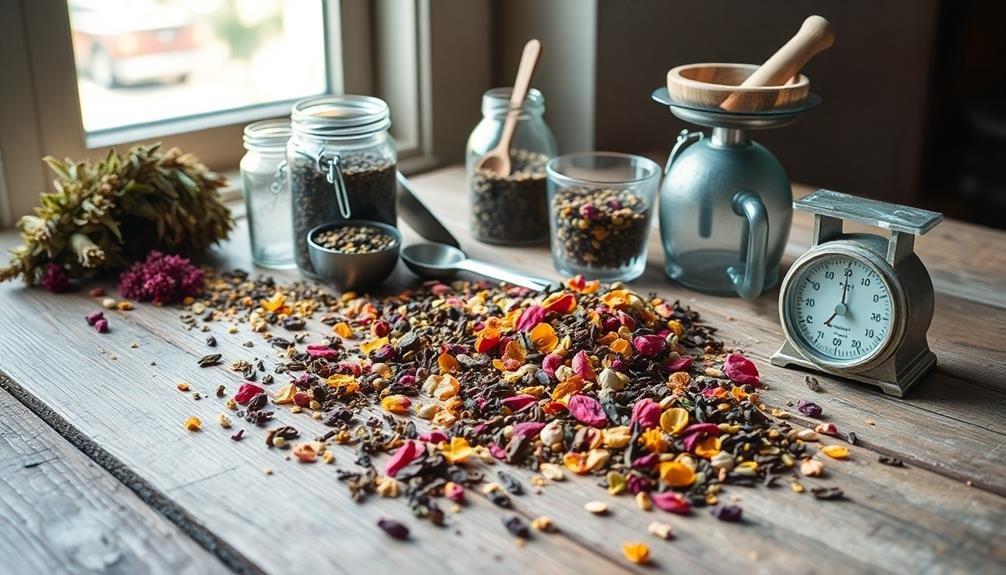
Several essential tools and ingredients are necessary for creating floral tea blends.
You'll need a digital scale for precise measurements, airtight glass jars for storage, and a notebook to record your recipes. Invest in a tea infuser or reusable tea bags for brewing your creations.
For ingredients, start with a base tea like black, green, or white tea. Then, gather dried flowers such as chamomile, lavender, rose petals, and jasmine.
Don't forget herbs like mint, lemon balm, or rosemary for added flavor and aroma. Consider fruit pieces like dried berries or citrus peels for a touch of sweetness.
You'll also want to have natural flavorings on hand, such as vanilla beans or cinnamon sticks. Essential oils can be used sparingly for extra fragrance, but make sure they're food-grade.
Keep a selection of sweeteners like honey or stevia if desired.
Lastly, you'll need clean, filtered water for brewing and tasting your blends.
With these tools and ingredients at your disposal, you're ready to start creating unique and delightful floral tea blends.
Understanding Floral Flavor Profiles
To create harmonious floral tea blends, you'll need to grasp the taste spectrum and aroma intensity of different flowers.
You can categorize floral flavors on a scale from light and delicate to bold and assertive. Understanding these profiles will help you balance the various floral notes in your blends, ensuring no single element overpowers the others.
Taste Spectrum Overview
Before diving into specific floral tea blends, it's crucial to understand the diverse spectrum of floral flavors. You'll encounter a wide range of tastes, from delicate and subtle to bold and assertive.
On the lighter end, you'll find chamomile with its sweet, apple-like notes, and lavender with its soft, perfumed essence. Moving towards the middle, you'll discover jasmine's intoxicating aroma and rose's romantic, slightly sweet profile.
As you explore the bolder end of the spectrum, you'll encounter hibiscus with its tart, cranberry-like flavor, and chrysanthemum's unique, slightly bitter taste. Other floral notes to take into account include the honey-like sweetness of linden, the minty freshness of bee balm, and the citrusy undertones of orange blossom.
Each floral ingredient brings its own character to a blend, and understanding these flavor profiles will help you create balanced and harmonious combinations.
As you experiment, pay attention to how different flowers interact with one another and with base teas. This knowledge will empower you to craft unique and personalized floral tea blends that suit your taste preferences.
Aroma Intensity Scales
Understanding the aroma intensity of different floral ingredients is key to creating well-balanced tea blends. To help you gauge the strength of various floral components, you'll use an aroma intensity scale ranging from 1 to 10, with 1 being the mildest and 10 the strongest.
Start by familiarizing yourself with some common floral ingredients and their typical intensity ratings:
- Chamomile (2-3): Soft, apple-like scent
- Lavender (7-8): Strong, distinctive fragrance
- Rose petals (5-6): Sweet, medium-intensity aroma
- Jasmine (6-7): Delicate yet penetrating scent
- Hibiscus (4-5): Tart, fruity aroma
When creating your blends, you'll want to balance stronger aromas with milder ones. For example, you might pair a small amount of lavender with a larger quantity of chamomile to achieve a harmonious blend.
Remember that steeping time and water temperature can also affect aroma intensity, so experiment with these variables to fine-tune your creations.
As you develop your blending skills, you'll learn to identify subtle nuances in floral aromas and how they interact with other ingredients. This knowledge will enable you to craft unique and appealing tea blends tailored to your preferences.
Choosing Base Teas
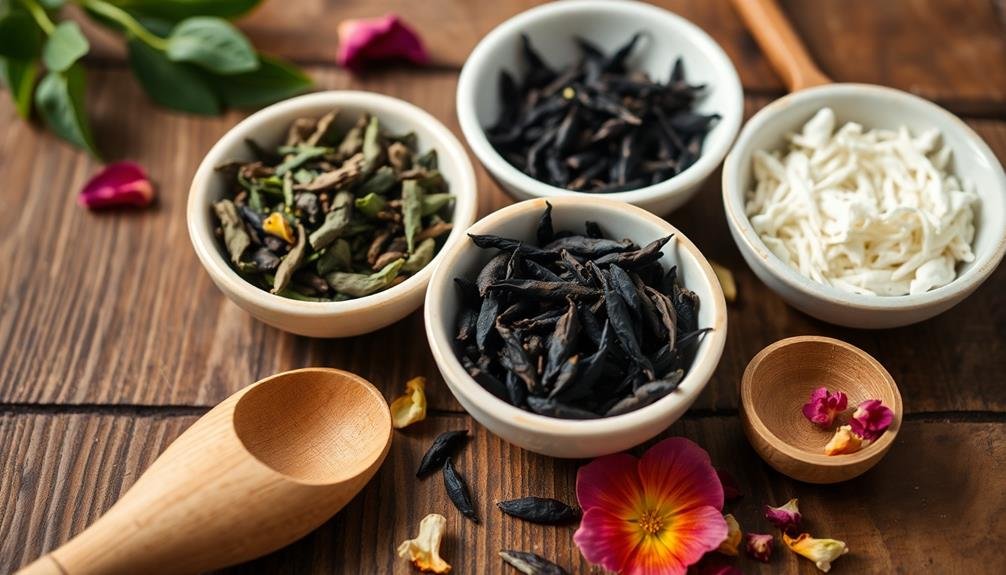
Selecting the right base tea forms the foundation of any successful floral blend. You'll want to choose a tea that complements your chosen floral notes without overpowering them. Consider the strength, flavor profile, and caffeine content of different base teas to find the perfect match for your blend.
Black teas offer a robust foundation, ideal for stronger floral flavors like rose or lavender. Green teas provide a lighter, grassy backdrop that pairs well with delicate florals such as jasmine or chamomile. White teas, with their subtle sweetness, can enhance the natural flavors of many flowers. Oolong teas offer a unique middle ground, with varying levels of oxidation that can complement a wide range of floral notes.
When selecting your base tea, keep these factors in mind:
- Oxidation level of the tea
- Caffeine content
- Natural flavor notes
- Processing method (e.g., roasted, steamed, or pan-fired)
- Origin and terroir
Experiment with different combinations to find the perfect balance between your base tea and floral ingredients.
Don't be afraid to mix multiple tea types for a more complex flavor profile. Remember, the goal is to create a harmonious blend where both the tea and floral notes shine through.
Balancing Flavors and Aromas
Creating a harmonious floral tea blend requires a delicate balance of flavors and aromas. When combining floral elements with your chosen base tea, consider the intensity of each ingredient. Start with small amounts of dried flowers and gradually increase until you achieve the desired taste and scent profile.
Remember that some flowers, like lavender and rose, can quickly overpower other flavors if used excessively.
Pay attention to complementary and contrasting flavors. Pair light, delicate florals with milder base teas, while bolder flowers can stand up to stronger teas. For example, chamomile works well with white tea, while hibiscus complements black tea.
Don't shy away from experimenting with unexpected combinations, as they can lead to unique and exciting blends.
Consider the overall aroma of your blend, as it greatly impacts the drinking experience. Aim for a pleasant, well-rounded scent that doesn't overwhelm the palate.
To achieve this, mix flowers with different aromatic qualities, such as sweet, spicy, or earthy notes.
Proper Drying Techniques
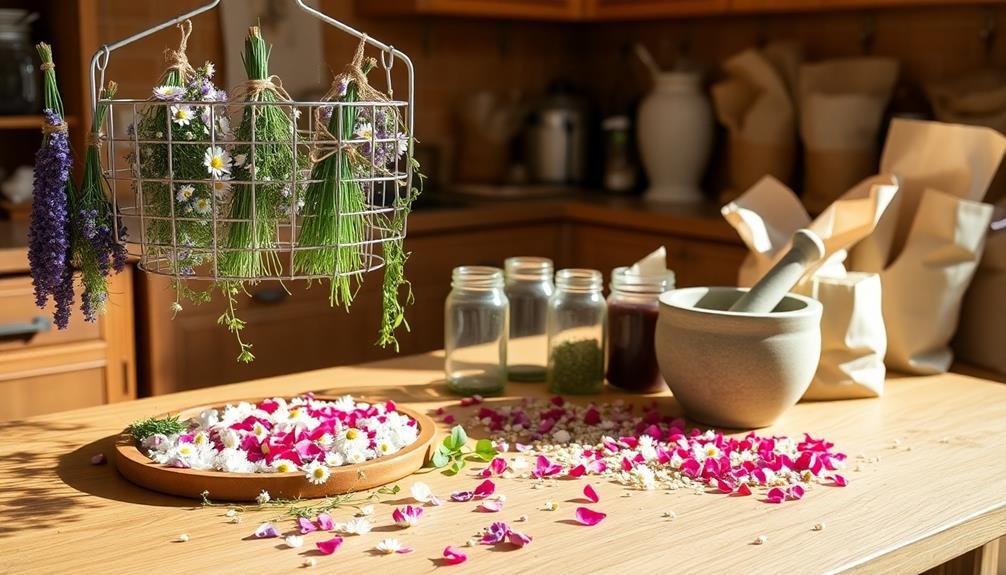
Now that you've mastered the art of balancing flavors and aromas, it's time to focus on proper drying techniques for your floral ingredients. Drying your flowers correctly is vital for preserving their flavors, colors, and aromas. You'll want to make certain your blossoms are free from moisture to prevent mold growth and maintain their quality.
Start by harvesting your flowers on a dry, sunny day when they're at their peak. Gently shake off any insects or debris, then rinse them in cool water if necessary. Pat them dry with a clean towel or use a salad spinner for delicate petals. Arrange the flowers in a single layer on a drying rack or screen, allowing for good air circulation.
Here are five essential tips for proper drying:
- Use a warm, dark, and well-ventilated area
- Avoid direct sunlight to prevent color fading
- Check your flowers daily for signs of mold
- Rotate the flowers every few days for even drying
- Store fully dried flowers in airtight containers
Blending Ratios and Proportions
Crafting the perfect floral tea blend comes down to finding the right balance of ingredients.
You'll want to start with a base tea, typically making up 60-70% of your blend. This can be black, green, white, or oolong tea, depending on your preference. The remaining 30-40% will be your floral and herbal additions.
For a delicate blend, use a 70:30 ratio of base tea to florals. If you're aiming for a more robust floral flavor, try a 60:40 split. Remember, some flowers have stronger flavors than others. Rose petals, for example, are quite potent, so you'll need less of them compared to milder flowers like chamomile.
A good rule of thumb is to use 1-2 teaspoons of dried flowers per cup of base tea. Start with small batches, adjusting the ratios until you find your perfect blend.
Don't be afraid to experiment with different combinations. You might mix lavender with chamomile for a soothing blend, or combine rose petals with hibiscus for a tart, floral infusion.
Keep notes on your blends to replicate your favorites.
Storage and Packaging Methods
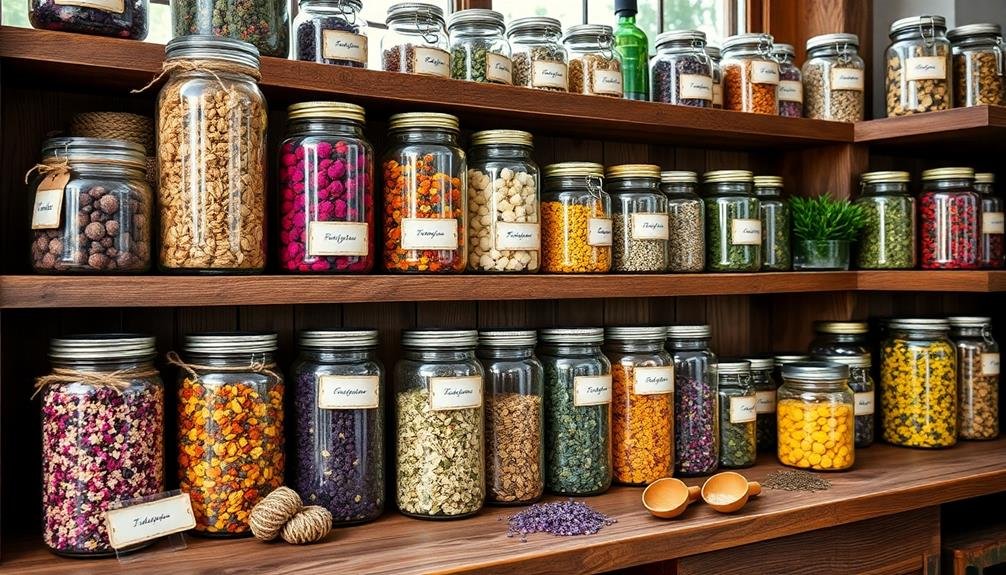
Once you've perfected your floral tea blend, proper storage and packaging are key to maintaining its quality and flavor. Keep your tea away from light, heat, moisture, and strong odors to preserve its delicate taste and aroma.
Choose airtight containers made of glass, ceramic, or metal for ideal storage. These materials won't absorb flavors or odors, ensuring your blend stays fresh.
When packaging your tea for gifts or sale, consider using:
- Resealable foil bags with zipper closures
- Decorative tins with tight-fitting lids
- Glass jars with rubber gaskets
- Biodegradable cellophane bags for eco-friendly options
- Vacuum-sealed pouches for extended shelf life
Label your packages clearly with the blend name, ingredients, and brewing instructions. Include the packaging date to track freshness. If you're selling your tea, add your brand name and contact information.
For personal use, store your blends in a cool, dark pantry or cupboard. Avoid storing tea near spices or coffee, as these can affect its flavor.
With proper storage and packaging, your floral tea blends will stay fresh and flavorful for months, allowing you to enjoy your creations long after you've made them.
Steeping Guidelines for Floral Blends
Steeping is the heart of brewing a perfect cup of floral tea. To guarantee you extract the best flavors and aromas from your floral blends, follow these guidelines.
Start with fresh, cold water and heat it to the appropriate temperature. For delicate flowers like chamomile or lavender, use water between 175-185°F (79-85°C). Heartier blends with rose or hibiscus can handle slightly hotter water, around 190-200°F (88-93°C).
Measure your tea carefully, using about 1 teaspoon of loose blend per 8 ounces of water. Place the tea in an infuser or tea bag, then pour the hot water over it. Steep for 3-5 minutes, depending on the blend and your taste preferences. Don't over-steep, as this can lead to bitterness.
Remove the tea leaves promptly after steeping. If you're making iced tea, double the amount of tea and steep for the same time, then pour over ice. For stronger brews, increase the amount of tea rather than steeping longer.
Health Benefits of Floral Teas
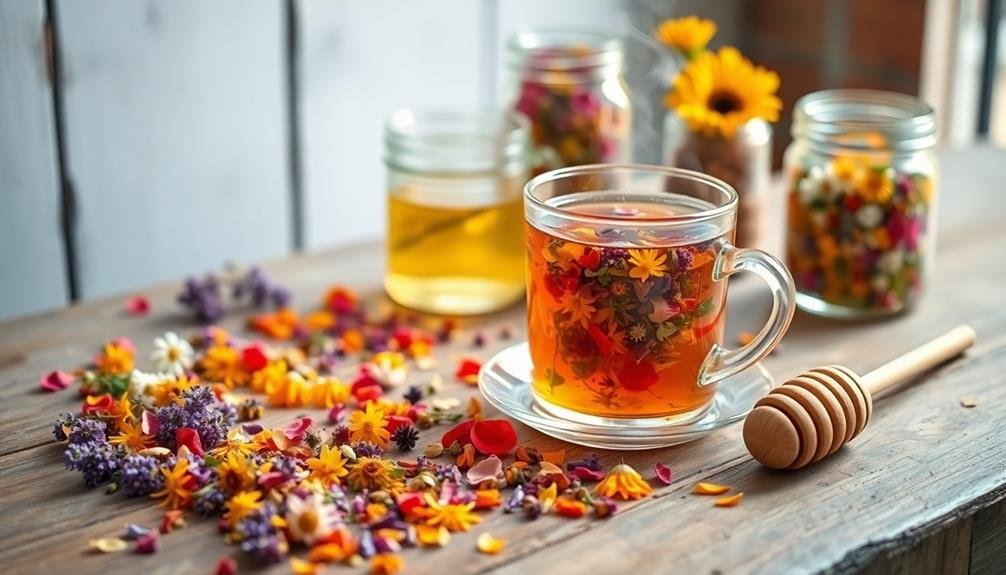
Beyond their delightful flavors and aromas, floral teas offer a range of health benefits that make them more than just a pleasant beverage. When you incorporate floral teas into your daily routine, you're not only treating your taste buds but also nurturing your body.
These natural infusions are packed with antioxidants, vitamins, and minerals that can support your overall well-being.
Here are some key health benefits you can enjoy from various floral teas:
- Chamomile: Promotes relaxation and better sleep
- Lavender: Reduces stress and anxiety
- Hibiscus: Supports heart health and may lower blood pressure
- Rose: Boosts skin health and aids digestion
- Jasmine: Enhances mood and may improve brain function
It's important to note that while these benefits are promising, they shouldn't replace medical advice or treatment.
You can experiment with different floral blends to find the ones that best suit your taste and health goals. By incorporating these teas into your lifestyle, you're taking a simple yet effective step towards improving your overall health and well-being.
Seasonal Blending Ideas
As the seasons change, so too can your floral tea blends, allowing you to create unique combinations that reflect nature's rhythms.
In spring, try mixing chamomile with fresh mint and a touch of lavender for a revitalizing blend. Add rose petals for a delicate floral note that embodies the season's renewed energy.
Summer calls for invigorating iced teas. Combine hibiscus flowers with lemongrass and a hint of jasmine for a vibrant, cooling drink.
Don't forget to experiment with fruit-infused blends, like peach and marigold or strawberry and elderflower.
As autumn arrives, embrace warming spices. Mix chrysanthemum with cinnamon, ginger, and a pinch of clove for a comforting brew.
Consider adding dried apple pieces or rosehips for a subtle fruity undertone.
Winter is perfect for rich, indulgent blends. Pair vanilla rooibos with star anise and dried orange peel for a luxurious, caffeine-free option.
For a festive touch, incorporate peppermint and cornflower petals into your black tea base.
Remember to adjust the ratios of your ingredients based on personal preference and the strength of each element.
Don't be afraid to experiment and create your own signature seasonal blends.
Frequently Asked Questions
Can I Use Fresh Flowers Instead of Dried Ones in My Tea Blends?
You can use fresh flowers in tea blends, but it's not recommended. Fresh petals can mold quickly and don't store well. Stick to dried flowers for better flavor, longer shelf life, and safer consumption in your teas.
Are There Any Flowers That Should Be Avoided in Tea Blends?
You should avoid toxic flowers like lily of the valley, oleander, and foxglove in tea blends. Be cautious with nightshades and some daisies. Always research thoroughly and consult experts before using any unfamiliar flowers in your teas.
How Long Do Homemade Floral Tea Blends Typically Stay Fresh?
Your homemade floral tea blends can stay fresh for 6-12 months if stored properly. You'll want to keep them in airtight containers, away from light and moisture. Don't forget to label them with the blend date for reference.
Can I Add Sweeteners or Other Non-Floral Ingredients to My Blends?
Yes, you can add sweeteners or non-floral ingredients to your blends. Try honey, stevia, or dried fruits for sweetness. Spices like cinnamon or ginger can add depth. Experiment with different combinations to create unique flavors you'll love.
Are There Any Potential Allergic Reactions Associated With Drinking Floral Teas?
Yes, you should be aware of potential allergic reactions to floral teas. If you're allergic to certain flowers or pollen, you might experience symptoms. It's best to consult your doctor if you have known allergies or sensitivities.
In Summary
You've now got the skills to create your own unique floral tea blends. Remember to experiment with different combinations, trust your senses, and don't be afraid to try bold flavors. Keep your blends fresh by storing them properly and always use high-quality ingredients. As you continue to practice, you'll develop your own signature blends. Enjoy the process of crafting personalized teas that'll delight your taste buds and those of your friends and family.

Leave a Reply