

Traditional Chinese tea blending techniques are rooted in centuries of practice, combining art and science to create harmonious flavors. You'll use precise tools to measure and mix high-quality tea leaves, balancing flavors and aromas while considering the principles of yin and yang. Seasonal considerations influence your blend choices, with each season calling for specific combinations. You might incorporate medicinal properties, age teas for complexity, or focus on artistic presentation. Regional variations add diversity to blending styles, while modern innovations enhance traditional methods. By mastering these techniques, you'll reveal the secrets to crafting exquisite Chinese tea blends.
Historical Roots of Tea Blending
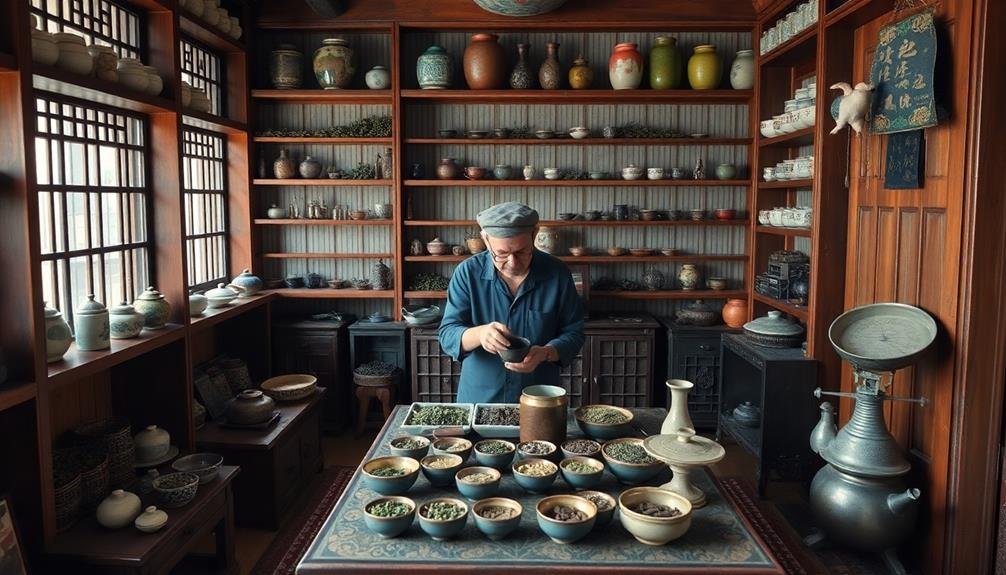
Tracing the origins of tea blending in China takes us back thousands of years. You'll find that the practice began during the Tang Dynasty (618-907 CE) when tea consumption became widespread. At this time, tea wasn't just a beverage but a form of currency and a symbol of cultural refinement.
As tea culture evolved, so did blending techniques. During the Song Dynasty (960-1279 CE), you'd see the emergence of "tribute teas," specially crafted blends for the imperial court. These blends often combined rare and expensive teas with flowers, spices, and fruits to create unique flavors.
The Ming Dynasty (1368-1644 CE) brought about a shift towards loose leaf teas, which allowed for more diverse blending possibilities. You'd notice tea masters experimenting with different combinations to achieve balance and complexity in their brews.
Essential Tools for Chinese Blending
You'll need a few key tools to start blending Chinese teas like a master.
Precise tea scales and measures are essential for accurately portioning your ingredients.
Blending bowls and sieves help you mix and refine your tea creations, ensuring a consistent and well-balanced blend.
Tea Scales and Measures
Every tea blender's toolkit must include precise scales and measuring instruments. You'll need a variety of scales to guarantee accuracy in your blending process. A digital scale with 0.1-gram precision is essential for weighing small quantities of tea leaves and herbs. For larger batches, invest in a scale that can handle up to 5 kilograms.
Don't forget about volume measurements. Traditional Chinese tea blending often uses special measuring cups called "chá liàng" or tea scoops. These come in various sizes, typically ranging from 3 to 15 grams. You'll also need graduated cylinders for measuring liquids, especially when working with flavored oils or essences.
To maintain consistency in your blends, it's vital to calibrate your scales regularly. Keep a set of calibration weights on hand for this purpose. When measuring, always use the same tools and techniques to guarantee reproducibility.
Remember that different teas have varying densities, so relying solely on volume measurements can lead to inconsistencies. By combining weight and volume measurements, you'll achieve more precise and balanced blends that showcase the true art of Chinese tea blending.
Blending Bowls and Sieves
Moving from precision in measurements to the physical act of blending, we turn our attention to the essential tools of the trade. Blending bowls and sieves are vital for creating harmonious tea mixtures in traditional Chinese tea blending.
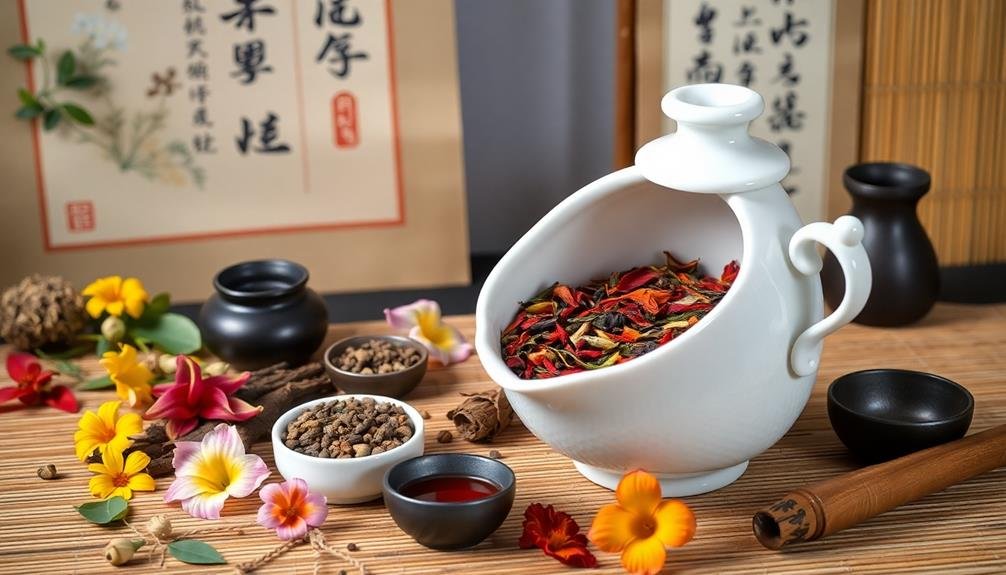
You'll find that blending bowls come in various materials, with porcelain and bamboo being the most common. Porcelain bowls are preferred for their non-reactive nature, ensuring the purity of flavors. Bamboo bowls, while more affordable, impart a subtle woody aroma that can enhance certain blends.
When it comes to sieves, you'll want to invest in a set with different mesh sizes. Fine-mesh sieves are important for removing dust and small particles, while larger-mesh sieves help separate leaves of different sizes. Stainless steel sieves are durable and easy to clean, making them a popular choice among tea blenders.
To use these tools effectively, you'll start by combining your chosen tea leaves in the blending bowl. Gently mix them with your hands or a wooden spoon, then transfer the mixture to the appropriate sieve to achieve the desired consistency and remove any unwanted elements.
Selecting Quality Tea Leaves
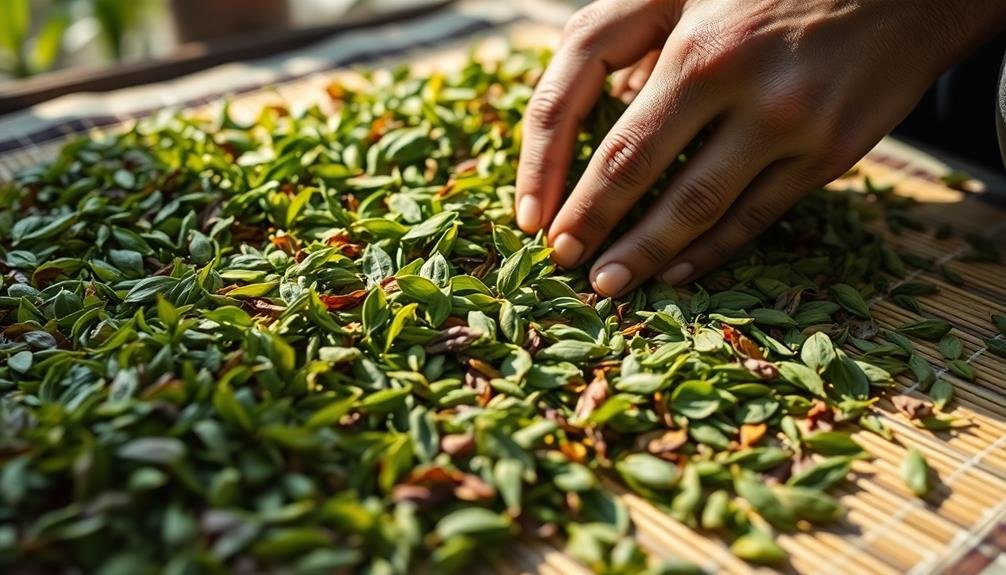
Mastering the art of selecting quality tea leaves forms the foundation of traditional Chinese tea blending. You'll need to develop a keen eye and a refined palate to choose the best leaves for your blend.
Start by examining the appearance of the leaves, looking for uniform color, shape, and size. High-quality leaves should be whole or only slightly broken, with a vibrant hue that's characteristic of their tea type.
Next, assess the aroma of the dry leaves. They should have a fresh, inviting scent that hints at their flavor profile. Avoid leaves with musty or stale odors, as these indicate poor storage or age.
When you're ready to taste, brew a small sample and evaluate the liquor's color, clarity, and flavor.
Consider these key factors when selecting tea leaves:
- Origin: Choose leaves from reputable tea-growing regions
- Harvest time: Opt for leaves picked during the ideal season
- Processing method: verify proper handling and production techniques
Harmonizing Flavors and Aromas
When blending Chinese teas, you'll need to master the art of harmonizing flavors and aromas.
Start by balancing the five tastes – sweet, sour, bitter, salty, and umami – to create a well-rounded blend.
You'll also want to explore complementary scent combinations, pairing floral notes with fruity ones or woody aromas with earthy undertones.
Balancing Five Tastes
While many tea enthusiasts focus solely on individual flavors, traditional Chinese tea blending emphasizes the harmonious balance of five distinct tastes: sweet, sour, bitter, salty, and umami. This approach guarantees a complex and well-rounded tea experience that engages your entire palate.
To achieve this balance, you'll need to carefully select and combine different tea leaves and herbs. Consider these key principles:
- Start with a base tea that provides the dominant taste.
- Add complementary ingredients to enhance or contrast the base flavor.
- Use small amounts of strong-tasting elements to create depth and complexity.
You'll find that certain ingredients naturally contribute to specific tastes. For example, green tea often provides bitterness, while chamomile adds sweetness. Citrus peel can introduce sourness, and seaweed or kelp can bring a salty umami flavor.
As you experiment with different combinations, you'll develop an intuitive understanding of how various elements interact.
Complementary Scent Combinations
Beyond the balance of tastes, traditional Chinese tea blending places great importance on complementary scent combinations. You'll find that master tea blenders carefully select and combine different tea leaves and ingredients to create harmonious aromatic profiles.
They'll often pair floral notes with fruit scents or match earthy undertones with sweet aromas. For example, you might encounter a blend that combines the delicate fragrance of jasmine with the subtle sweetness of osmanthus.
Or you'll discover a mix that pairs the fresh, grassy scent of green tea with the light, citrusy aroma of lemon peel. Some blenders even incorporate non-tea elements like dried flowers, herbs, or spices to enhance the overall bouquet.
When creating these scent combinations, blenders consider how the aromas will evolve throughout the brewing process. They'll aim for a balance that unfolds gradually, revealing different layers of fragrance as you sip.
This attention to aromatic harmony isn't just about pleasing the nose; it's an integral part of the overall tea-drinking experience, enhancing your enjoyment and appreciation of the blend's complex flavors and scents.
Balancing Yin and Yang
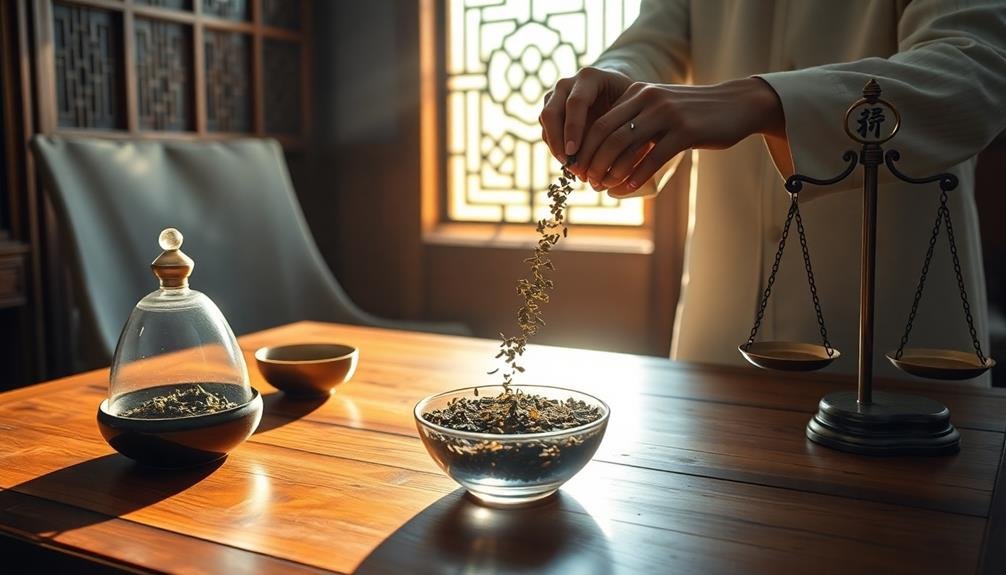
The ancient concept of yin and yang lies at the heart of traditional Chinese tea blending. When creating balanced blends, you'll need to take into account the inherent properties of each tea and herb. Yin represents cool, calming elements, while yang embodies warm, invigorating qualities. Your goal is to achieve harmony between these opposing forces.
To balance yin and yang in your tea blends, take into account these factors:
- Temperature: Combine cooling herbs like chrysanthemum or mint with warming spices such as ginger or cinnamon.
- Flavor profile: Pair bitter or astringent teas with sweet or mellow ingredients to create a well-rounded taste.
- Energy effects: Mix energizing teas like green or white with calming herbs such as chamomile or lavender.
You'll find that certain teas naturally lean towards yin or yang. For example, green tea is regarded as cooling and yin, while black tea is warming and yang.
Seasonal Blending Considerations
When blending Chinese teas, you'll want to reflect on the changing seasons and their effects on your body.
You can craft spring and autumn blends to align with nature's transformations, create warming concoctions for winter's chill, and mix cooling combinations to beat the summer heat.
These seasonal reflections will help you tailor your tea blends to provide maximum benefit and enjoyment throughout the year.
Spring and Autumn Picks
Seasonal shifts play an essential role in traditional Chinese tea blending techniques, with spring and autumn picks often forming the foundation of many prized blends.
You'll find that these two seasons produce teas with distinct characteristics, making them ideal for crafting complex and balanced blends.
Spring-picked teas are typically more delicate and aromatic, with a lighter body and fresher taste. They're prized for their subtle flavors and are often used as the base for lighter blends.
Autumn-picked teas, on the other hand, tend to have a fuller body and richer flavor profile, making them perfect for creating more robust blends.
When blending spring and autumn picks, consider these key factors:
- Flavor balance: Combine the light, floral notes of spring teas with the deeper, more robust flavors of autumn picks
- Aroma synergy: Verify the fragrances complement each other, creating a harmonious bouquet
- Texture contrast: Mix the smooth, delicate mouthfeel of spring teas with the fuller-bodied autumn leaves
Winter Warming Blends
As temperatures drop and days grow shorter, Chinese tea blenders turn their attention to crafting winter warming blends. These teas are designed to provide comfort and boost immunity during the colder months. You'll find that winter blends often feature robust black teas as their base, chosen for their full-bodied flavor and warming properties.
To create these seasonal blends, tea masters incorporate ingredients known for their warming qualities in Traditional Chinese Medicine. You might encounter ginger, which improves circulation and digestion, or cinnamon, which helps regulate blood sugar and provides a comforting aroma. Star anise and cloves are also popular additions, offering both flavor and potential health benefits.
Some winter blends include dried citrus peels, particularly tangerine or orange, which are believed to help dispel cold and dampness from the body. You'll also find teas blended with jujube dates or goji berries, both prized for their ability to nourish and strengthen the body during winter.
When crafting these blends, tea masters carefully balance the flavors to guarantee a harmonious and satisfying cup that not only warms you physically but also lifts your spirits during the long winter months.
Summer Cooling Combinations
Summer in China brings sweltering heat and humidity, prompting tea blenders to craft invigorating combinations that cool the body and soothe the spirit. Traditional Chinese medicine principles guide these blends, focusing on ingredients with cooling properties. You'll find green tea as a common base, often paired with chrysanthemum, mint, or lotus leaf for their revitalizing qualities.
When creating summer cooling combinations, consider these key factors:
- Balance of flavors: Combine bitter and sweet notes to create a harmonious blend.
- Cooling herbs: Incorporate ingredients like honeysuckle, mulberry leaf, or lemongrass.
- Yin-nourishing elements: Add goji berries or American ginseng to support the body's cooling systems.
You can also experiment with cold-brewing techniques to enhance the revitalizing qualities of these blends. Steep the tea in cold water for several hours or overnight, resulting in a smoother, less astringent flavor profile.
Don't forget to include a small amount of warm-natured herbs to prevent overcooling the body, which can lead to digestive issues. By mastering these summer cooling combinations, you'll create delightful and beneficial teas to beat the heat.
Medicinal Properties in Blends
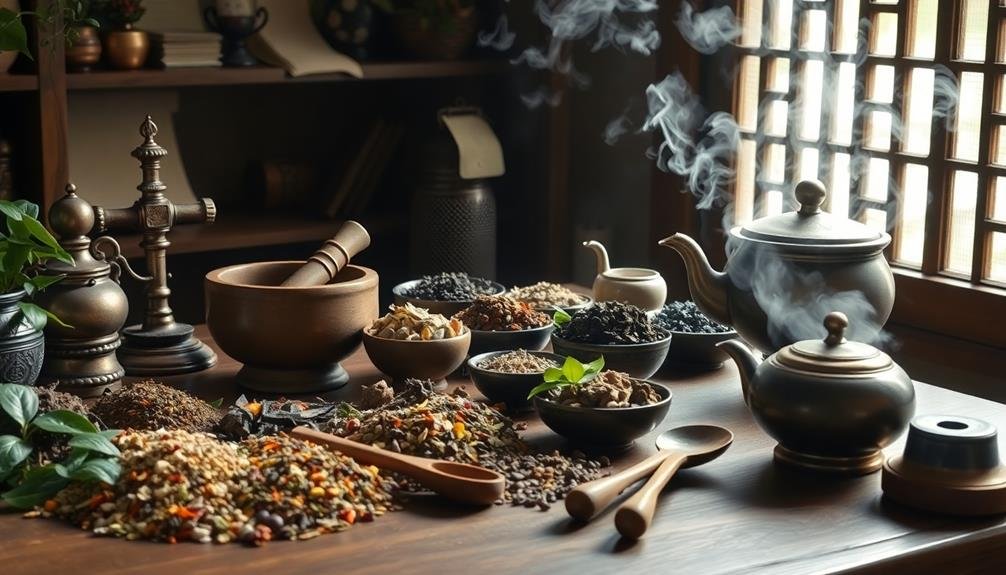
Blending traditional Chinese teas isn't just about creating delightful flavors; it's also about harnessing powerful medicinal properties. In Chinese medicine, different herbs and tea leaves are combined to address specific health concerns and promote overall well-being.
You'll find that many traditional blends incorporate ginger, which aids digestion and reduces inflammation. Chrysanthemum flowers are often added for their cooling properties and ability to soothe headaches. For respiratory issues, you might encounter blends with licorice root or peppermint leaves.
When creating medicinal tea blends, it's essential to understand the properties of each ingredient and how they interact. Some combinations can enhance the effectiveness of certain herbs, while others may counteract their benefits. For instance, blending pu-erh tea with hawthorn berries is believed to help lower cholesterol levels more effectively than either ingredient alone.
Remember that dosage is important in medicinal blends. You should consult with a trained herbalist or traditional Chinese medicine practitioner before using these teas for therapeutic purposes. They can guide you on the appropriate ratios and brewing methods to maximize the health benefits of your tea blends.
Tea Aging and Fermentation
Many traditional Chinese teas undergo aging and fermentation processes that considerably alter their flavor profiles and health benefits.
You'll find that aging can enhance a tea's complexity, smoothness, and depth of flavor. Pu-erh tea is a prime example of this practice, with some varieties aged for decades.
The fermentation process, on the other hand, involves microbial activity that transforms the tea's chemical composition, resulting in unique flavors and aromas.
When exploring aged and fermented teas, you'll notice:
- Darker colors: As teas age or ferment, they often develop deeper, richer hues.
- Earthy notes: Many aged teas acquire complex, earthy flavors reminiscent of forest floors or autumn leaves.
- Reduced astringency: The aging process can mellow out harsh tannins, creating a smoother mouthfeel.
You'll find that different teas require specific aging conditions. Some benefit from controlled humidity and temperature, while others are best aged in clay vessels or bamboo baskets.
The fermentation process can be natural or accelerated, with each method producing distinct results. By understanding these techniques, you'll gain a deeper appreciation for the intricate world of Chinese tea blending.
Artistic Presentation of Blends
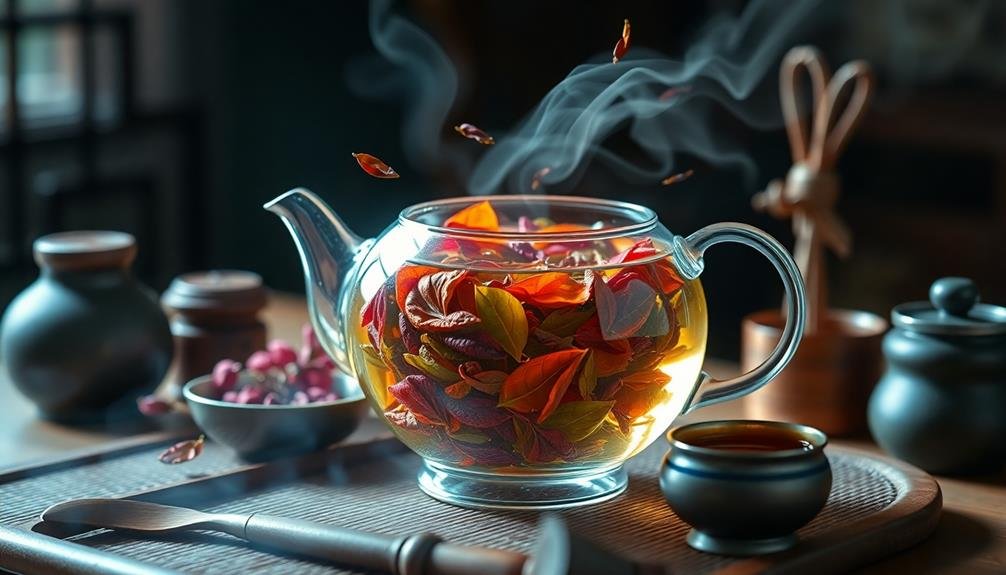
Beyond the art of blending and aging teas, Chinese tea culture places great importance on the visual presentation of tea blends. You'll find that the aesthetic appeal of a tea blend is considered an essential part of the overall tea experience.
When presenting tea blends, you'll often see artful arrangements of tea leaves, flowers, and other ingredients. These compositions aren't just visually pleasing; they're also designed to enhance the aroma and flavor of the tea. You might encounter:
| Presentation Style | Description |
|---|---|
| Layered Blends | Ingredients arranged in distinct layers |
| Floral Patterns | Tea leaves and flowers arranged in intricate designs |
| Seasonal Themes | Blends reflecting the current season |
| Color Harmony | Carefully balanced color combinations |
To fully appreciate the artistic presentation, you'll want to use clear glass teapots or gaiwans. This allows you to observe the unfolding of the blend as it steeps, creating a visually engaging experience. Remember, the presentation isn't just for show; it's meant to heighten your anticipation and enjoyment of the tea's flavors and aromas.
Regional Blending Variations
While traditional Chinese tea blending techniques share common foundations, you'll find distinct regional variations across China. These differences reflect local tastes, available ingredients, and cultural influences.
In the south, Fujian province is known for its floral and fruit-infused oolong blends, often combining tea leaves with osmanthus or lychee. Yunnan, famous for pu-erh tea, creates unique blends using local herbs and spices like ginger and Sichuan pepper.
In contrast, northern regions tend to favor stronger, more robust blends. Beijing's jasmine tea is a prime example, with its intense floral aroma.
You'll also encounter regional variations in blending ratios and processing methods. Some areas focus on:
- Dry blending: Mixing different tea leaves and ingredients before brewing
- Wet blending: Combining teas during the brewing process
- Aging blends: Allowing mixed teas to mature together for enhanced flavor
These regional differences contribute to China's rich tea culture, offering a diverse array of flavors and experiences.
As you explore Chinese tea blends, you'll discover how each region's unique approach reflects its history, climate, and local preferences.
Modern Innovations in Tradition
Traditional Chinese tea blending techniques have evolved with the times, incorporating modern innovations while respecting age-old practices. You'll find that today's tea masters are using advanced equipment and scientific methods to refine their blends. They're experimenting with temperature-controlled oxidation chambers and precision scales to achieve consistent results.
Modern blending also embraces fusion, combining traditional Chinese teas with international flavors. You might encounter blends that incorporate herbs, fruits, or even flowers from other parts of the world. These innovations have expanded the palette of flavors available to tea enthusiasts.
Here's a comparison of traditional and modern blending techniques:
| Aspect | Traditional | Modern |
|---|---|---|
| Tools | Manual | Automated |
| Oxidation | Natural | Controlled |
| Blending | By hand | Machine-assisted |
| Ingredients | Local | Global |
| Precision | Experience-based | Measured |
Despite these advancements, many tea artisans still value hand-crafting and sensory evaluation. They're finding ways to balance technology with tradition, using modern tools to enhance rather than replace time-honored methods. This fusion of old and new guarantees that Chinese tea blending continues to evolve while maintaining its rich cultural heritage.
Frequently Asked Questions
How Long Does It Take to Master Traditional Chinese Tea Blending Techniques?
You'll need years of dedicated practice to master traditional Chinese tea blending techniques. It's not just about mixing leaves; you're learning complex flavor profiles, cultural traditions, and precise methods. Expect at least 5-10 years of intensive study.
Are There Any Dangerous or Toxic Ingredients Used in Chinese Tea Blends?
You'll find most traditional Chinese tea blends are safe, but be cautious. Some herbs can be toxic if misused. It's best to stick with reputable sources and consult experts if you're unsure about specific ingredients.
Can Chinese Tea Blending Techniques Be Applied to Non-Tea Beverages?
You can apply Chinese tea blending techniques to non-tea beverages. You'll find they work well with herbal infusions, fruit drinks, and even cocktails. Try balancing flavors, considering health benefits, and experimenting with unique ingredient combinations.
What Certifications or Training Programs Exist for Chinese Tea Blending?
You'll find various certifications for Chinese tea blending, including courses from tea academies and institutes. You can pursue programs like the Certified Tea Blender or Tea Sommelier certification. Online and in-person options are available for aspiring tea artisans.
How Do Chinese Tea Blends Compare to Those From Other Cultures?
You'll find Chinese tea blends often focus on balanced flavors and health benefits. They're typically more subtle than Western blends, using fewer ingredients. Unlike Indian blends, they rarely include milk or spices as standard additions.
In Summary
You've now explored the rich world of traditional Chinese tea blending. From ancient techniques to modern innovations, you've learned how to select, harmonize, and balance flavors. You've discovered the importance of yin and yang, aging, and artistic presentation. Remember, tea blending is both an art and a science. As you experiment with your own blends, don't forget to honor the regional variations and time-honored methods that make Chinese tea culture so unique.

Leave a Reply