

When exploring medicinal herb tastes to create custom tea blends, you'll discover a rich palette of flavors and health benefits. Start by understanding the five major flavor categories: sweet, bitter, pungent, sour, and astringent. Each category offers unique properties, from the digestive support of bitter dandelion root to the soothing sweetness of chamomile. Experiment with complementary and contrasting tastes, balancing intense flavors like ginger with milder herbs like lemon balm. Consider seasonal elements and your personal preferences when crafting blends. By keeping a tasting journal and trying unexpected combinations, you'll reveal the potential for delightful, personalized tea experiences that nourish both body and soul.
Understanding Herbal Flavor Categories
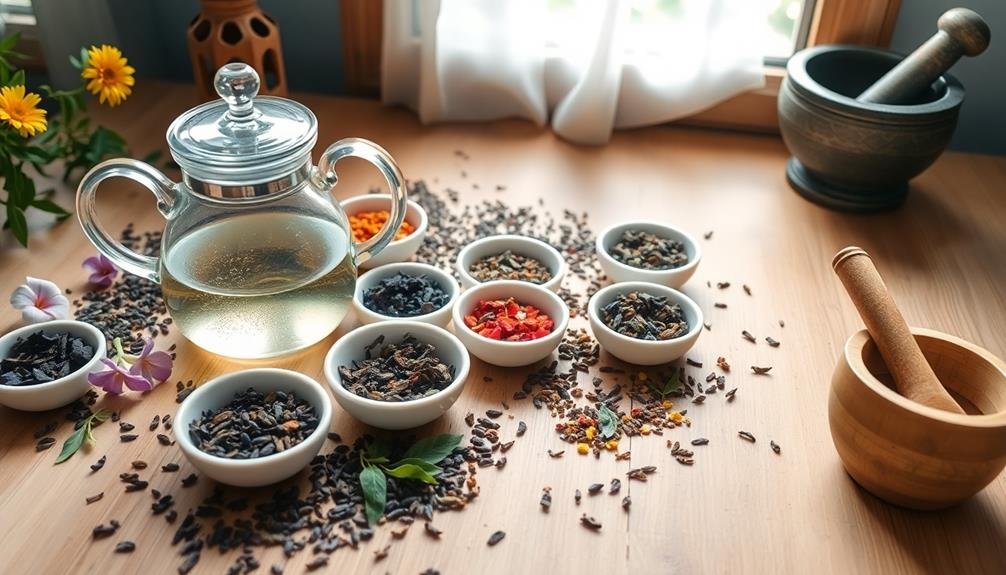
Countless herbs and botanicals can be used in tea blending, each with its own unique flavor profile. To create balanced and appealing custom tea blends, it's crucial to understand the major herbal flavor categories. These include sweet, bitter, pungent, sour, and astringent tastes.
Sweet herbs like licorice root, stevia, and cinnamon add a pleasant, sometimes sugary note to your blend. Bitter herbs such as dandelion root or milk thistle can provide depth and complexity. Pungent herbs like ginger, peppermint, or rosemary offer a spicy or cooling sensation. Sour flavors from hibiscus or lemon balm add a tangy twist. Astringent herbs like green tea or raspberry leaf create a dry, mouth-puckering effect.
When crafting your blend, aim for a harmonious balance of flavors. Start with a base herb, then add complementary tastes. For example, combine chamomile (sweet) with lemon balm (sour) and a touch of peppermint (pungent).
Remember that some herbs have multiple flavor profiles, so experiment to find combinations you enjoy. By understanding these flavor categories, you'll be able to create more nuanced and satisfying tea blends.
Bitter Herbs and Their Benefits
Bitter herbs play an essential role in custom tea blends, offering more than just a distinctive taste. They're known for their powerful medicinal properties and ability to stimulate digestion. When you incorporate bitter herbs into your tea blends, you're not only adding complexity to the flavor profile but also boosting your health.
Some common bitter herbs you can use in your tea blends include dandelion root, gentian, and chamomile. These herbs contain compounds that can support liver function, reduce inflammation, and aid in detoxification.
While the taste may be challenging for some, you'll find that combining bitter herbs with sweeter or aromatic ingredients can create a balanced and enjoyable blend.
Here are three key benefits of including bitter herbs in your custom tea blends:
- Improved digestion and appetite stimulation
- Enhanced liver function and detoxification
- Potential anti-inflammatory and antioxidant effects
When experimenting with bitter herbs, start with small amounts and gradually increase to suit your taste preferences.
You'll discover that these potent ingredients can transform your tea blends into both flavorful and health-promoting concoctions.
Sweet Herbs for Balance
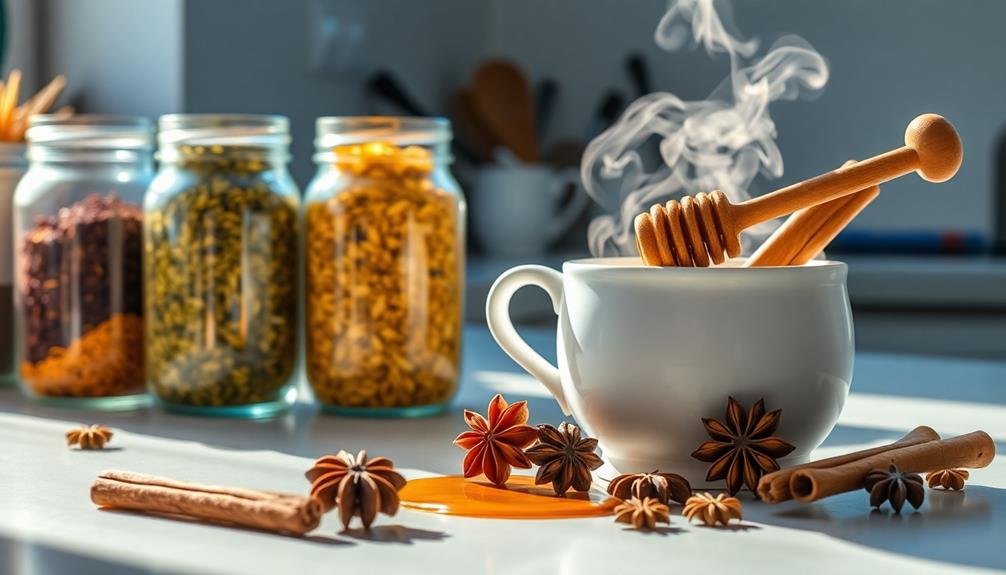
Sweet herbs serve as a perfect counterbalance to bitter elements in your custom tea blends. They not only improve taste but also offer various health benefits.
Consider incorporating licorice root, which adds natural sweetness and supports digestive health. Stevia leaves are another excellent option, providing sweetness without calories and potentially helping to regulate blood sugar levels.
Don't overlook the power of cinnamon in your blends. It's not only sweet but also helps reduce inflammation and may lower blood sugar.
Fennel seeds offer a subtle sweetness with a hint of licorice flavor, aiding digestion and freshening breath. For a floral touch, try chamomile or lavender. They're mildly sweet and promote relaxation.
When creating your custom blend, start with a small amount of sweet herbs and adjust to taste. Remember that some, like licorice root, can be quite potent.
Experiment with different combinations to find your perfect balance. You might pair sweet herbs with bitter ones or mix them with aromatic herbs for a more complex flavor profile.
Always research potential interactions or contraindications, especially if you're taking medications or have health conditions.
Pungent Herbs in Tea Blends
When crafting your custom tea blend, you'll find pungent herbs can add a kick of warmth and stimulation.
You'll need to carefully balance these strong flavors to avoid overpowering your blend.
Popular pungent herbs for tea include ginger, cinnamon, and peppermint, each offering unique aromatic qualities and potential health benefits.
Warming and Stimulating Effects
Throughout history, pungent herbs have played an essential role in tea blends, offering both warming and stimulating effects. These herbs can invigorate your senses, boost circulation, and provide a natural energy lift. When you're crafting custom tea blends, consider incorporating pungent herbs to create a warming and stimulating experience.
Some popular pungent herbs known for their warming and stimulating properties include ginger, cinnamon, and black pepper. These herbs can help increase your body's internal heat, promote sweating, and enhance overall liveliness.
You'll find that pungent herbs often have a spicy or sharp taste, which can add depth and complexity to your tea blends.
To make the most of these warming and stimulating herbs, try:
- Combining ginger and cinnamon for a spicy chai-inspired blend
- Adding a pinch of black pepper to green tea for a metabolism boost
- Mixing cayenne with hibiscus for a tangy, invigorating brew
Balancing Pungent Flavors
While pungent herbs can add a delightful kick to your tea blends, it's crucial to balance their strong flavors with other ingredients. Pungent herbs like ginger, pepper, and cinnamon can overwhelm milder flavors if used in excess. To create a harmonious blend, start with small amounts of these potent herbs and gradually increase until you achieve the desired intensity.
Consider pairing pungent herbs with sweeter or more mellow ingredients to soften their impact. For example, combine ginger with chamomile or lemon balm to create a soothing yet invigorating blend. Alternatively, mix cinnamon with licorice root or fennel to balance its warmth with natural sweetness.
Don't forget about the power of aromatics when working with pungent herbs. Ingredients like lavender, rose petals, or mint can provide a pleasant counterpoint to stronger flavors. Experiment with different ratios to find the perfect balance that suits your taste preferences.
When blending pungent herbs, remember that steeping time can greatly affect the final flavor. Shorter steeping times may result in a milder taste, while longer steeps can intensify the pungency. Adjust your brewing method accordingly to achieve the desired balance in your custom tea blend.
Popular Pungent Tea Herbs
Now that you understand how to balance pungent flavors, let's explore some popular pungent herbs used in tea blends.
Ginger is a widely-loved pungent herb, known for its spicy and warming qualities. It's often used to aid digestion and reduce nausea.
Peppermint, with its cooling and invigorating taste, is another favorite. It's excellent for freshening breath and soothing upset stomachs.
Cinnamon, with its sweet and spicy notes, adds warmth to blends and may help regulate blood sugar levels.
Other popular pungent herbs include:
- Turmeric: Known for its anti-inflammatory properties and earthy flavor
- Rosemary: Offers a pine-like taste and may improve memory and concentration
- Clove: Provides a strong, warm flavor and potential antimicrobial benefits
When incorporating these herbs into your tea blends, remember to start with small amounts and adjust to taste.
You can combine them with milder herbs or fruits to create balanced and flavorful teas.
Experiment with different combinations to find your perfect pungent tea blend.
Don't forget to reflect on the potential health benefits of these herbs when crafting your custom teas.
Sour Herbs and Digestive Support
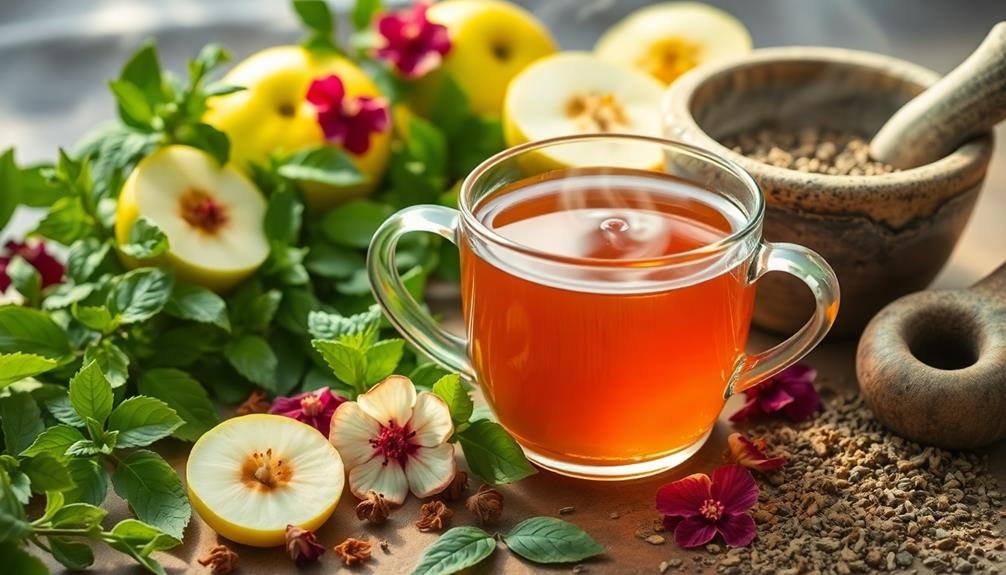
For those seeking digestive relief, sour herbs can be a game-changer in custom tea blends. These herbs stimulate digestive juices, supporting healthy digestion and nutrient absorption.
You'll find that sour flavors often come from organic acids, which can help balance your body's pH levels.
Hibiscus is a popular sour herb, known for its vibrant red color and tart taste. It's rich in vitamin C and may help lower blood pressure.
Lemon balm, another sour option, can soothe an upset stomach and reduce bloating. Rose hips, packed with antioxidants, offer a tangy flavor while supporting immune function.
When creating your blend, consider combining sour herbs with aromatic or bitter ones for a well-rounded taste.
Start with small amounts of sour herbs, as their strong flavors can easily overpower other ingredients.
You might pair hibiscus with mint for an invigorating digestive tea, or mix lemon balm with chamomile for a calming blend that also supports digestion.
Astringent Herbs for Toning
Astringent herbs can play a key role in your custom tea blends, offering a toning effect on tissues and organs.
You'll find common astringent varieties like blackberry leaf, oak bark, and witch hazel, each bringing unique flavors and benefits to your blend.
When incorporating these potent herbs, you'll need to carefully balance their astringency with other ingredients to create a harmonious and palatable tea.
Common Astringent Herb Varieties
When it comes to creating custom tea blends with toning properties, astringent herbs play a crucial role. These herbs contain tannins, which give them their characteristic drying effect on tissues. Some common astringent herbs you can incorporate into your tea blends include blackberry leaf, raspberry leaf, and white oak bark.
Blackberry leaf offers a mild astringent flavor and is often used to support digestive health. Raspberry leaf, known for its uterine toning properties, has a slightly sweet taste that balances well with other herbs. White oak bark provides a strong astringent effect and is traditionally used for skin and oral health.
Other popular astringent herbs for custom tea blends include:
- Yarrow: Known for its ability to support circulation and digestion
- Sage: Valued for its throat-soothing properties and menopausal support
- Green tea: Rich in antioxidants and offering a gentle astringency
When blending these herbs, remember to start with small amounts and adjust to your taste preferences.
You can combine astringent herbs with aromatic or bitter herbs to create a well-rounded flavor profile in your custom tea blend. Experiment with different ratios to find the perfect balance for your palate and health goals.
Balancing Astringency in Blends
While astringent herbs offer valuable toning properties, it's important to strike the right balance in your custom tea blends. Too much astringency can make your tea unpalatable and harsh on the palate. To achieve a harmonious blend, start by using small amounts of astringent herbs and gradually increase as needed.
Consider pairing astringent herbs with smoother, more palatable ingredients. For example, combine raspberry leaf with chamomile or lemon balm to soften its astringent qualities. You can also add a touch of licorice root or stevia to counteract the drying effect of astringent herbs.
Experiment with different ratios to find the perfect balance. A general rule of thumb is to use no more than 25% astringent herbs in your blend. Pay attention to steeping times, as over-steeping can intensify astringency. For a milder taste, try cold brewing your tea blend.
Remember that personal preference plays a significant role in determining the ideal astringency level. What tastes balanced to one person may be too strong for another. Don't be afraid to adjust your blend until you achieve the desired flavor profile and therapeutic benefits.
Aromatic Herbs and Essential Oils
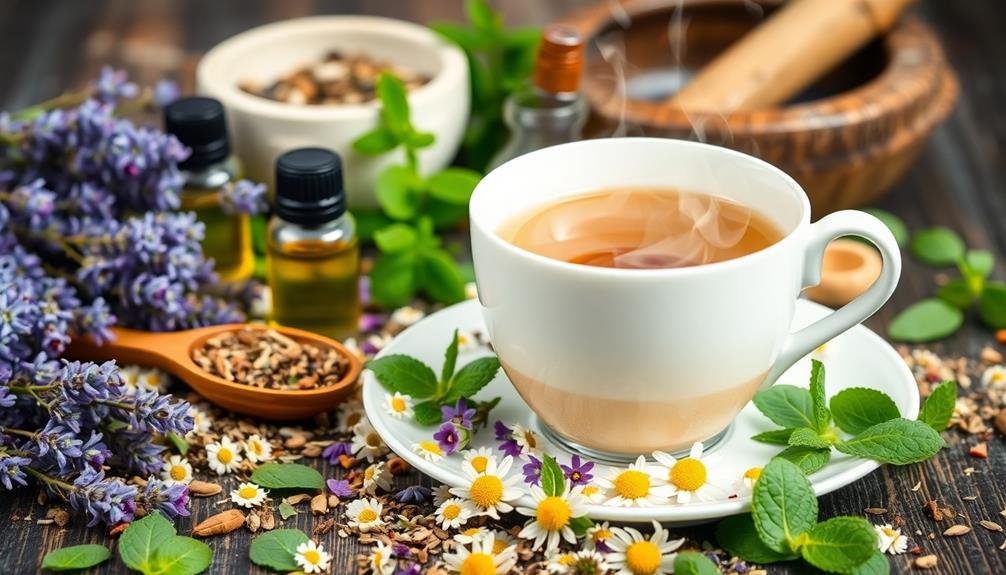
Aromatic herbs and essential oils are the secret weapons in creating enchanting custom tea blends. These fragrant additions can transform an ordinary tea into a sensory experience, elevating both flavor and aroma.
When selecting aromatic herbs, consider their intensity and how they'll complement your base tea. Lavender, mint, and chamomile are popular choices, but don't hesitate to experiment with less common options like lemon verbena or rose petals.
Essential oils offer a concentrated burst of flavor and aroma, but use them sparingly. A single drop can dramatically alter your blend's profile. Always verify you're using food-grade essential oils and mix them thoroughly into your dry ingredients.
To create harmonious blends with aromatic herbs and essential oils:
- Start with a small amount and gradually increase to find the perfect balance.
- Consider the therapeutic properties of your chosen aromatics to enhance your tea's benefits.
- Experiment with unexpected combinations, like pairing floral notes with spicy or citrusy elements.
Cooling Herbs for Refreshment
Immerse yourself in the world of cooling herbs to create revitalizing custom tea blends that'll quench your thirst and invigorate your senses. These invigorating herbs offer a natural way to beat the heat and provide a soothing effect on your body.
Start with peppermint, a classic cooling herb known for its crisp flavor and ability to aid digestion. Combine it with spearmint for a more complex minty profile.
Add lemon balm to introduce a subtle citrusy note while promoting relaxation. For a unique twist, try incorporating holy basil, which offers a slightly spicy coolness and adaptogenic properties.
Don't overlook the cooling power of hibiscus, which not only adds a tart, berry-like flavor but also helps lower body temperature. Pair it with rosehips for an extra vitamin C boost.
Chrysanthemum flowers provide a delicate, sweet coolness that complements other herbs beautifully. For a more intense cooling sensation, experiment with small amounts of licorice root or fennel.
When blending these herbs, consider their individual strengths and how they'll interact. Start with small batches, adjusting proportions until you find your perfect invigorating blend.
Warming Herbs for Comfort
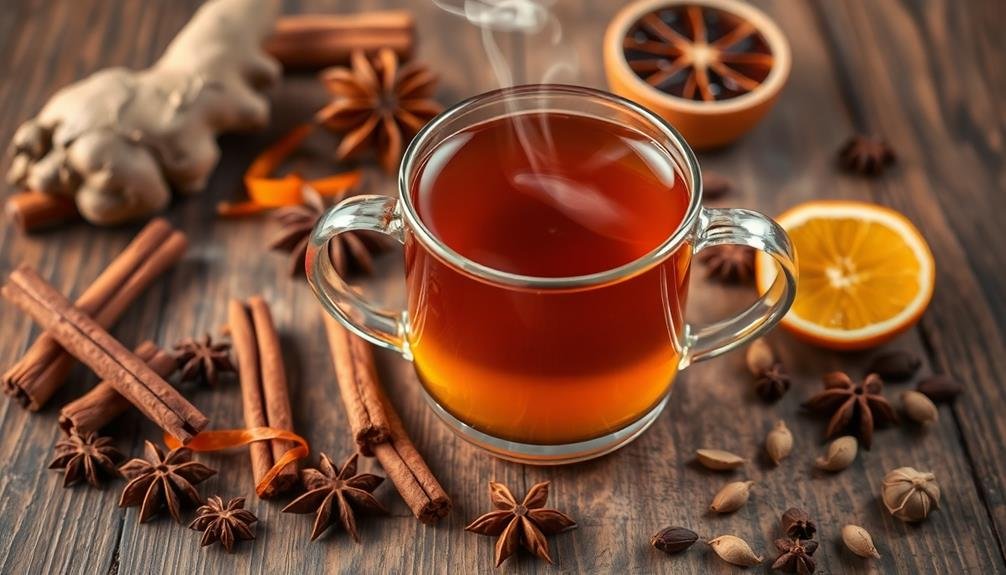
As temperatures drop, you'll want to cozy up with warming herbs that provide comfort and nourishment. These herbs can help increase circulation, boost metabolism, and promote a sense of well-being during colder months.
Ginger, cinnamon, and cardamom are excellent warming spices that can be easily incorporated into your custom tea blends.
Ginger root, with its spicy and pungent flavor, is known for its ability to warm the body from the inside out. It's also great for aiding digestion and reducing inflammation.
Cinnamon bark offers a sweet and woody taste while helping to regulate blood sugar levels and improve circulation.
Cardamom pods bring a unique, aromatic flavor to your blend and can help soothe the respiratory system.
To create your own warming tea blend, try these combinations:
- Ginger, cinnamon, and black tea for a spicy chai-like experience
- Cardamom, vanilla, and rooibos for a sweet and comforting blend
- Cinnamon, star anise, and oolong for a complex, warming flavor profile
Experiment with different ratios and add other warming herbs like cloves, black pepper, or turmeric to find your perfect comforting blend.
Balancing Flavors in Tea Blends
When crafting your custom tea blend, consider pairing complementary herbs to create a balanced flavor profile.
You'll want to match sweet and bitter elements carefully, ensuring neither overpowers the other.
Experiment with combinations like chamomile and lemon balm or peppermint and licorice root to achieve a harmonious taste in your unique blend.
Complementary Herb Pairings
Creating a harmonious tea blend is an art that relies on understanding complementary herb pairings. When you're crafting your custom blend, think about how different herbs interact to create a balanced and flavorful experience. Some herbs naturally complement each other, enhancing their individual tastes and therapeutic properties.
For example, chamomile pairs well with lavender, creating a soothing and relaxing blend. Peppermint and spearmint combine for a revitalizing and invigorating mix, while ginger and lemon balance each other's strong flavors. Don't be afraid to experiment with unexpected combinations, such as rosemary and lemongrass or hibiscus and elderberry.
To help you get started with complementary herb pairings, here are three classic combinations:
- Licorice root and fennel seeds: A sweet and aromatic blend that supports digestion
- Nettle and red raspberry leaf: A nutrient-rich combination with a mild, earthy flavor
- Tulsi (holy basil) and lemon balm: An adaptogenic blend that promotes calm and focus
Remember to think about the therapeutic properties of each herb when creating your blends. By combining herbs with similar or complementary effects, you can create teas that not only taste great but also support your health and well-being.
Sweet and Bitter Harmonization
The delicate dance of sweet and bitter flavors forms the backbone of a well-balanced tea blend. When you're crafting your custom blend, consider how these opposing tastes can complement each other. Sweet herbs like licorice root or stevia can soften the sharp edges of bitter herbs, creating a more palatable experience.
To harmonize sweet and bitter flavors, start by identifying the primary taste of your base herb. Then, select complementary herbs that'll balance the blend. For instance, if you're using a bitter herb like dandelion root, pair it with sweet chamomile or fennel. This balance not only improves taste but can also enhance the blend's medicinal properties.
Here's a quick reference guide for harmonizing sweet and bitter herbs:
| Bitter Herb | Sweet Herb | Balanced Blend |
|---|---|---|
| Dandelion | Licorice | Digestive Tonic |
| Gentian | Cinnamon | Appetite Stimulant |
| Chicory | Stevia | Coffee Alternative |
| Yarrow | Fennel | Fever Reducer |
| Artichoke | Peppermint | Liver Support |
Seasonal Considerations for Blending
Tea blending's seasonal aspects offer unique opportunities to create timely and appealing flavors. As you craft your custom tea blends, contemplate the changing weather and its impact on your body's needs.
In winter, you might focus on warming spices like cinnamon and ginger to boost circulation and provide comfort. Spring calls for light, floral notes that reflect the season's renewal, such as chamomile or lavender. Summer blends can incorporate cooling herbs like mint or lemon balm to help beat the heat.
When selecting herbs for your seasonal blends, keep these factors in mind:
- Availability of fresh, local ingredients
- Traditional medicinal uses associated with each season
- Flavor profiles that complement seasonal foods and activities
Don't forget to contemplate the emotional aspects of each season. Autumn might inspire you to create cozy blends with notes of vanilla or nutmeg, while summer could call for bright, citrusy flavors.
Complementary and Contrasting Tastes
Understanding complementary and contrasting tastes is essential when crafting custom tea blends. You'll want to balance flavors that work well together while also incorporating contrasts to create depth and interest. Consider pairing sweet herbs with slightly bitter ones or combining floral notes with earthy undertones. For example, chamomile's sweet, apple-like flavor complements the light bitterness of lemon balm, while lavender's floral notes contrast nicely with the earthiness of rooibos.
To help you get started, here's a table of common herb pairings:
| Herb | Complementary | Contrasting |
|---|---|---|
| Peppermint | Chamomile | Ginger |
| Lemon Balm | Lavender | Licorice Root |
| Hibiscus | Rosehips | Spearmint |
| Elderberry | Echinacea | Cinnamon |
| Nettle | Dandelion Root | Orange Peel |
When experimenting with these combinations, start with small batches and adjust ratios to suit your taste preferences. Don't be afraid to try unexpected pairings – you might discover a unique blend that becomes your new favorite. Remember, the art of tea blending is all about finding harmonious combinations that delight your senses and support your health goals.
Experimenting With Flavor Combinations
Experimenting with flavor combinations is the heart of creating custom tea blends. It's where your creativity shines and your palate guides you. Start by selecting a base herb or tea, then gradually add complementary or contrasting flavors. You'll want to evaluate the strength of each ingredient and how they interact.
Don't be afraid to mix unexpected elements – sometimes the most surprising combinations yield the most delightful results.
Keep a tasting journal to track your experiments and refine your blends. Note the proportions, steeping times, and your impressions of each creation. This record will help you replicate successful blends and learn from less appealing ones. Remember, personal taste varies, so what you love mightn't appeal to everyone.
To get started with your flavor experiments:
- Choose three herbs with distinct flavor profiles (e.g., chamomile, peppermint, and ginger)
- Create different ratios of these herbs (e.g., 2:1:1, 1:2:1, 1:1:2)
- Steep each blend and compare the tastes
As you gain confidence, expand your ingredient list and try more complex combinations. You'll soon develop a knack for predicting how flavors will meld and create truly unique, personalized tea blends.
Frequently Asked Questions
How Long Should I Steep Different Herbs for Optimal Flavor Extraction?
You'll want to steep different herbs for varying times. Delicate herbs like mint need just 3-5 minutes, while robust roots like ginger require 10-15 minutes. Experiment to find your preferred strength, but don't over-steep to avoid bitterness.
Are There Any Herbs That Should Not Be Mixed in Tea Blends?
You shouldn't mix certain herbs in tea blends. Avoid combining St. John's Wort with antidepressants, licorice root with blood pressure medications, or ginkgo biloba with blood thinners. Always research potential interactions before blending medicinal herbs.
Can I Use Fresh Herbs Instead of Dried Ones in My Tea Blends?
You can use fresh herbs in your tea blends. They'll provide a more vibrant flavor, but you'll need to use more of them compared to dried herbs. Be sure to wash fresh herbs thoroughly before steeping.
How Do I Properly Store My Herbal Tea Blends to Maintain Freshness?
To keep your herbal tea blends fresh, store them in airtight containers away from light, heat, and moisture. You'll want to use dark glass or opaque containers. Don't forget to label and date them for easy tracking.
Are There Any Potential Side Effects or Interactions When Combining Certain Medicinal Herbs?
Yes, combining certain medicinal herbs can lead to side effects or interactions. You'll need to research each herb carefully and consult a healthcare professional. Don't mix herbs with medications without expert advice. Always prioritize safety when blending.
In Summary
You've now explored the world of medicinal herb flavors and learned how to create custom tea blends. By understanding the different taste categories and their benefits, you're equipped to balance flavors, consider seasonal factors, and experiment with combinations. Don't be afraid to try new pairings and adjust to your preferences. With practice, you'll develop a knack for crafting delicious, health-supporting herbal teas tailored to your needs and tastes.


Leave a Reply