
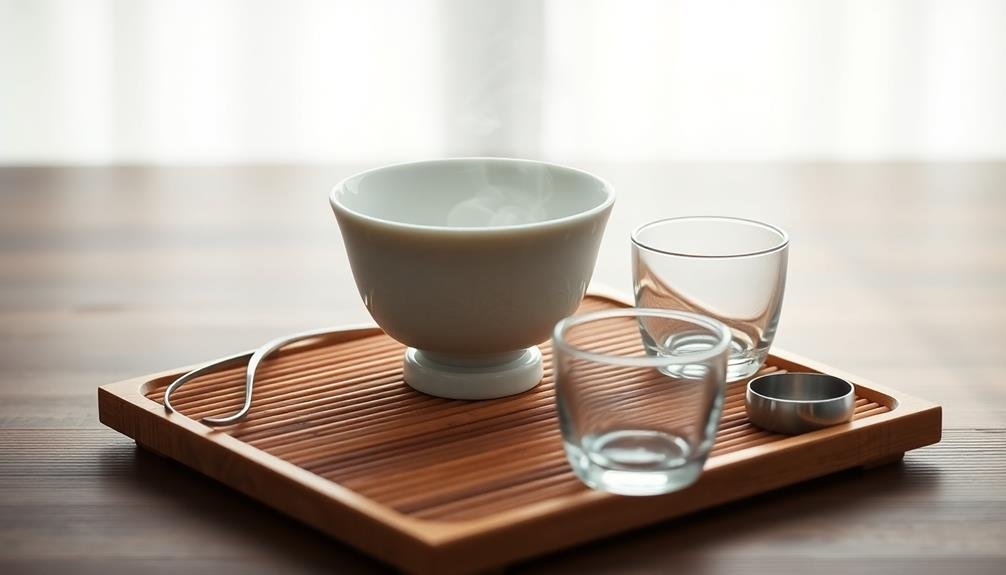
Simplifying your tea ritual with minimalist tools allows you to focus on the essence of tea appreciation. By decluttering your tea space and prioritizing quality over quantity, you'll enhance mindfulness during preparation. Eco-friendly equipment and sustainable accessories reduce waste while improving your brewing experience. You'll savor each sip more fully, engaging all your senses in the process. Minimalist practices help you create a calming moment, transforming your tea time into a form of meditation. By stripping away excess, you'll cultivate a deeper connection with your tea and the ritual itself. Discover how less can truly lead to more in your tea journey.
Essence of Minimalist Tea Rituals
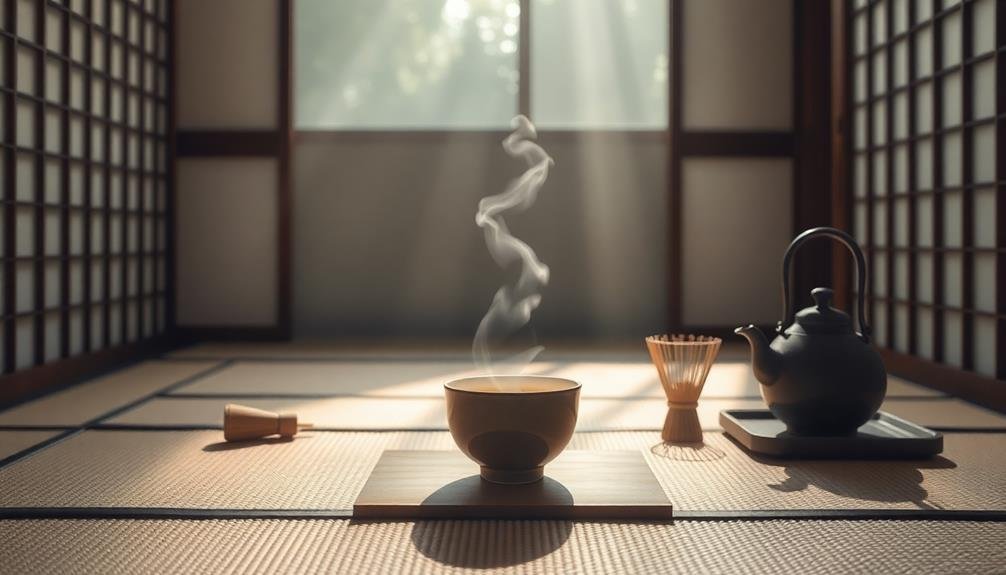
At the heart of minimalist tea rituals lies a focus on simplicity and mindfulness. By stripping away unnecessary elements, you're able to concentrate on the essential aspects of tea preparation and consumption. This approach allows you to fully appreciate the nuances of flavor, aroma, and texture that each cup offers.
Minimalist tea rituals emphasize quality over quantity. You'll find that using fewer, carefully chosen tools can enhance your tea experience. A simple teapot, a cup, and high-quality loose-leaf tea are often all you need. This reduction in equipment not only declutters your space but also streamlines your process, making it easier to maintain consistency in your brewing.
The essence of minimalist tea rituals extends beyond physical tools. It's about cultivating a mindset of presence and intention. As you brew and sip your tea, you're encouraged to focus on the present moment, savoring each step of the process.
This practice can become a form of meditation, offering a calm respite from the chaos of daily life. By embracing minimalism in your tea ritual, you're not just simplifying your routine; you're elevating your entire tea experience.
Eco-Friendly Brewing Equipment
When choosing eco-friendly brewing equipment, you'll want to prioritize sustainable materials like glass, stainless steel, or bamboo.
You can greatly reduce your environmental impact by opting for reusable filters and strainers instead of disposable tea bags.
Sustainable Materials Matter
How can you make your tea ritual more environmentally friendly? Start by choosing brewing equipment made from sustainable materials. Opt for teapots, cups, and infusers crafted from bamboo, glass, or stainless steel. These materials are durable, long-lasting, and have a lower environmental impact than plastic alternatives.
Consider investing in a ceramic teapot, which not only retains heat well but also doesn't impart any unwanted flavors to your tea. For infusers, look for stainless steel mesh options that are reusable and easy to clean. Glass teacups are another excellent choice, as they're recyclable and don't absorb odors or stains.
When selecting tea, choose loose leaf varieties packaged in compostable or recyclable materials. This reduces waste from individual tea bags and their packaging. If you prefer bagged tea, opt for brands that use biodegradable or compostable tea bags without plastic components.
Don't forget about your water source. Use a water filter to improve taste and reduce the need for bottled water.
Reduce Single-Use Waste
Reducing single-use waste in your tea ritual starts with smart choices in brewing equipment. Opt for reusable tea filters or infusers instead of disposable tea bags. Stainless steel mesh infusers are durable and easy to clean, while cloth tea filters offer a biodegradable alternative. These options allow you to enjoy loose leaf teas without creating unnecessary waste.
Invest in a high-quality electric kettle or stovetop kettle that'll last for years, reducing the need for frequent replacements. Choose glass, ceramic, or stainless steel teapots and cups instead of plastic ones, as they're more durable and don't leach harmful chemicals into your tea.
For on-the-go brewing, use a travel mug with a built-in infuser. This eliminates the need for disposable cups and allows you to enjoy freshly brewed tea wherever you are.
When purchasing tea, look for brands that use minimal, recyclable packaging or offer bulk options to further reduce waste.
Decluttering Your Tea Space
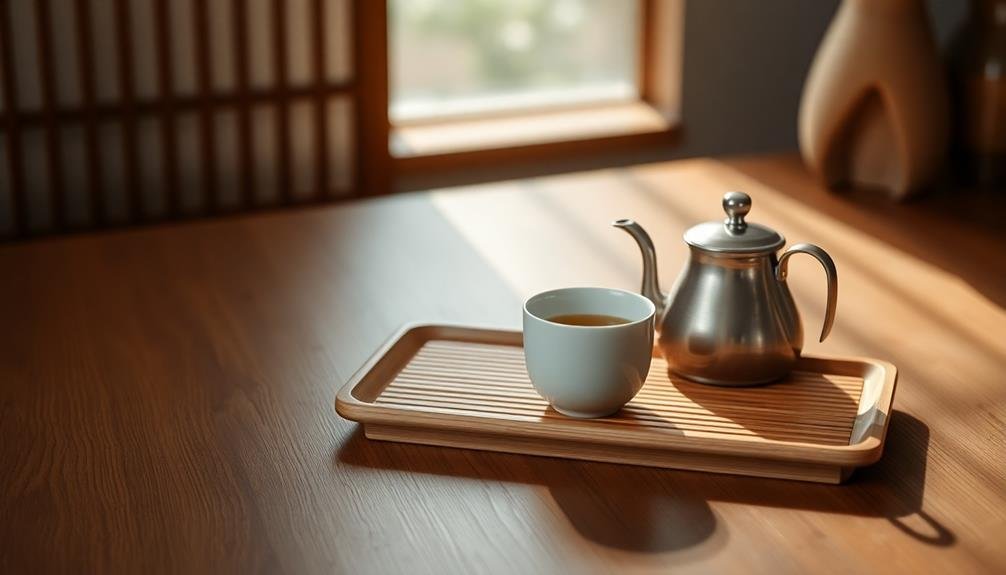
Within your tea ritual space, clutter can be a silent saboteur of tranquility. To reclaim your peaceful haven, begin by evaluating your tea collection. Remove expired teas, blends you don't enjoy, and duplicates. Next, review your teaware. Keep only the pieces you use regularly or that bring you joy.
Organize your remaining items into functional categories:
| Everyday | Special Occasion | Storage |
|---|---|---|
| Favorite teas | Rare blends | Bulk teas |
| Go-to teapot | Decorative set | Extra filters |
| Daily cup | Tasting cups | Seasonal items |
This arrangement guarantees easy access to your daily essentials while preserving special items for memorable moments.
Consider vertical storage solutions to maximize space. Wall-mounted shelves or hanging racks can display your most beautiful pieces while freeing up counter space. Use clear containers for loose-leaf teas to easily identify and access your favorites.
Lastly, create a dedicated space for tea preparation. This could be a small corner of your kitchen or a portable tray you can move to different areas. By decluttering and organizing your tea space, you'll enhance your ritual's mindfulness and enjoyment.
Quality Over Quantity
A curated tea collection focuses on excellence rather than excess. When simplifying your tea ritual, prioritize quality over quantity. Instead of amassing a vast array of teas, select a few exceptional varieties that truly resonate with your palate.
This approach allows you to develop a deeper appreciation for each tea's unique characteristics and nuances.
Invest in high-quality, versatile teaware that serves multiple purposes. A well-crafted teapot or gaiwan can elevate your tea experience, enhancing the flavors and aromas of your chosen teas.
By limiting your collection to a few essential pieces, you'll create a more harmonious and focused tea space.
When selecting teas, consider these factors:
- Origin and authenticity
- Freshness and storage conditions
- Ethical sourcing practices
Mindful Tea Preparation
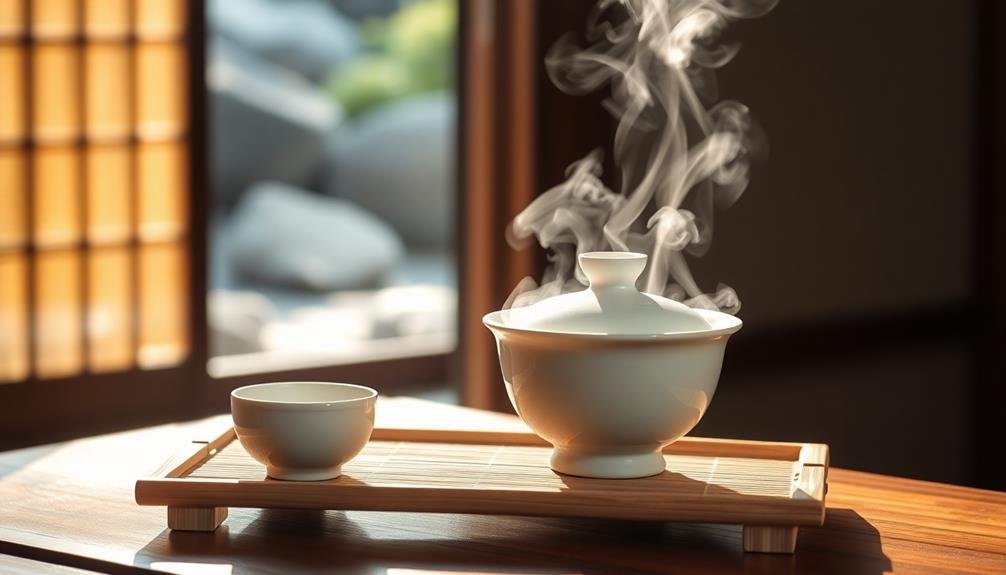
As you simplify your tea ritual, turn your attention to the brewing process itself.
Focus on each step, from heating the water to steeping the leaves, allowing yourself to be fully present in the moment.
When you finally take a sip, pause to truly taste and appreciate the flavors, aromas, and sensations your mindfully prepared tea offers.
Focus on Brewing Process
Brewing tea mindfully can transform a simple act into a meditative ritual. As you focus on the brewing process, you'll find yourself becoming more present and attuned to the subtle nuances of your tea.
Start by selecting your tea leaves with intention, considering their origin and flavor profile. Heat your water to the appropriate temperature for your chosen tea, paying attention to the sound and sight of the water as it approaches the right level of heat.
As you pour the water over the leaves, observe the following:
- The unfurling of the leaves as they're exposed to hot water
- The changing color of the liquid as it steeps
- The aroma that wafts up from the cup or teapot
Time your steep carefully, using a timer if needed, to achieve the perfect balance of flavors. As you wait, take deep breaths and clear your mind.
When it's time, pour your tea slowly and deliberately, savoring the anticipation of that first sip. By focusing on each step of the brewing process, you'll cultivate a deeper appreciation for your tea and create a moment of calm in your day.
Savor Each Sip
Three key elements contribute to savoring each sip of your tea: sight, smell, and taste. To fully appreciate your tea's visual appeal, pour it into a clear or light-colored cup. Observe the color and clarity of the liquid, which can offer insights into the tea's quality and preparation.
Next, engage your sense of smell. Before taking a sip, bring the cup close to your nose and inhale deeply. The aroma will prepare your palate and enhance your overall experience. Different teas have unique scents, from floral to earthy, so take time to identify and appreciate these nuances.
Finally, focus on the taste. Take small sips and let the tea coat your entire mouth. Pay attention to the initial flavors, how they evolve, and the aftertaste. Notice the tea's temperature, body, and any textural elements.
Don't rush through your cup; instead, pause between sips to reflect on the sensations.
Sustainable Tea Accessories
When it comes to sustainable tea accessories, there's a world of eco-friendly options to enhance your brewing experience.
You'll find reusable tea filters made from organic cotton or stainless steel, eliminating the need for disposable paper filters. Bamboo tea trays and scoops offer a renewable alternative to plastic counterparts, while glass teapots and cups provide a durable, long-lasting solution.
Consider investing in a temperature-controlled electric kettle made from sustainable materials like stainless steel or borosilicate glass. These kettles not only reduce energy consumption but also guarantee ideal brewing temperatures for different tea varieties.
For on-the-go tea lovers, insulated stainless steel travel mugs keep your brew hot while minimizing waste from disposable cups.
To further embrace sustainability in your tea ritual, focus on:
- Choosing loose leaf teas to reduce packaging waste
- Composting used tea leaves for your garden
- Opting for fair-trade and organic tea sources
Simplifying DIY Herbal Blends
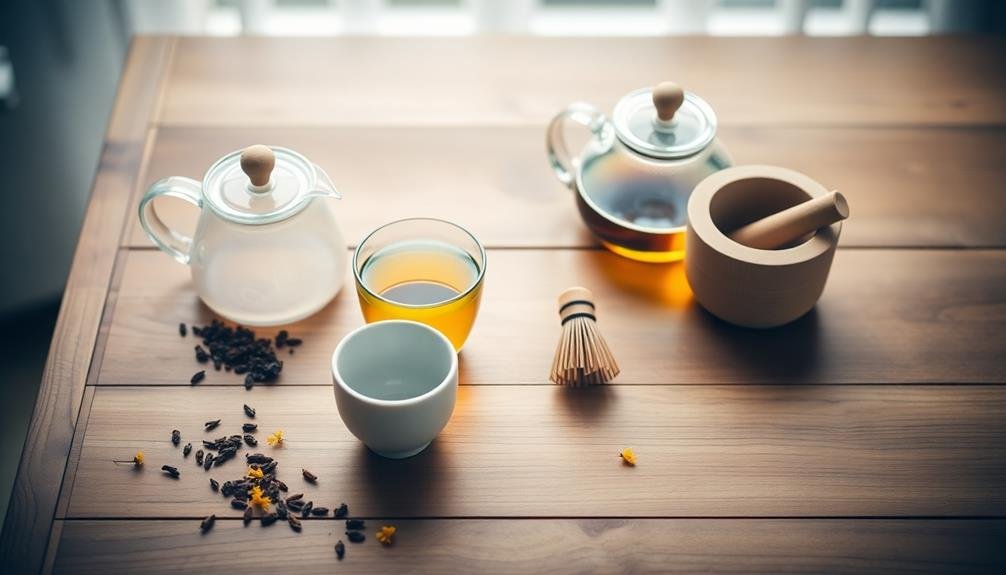
Creating your own herbal tea blends doesn't have to be complicated. Start with a base herb like chamomile, peppermint, or rooibos, then add one or two complementary flavors. Keep it simple by focusing on just a few high-quality ingredients rather than overwhelming your palate with too many elements.
Stock up on common herbs like lavender, lemon balm, and rosehips. These versatile ingredients pair well with many base teas and can be mixed and matched easily. Use a small kitchen scale to measure your herbs accurately, aiming for about 1-2 teaspoons of dried herbs per cup of water.
Experiment with ratios to find your perfect blend. Start with equal parts of each herb, then adjust to your taste preferences. Don't forget to write down successful combinations so you can replicate them later.
Store your blends in airtight glass jars away from direct sunlight to preserve their freshness and flavor. Label each jar with the ingredients and date of creation.
Minimalism and Tea Appreciation
Minimalism in tea appreciation aligns perfectly with the simplicity of DIY herbal blends. By embracing a minimalist approach, you'll find that less truly is more when it comes to enjoying your tea.
Stripping away unnecessary elements allows you to focus on the essence of the tea-drinking experience, enhancing your appreciation for the subtle flavors and aromas.
To adopt a minimalist tea ritual, consider these key principles:
- Choose quality over quantity: Invest in a few high-quality teas rather than amassing a large collection.
- Simplify your tools: Use only essential equipment, such as a basic teapot or infuser and a favorite cup.
- Practice mindfulness: Focus on the present moment and the sensory experience of drinking tea.
Reducing Waste in Tea Practices
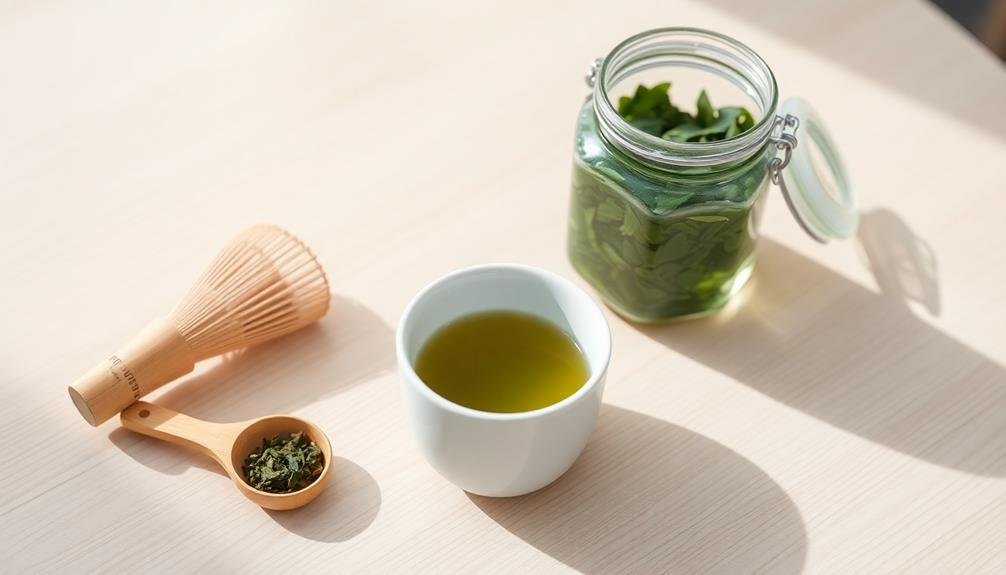
As you embrace a minimalist tea ritual, it's essential to reflect on how you can reduce waste in your tea practices. Start by opting for loose-leaf tea instead of tea bags, which often contain plastic and create unnecessary waste. Invest in a reusable infuser or strainer to steep your tea, eliminating the need for disposable filters.
Consider purchasing tea in bulk to minimize packaging waste. Store your tea in airtight, reusable containers to maintain freshness and avoid single-use packaging. When brewing, use only the amount of water you need to conserve energy and reduce water waste.
Don't forget to compost your used tea leaves, which make excellent nutrients for plants. For on-the-go tea drinking, carry a reusable travel mug or thermos instead of relying on disposable cups. If you enjoy iced tea, make it at home in large batches rather than buying bottled versions.
Frequently Asked Questions
How Does Minimalist Tea Brewing Affect the Taste of Different Tea Varieties?
Minimalist tea brewing can enhance the taste of different varieties by allowing you to focus on the tea's natural flavors. You'll experience more nuanced notes as you're not distracted by complex equipment or unnecessary additives.
Can Minimalist Tea Tools Be Used for Large Gatherings or Events?
Yes, you can use minimalist tea tools for large gatherings. They're versatile and efficient, allowing you to brew multiple servings quickly. You'll find it easy to scale up your brewing process while maintaining the simplicity and elegance of minimalist techniques.
What Are the Best Storage Solutions for a Minimalist Tea Collection?
For your minimalist tea collection, opt for airtight canisters or tins to preserve freshness. Use stackable containers to save space. A compact tea tray or box can neatly store your tools. Consider wall-mounted shelves for a clutter-free display.
How Do Minimalist Tea Practices Impact Traditional Cultural Tea Ceremonies?
You'll find minimalist tea practices streamline traditional ceremonies, focusing on essence over elaborate rituals. They'll simplify preparation, reduce equipment, and emphasize mindfulness. This approach can enhance your appreciation of tea's fundamental qualities and cultural significance.
Are There Any Drawbacks to Adopting a Minimalist Approach to Tea Brewing?
You might miss out on the intricate rituals and cultural significance of traditional tea ceremonies. You'll have fewer tools for specialized brews, potentially limiting your tea variety. Some may find the simplified approach less meditative or aesthetically pleasing.
In Summary
You've discovered the beauty of simplifying your tea ritual. By embracing minimalism, you're not only decluttering your space but also enhancing your tea experience. You're making eco-friendly choices, focusing on quality, and cultivating mindfulness. Remember, less is more when it comes to tea accessories and blends. As you continue this journey, you'll find deeper appreciation for each cup and contribute to reducing waste. Keep sipping mindfully and enjoying the essence of tea in its purest form.

Leave a Reply