

Anise seed tea is a flavorful brew that can considerably boost your digestion. Made from the seeds of the Pimpinella anisum plant, this aromatic tea offers a natural remedy for various digestive issues. It's known to reduce bloating, alleviate gas, and ease constipation. The tea's carminative properties help expel excess gas, while its antimicrobial effects may improve gut flora. You'll also benefit from its anti-inflammatory qualities, which can soothe gastrointestinal discomfort. To enjoy these benefits, simply steep crushed anise seeds in hot water for 5-10 minutes. Discover how this ancient remedy can revolutionize your digestive health and overall well-being.
What Is Anise Seed Tea?

Anise seed tea is a flavorful infusion made from the seeds of the anise plant. This aromatic herb, scientifically known as Pimpinella anisum, belongs to the Apiaceae family and is native to the Mediterranean region.
When you brew anise seeds in hot water, you'll create a warming beverage with a distinct licorice-like taste and aroma.
To prepare anise seed tea, you'll typically use whole or crushed anise seeds. You can steep them in boiling water for about 5-10 minutes, allowing the seeds to release their essential oils and flavor compounds. The resulting tea is usually light golden in color and can be enjoyed hot or cold.
Anise seed tea isn't just a tasty drink; it's also known for its potential health benefits. People have used it for centuries in traditional medicine to aid digestion, relieve bloating, and soothe coughs.
It's caffeine-free, making it a suitable option for those looking to reduce their caffeine intake. You can enjoy anise seed tea on its own or blend it with other herbs for a more complex flavor profile.
Health Benefits of Anise Seeds
A treasure trove of potential health benefits awaits those who consume anise seeds regularly. These tiny powerhouses are packed with antioxidants, vitamins, and minerals that can support your overall health.
You'll find that anise seeds may help improve digestion by reducing bloating, gas, and constipation. They're also known to have anti-inflammatory properties, which can alleviate various digestive issues.
Anise seeds might boost your respiratory health by acting as an expectorant, helping to clear mucus and ease coughing. If you're struggling with sleep, these seeds could potentially help due to their mild sedative effects. They've been traditionally used to combat insomnia and promote relaxation.
Women may find anise seeds particularly beneficial, as they're thought to help regulate menstrual cycles and alleviate menopause symptoms. Additionally, these seeds may support lactation in nursing mothers.
For those concerned about bone health, anise seeds contain calcium and other minerals that contribute to stronger bones. Finally, their antimicrobial properties might help fight off harmful bacteria, potentially boosting your immune system and oral health.
Digestive Properties of Anise Tea

Anise seed tea can greatly improve your digestive health.
You'll experience relief from gastrointestinal discomfort and reduced bloating when you incorporate this soothing brew into your routine.
Additionally, the tea enhances your body's ability to absorb nutrients, making it an excellent addition to your diet for overall digestive wellness.
Soothes Gastrointestinal Discomfort
For centuries, traditional healers have recognized the soothing effects of anise seed tea on digestive issues. This aromatic brew can provide relief for various gastrointestinal discomforts, making it a go-to remedy for many.
When you're experiencing bloating, gas, or indigestion, a cup of anise seed tea can help alleviate these symptoms. The tea's carminative properties help reduce gas buildup in your digestive tract, easing discomfort and promoting smoother digestion.
It's particularly effective in soothing stomach cramps and reducing nausea.
Anise seed tea can also help with more persistent digestive issues. If you suffer from irritable bowel syndrome (IBS), you might find that regularly drinking this tea helps manage your symptoms. Its anti-inflammatory properties can calm intestinal spasms and reduce abdominal pain associated with IBS.
Moreover, anise seed tea can stimulate appetite and aid in proper nutrient absorption. If you're recovering from a stomach bug or have been experiencing a loss of appetite, sipping on this tea might help jumpstart your digestive system and encourage a healthy eating pattern.
Reduces Bloating
One of the most notable benefits of anise seed tea is its ability to reduce bloating. When you drink this aromatic brew, you're tapping into its natural carminative properties. These properties help expel excess gas from your digestive system, alleviating that uncomfortable bloated feeling.
Anise seed tea works by relaxing the muscles in your gastrointestinal tract, allowing trapped gas to move through more easily. This action not only reduces bloating but also helps prevent its recurrence. The tea's active compounds, particularly anethole, stimulate the production of digestive enzymes, further aiding in the breakdown of food and reducing the likelihood of gas buildup.
Here's a quick guide to understanding how anise seed tea combats bloating:
| Symptom | Anise Tea's Action | Result |
|---|---|---|
| Gas buildup | Relaxes GI muscles | Easier gas passage |
| Slow digestion | Stimulates enzymes | Faster food breakdown |
| Intestinal spasms | Antispasmodic effect | Reduced discomfort |
| Inflammation | Anti-inflammatory | Decreased swelling |
| Bacterial imbalance | Antimicrobial properties | Improved gut flora |
Aids Nutrient Absorption
While reducing bloating is a significant benefit, anise seed tea also plays an essential role in aiding nutrient absorption. This aromatic brew stimulates the production of digestive enzymes, which are vital for breaking down food and extracting essential nutrients. When you drink anise seed tea, you're supporting your body's ability to efficiently process and utilize the vitamins and minerals from your meals.
The active compounds in anise, particularly anethole, help increase the secretion of gastric juices. This enhanced digestive environment allows for better absorption of nutrients in your small intestine. By improving overall digestion, anise tea can help you get more nutritional value from the foods you eat.
Additionally, anise seed tea can help balance your gut microbiome, which is critical for proper nutrient absorption. A healthy gut flora aids in the breakdown of complex carbohydrates and the synthesis of certain vitamins. By promoting a diverse and balanced gut ecosystem, you're setting the stage for maximum nutrient uptake.
To maximize these benefits, try drinking a cup of anise seed tea before or after meals. You'll not only enjoy its licorice-like flavor but also support your body's nutrient absorption processes.
How to Brew Anise Seed Tea
To brew anise seed tea, you'll need to steep 1-2 teaspoons of crushed anise seeds in boiling water for 5-10 minutes.
You can adjust the steeping time to your taste preference, with longer steeps producing a stronger flavor.
For added complexity, try mixing in complementary ingredients like cinnamon sticks, star anise, or a slice of fresh ginger.
Steeping Time and Temperature
Brewing the perfect cup of anise seed tea requires attention to steeping time and temperature. For ideal flavor and health benefits, you'll want to steep your anise seeds in water that's just below boiling, around 200°F (93°C). If you don't have a thermometer, bring water to a boil, then let it cool for about 30 seconds before pouring it over the seeds.
The best steeping time for anise seed tea is between 5 to 10 minutes. This duration allows enough time for the seeds to release their essential oils and flavors without becoming bitter. If you prefer a stronger taste, you can steep for up to 15 minutes, but be aware that the tea may develop a more intense licorice flavor.
To make a milder brew, stick to the lower end of the steeping range, around 5 minutes. For a more robust cup, aim for 8-10 minutes. Remember to cover your cup or teapot while steeping to prevent the volatile oils from escaping.
After steeping, strain the seeds and enjoy your freshly brewed anise seed tea.
Flavor Enhancement Options
Once you've mastered the basic brewing technique, you can explore various ways to enhance the flavor of your anise seed tea. Consider adding a touch of honey or agave nectar to balance the licorice-like taste with natural sweetness.
If you prefer a zesty kick, squeeze in some fresh lemon juice or add a slice of ginger to complement the anise's warmth.
For a more complex flavor profile, try blending anise seeds with other herbs and spices. Chamomile flowers can introduce a soothing, floral note, while cinnamon sticks or cardamom pods will intensify the tea's warmth and aroma.
Peppermint leaves can create a revitalizing contrast to anise's distinctive flavor.
If you're feeling adventurous, experiment with fruit additions. Apple slices or orange peel can introduce a subtle fruity undertone that pairs well with anise.
For a creamy twist, add a splash of milk or a non-dairy alternative like almond or oat milk. You can also try steeping anise seeds with black or green tea leaves for a unique fusion.
Remember to adjust steeping times when combining ingredients to achieve the perfect balance of flavors.
Best Time to Drink Anise Tea

The ideal time to enjoy anise seed tea largely depends on your personal preferences and needs. However, certain times of day can maximize its benefits.
If you're looking to aid digestion, drink a cup after meals, especially heavy ones. The tea's carminative properties can help reduce bloating and gas, making it an excellent post-dinner beverage.
For those seeking relaxation, sip anise tea in the evening. Its mild sedative effects can promote better sleep, making it a soothing pre-bedtime drink.
If you're battling a cold or sore throat, drink it throughout the day to benefit from its expectorant qualities.
Morning drinkers can also enjoy anise tea as a caffeine-free alternative to coffee. It provides a gentle energy boost without the jitters.
For women experiencing menstrual discomfort, drinking anise tea a few days before and during their period may help alleviate cramps.
Anise Tea Flavor Profile
When you sip anise tea, you'll immediately notice its sweet, licorice-like flavor that's both distinctive and comforting.
The aromatic and warming qualities of the tea will envelop your senses, creating a soothing experience.
You might also detect subtle herbal notes that add depth to the overall flavor profile, making anise tea a unique and enjoyable beverage.
Sweet Licorice-Like Taste
Savor the distinctive flavor of anise seed tea, which boasts a sweet, licorice-like taste that's both bold and revitalizing. This unique flavor profile comes from anethole, the compound responsible for anise's characteristic taste.
You'll notice a subtle sweetness that lingers on your palate, accompanied by a slight minty undertone. The complexity of anise seed tea's flavor makes it a versatile beverage that can be enjoyed hot or cold. Its taste is often described as:
- Sweet and aromatic
- Reminiscent of black licorice candy
- Slightly spicy with a hint of warmth
- Smooth and invigorating with a cooling aftertaste
If you're new to anise seed tea, you might find the taste intense at first. However, many people grow to appreciate its unique flavor profile over time.
You can adjust the strength of your tea by steeping the seeds for a shorter or longer duration. For a milder taste, try blending anise seed tea with other herbal teas like chamomile or peppermint. This will create a more balanced and nuanced flavor while still allowing you to enjoy the benefits of anise.
Aromatic and Warming
Aromatic and warming, anise seed tea offers a sensory experience that goes beyond its taste. As you brew this comforting beverage, you'll notice a distinct, inviting aroma wafting through the air. The scent is reminiscent of licorice but with a more complex, herbal undertone that sets it apart.
When you take your first sip, you'll feel a gentle warmth spreading through your body. This warming sensation is one of anise tea's most cherished qualities, making it an ideal choice for chilly days or when you're feeling under the weather. The heat isn't overpowering but rather a soothing embrace that can help you relax and unwind.
The aromatic properties of anise seed tea also contribute to its overall appeal. You might detect subtle notes of fennel and a hint of sweetness that complement the primary anise flavor.
This multi-layered aroma enhances the drinking experience, engaging your senses and potentially boosting your mood. The combination of warmth and aroma makes anise seed tea a perfect choice for those seeking a comforting, aromatic beverage that offers both flavor and sensory satisfaction.
Subtle Herbal Notes
Beyond its aromatic qualities, anise seed tea boasts a complex flavor profile with subtle herbal notes that enhance its overall taste. As you sip this soothing brew, you'll notice a delicate balance of flavors that dance across your palate. The initial licorice-like sweetness gives way to a more nuanced herbal character, reminiscent of fennel and star anise.
The subtle herbal notes in anise seed tea contribute to its unique flavor profile:
- Grassy undertones: A hint of fresh-cut grass adds depth to the tea's taste.
- Minty whispers: A slight cooling sensation complements the warmth of the brew.
- Earthy elements: Subtle soil-like notes ground the flavor and provide complexity.
- Floral hints: Delicate floral notes add a touch of elegance to the overall taste.
These subtle herbal notes work in harmony with the tea's primary licorice flavor, creating a well-rounded and satisfying beverage.
You'll find that the complexity of anise seed tea's flavor profile makes it an excellent choice for both casual sipping and mindful tasting experiences. Its unique blend of herbal notes sets it apart from other teas and keeps you coming back for more.
Combining Anise With Other Herbs

Blending anise seed with other herbs can enhance the flavor profile and potential health benefits of your tea. Consider pairing anise with fennel seeds, which share similar licorice notes and digestive properties. This combination can amplify the tea's ability to soothe upset stomachs and reduce bloating.
For a more complex flavor, try adding chamomile to your anise seed tea. Chamomile's mild, apple-like taste complements anise's sweetness while providing additional calming effects. This blend may help ease anxiety and promote better sleep.
If you're looking to boost your tea's antioxidant content, mix anise seeds with green tea leaves. The resulting brew offers a unique flavor profile and combines the benefits of both ingredients, potentially supporting heart health and metabolism.
For a spicier option, incorporate ginger or cinnamon into your anise seed tea. These warming spices can aid digestion and circulation while adding depth to the flavor.
You can also experiment with peppermint, which pairs well with anise and may help relieve nausea and headaches.
Remember to adjust the proportions of each herb to suit your taste preferences and desired therapeutic effects.
Possible Side Effects and Precautions
While anise seed tea is generally safe for most people, it's important to be aware of potential side effects and take necessary precautions. Some individuals may experience allergic reactions, especially those with sensitivities to plants in the Apiaceae family, such as celery or carrots.
If you're pregnant or breastfeeding, consult your healthcare provider before consuming anise seed tea, as it may affect hormone levels.
Be cautious when using anise seed tea if you're taking medications, as it can interact with certain drugs, including blood thinners and hormonal treatments. Excessive consumption may lead to nausea, dizziness, or drowsiness.
To guarantee safe consumption, consider these precautions:
- Start with small amounts to test your tolerance
- Don't exceed recommended dosages
- Avoid use before operating heavy machinery
- Discontinue use if you experience adverse reactions
If you have a history of estrogen-sensitive conditions, such as breast cancer or endometriosis, it's best to avoid anise seed tea altogether.
Always prioritize your health and consult a medical professional if you have any concerns or pre-existing conditions before incorporating anise seed tea into your routine.
Anise Tea vs. Fennel Tea

Two aromatic teas often confused with each other are anise tea and fennel tea. While they share similar flavors, they come from different plants and offer unique benefits. Anise tea is brewed from the seeds of the Pimpinella anisum plant, while fennel tea comes from the seeds of the Foeniculum vulgare plant.
You'll notice that both teas have a licorice-like taste, but anise tea tends to be sweeter and more intense. Fennel tea has a milder, slightly earthy flavor. When it comes to health benefits, both teas can aid digestion and reduce bloating. However, anise tea is known for its expectorant properties, while fennel tea is often used to soothe menstrual cramps.
Here's a quick comparison of anise and fennel tea:
| Characteristic | Anise Tea | Fennel Tea |
|---|---|---|
| Plant Source | Pimpinella anisum | Foeniculum vulgare |
| Flavor Profile | Sweet, intense licorice | Mild, earthy licorice |
| Key Benefits | Digestive aid, expectorant | Digestive aid, menstrual relief |
| Caffeine | Caffeine-free | Caffeine-free |
Choose the tea that best suits your taste preferences and health needs. You can even blend them for a unique flavor experience.
Storing and Preserving Anise Seeds
Now that you're familiar with anise tea, let's focus on keeping your anise seeds fresh for future brews. Proper storage is essential to maintain the seeds' flavor and potency. Store your anise seeds in an airtight container, away from direct sunlight and heat sources. A cool, dark pantry or cupboard is ideal.
When stored correctly, whole anise seeds can last up to 3-4 years, while ground seeds typically retain their quality for about 2-3 years.
To guarantee your anise seeds stay in top condition, follow these tips:
- Keep them dry: Moisture is the enemy of spice longevity, so always use a clean, dry spoon when scooping seeds.
- Avoid the fridge: The humidity in refrigerators can cause the seeds to clump or mold.
- Check for freshness: Give your seeds a sniff before use; if they've lost their distinct licorice aroma, it's time to replace them.
- Buy whole seeds: Whenever possible, opt for whole anise seeds and grind them as needed for maximum flavor and shelf life.
Anise Tea Recipes and Variations
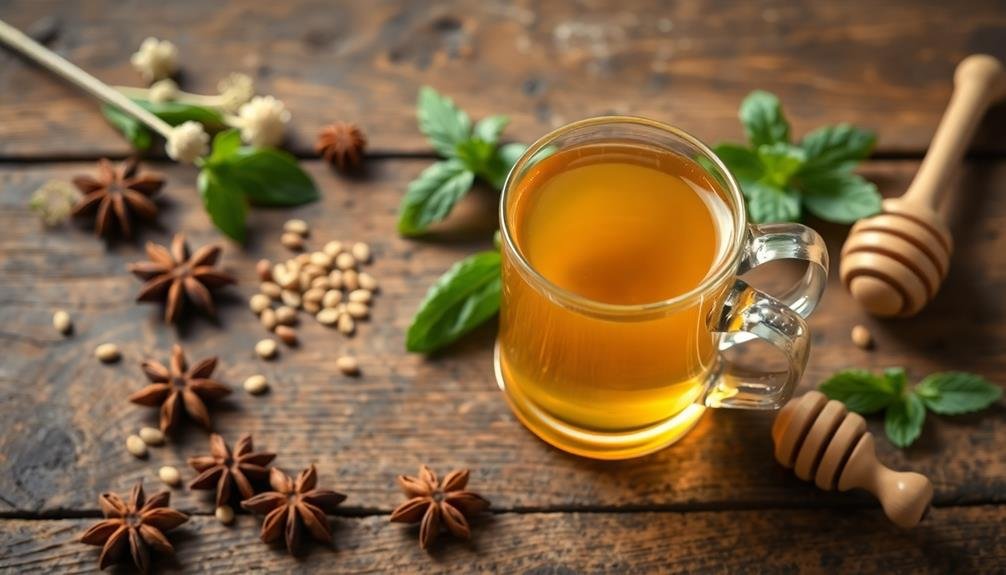
Countless variations of anise tea recipes exist, allowing you to customize your brew to suit your taste preferences and health needs. The simplest method involves steeping 1-2 teaspoons of crushed anise seeds in a cup of boiling water for 5-10 minutes. Strain and enjoy hot or cold.
For a stronger flavor, try toasting the seeds before steeping. You can also combine anise with other herbs like fennel, caraway, or licorice root for a more complex taste and additional health benefits. Add a slice of fresh ginger or a cinnamon stick for a spicy kick.
If you're looking for a caffeine-free alternative to coffee, mix anise seeds with roasted chicory root. This blend offers a rich, full-bodied flavor reminiscent of coffee.
For a soothing nighttime drink, combine anise with chamomile and lavender.
To make an invigorating iced tea, brew a strong anise tea, let it cool, and serve over ice with a splash of lemon juice and honey. You can also use anise tea as a base for smoothies or add it to your favorite cocktails for a unique twist.
Frequently Asked Questions
Can Anise Seed Tea Help With Menstrual Cramps?
Yes, anise seed tea may help with menstrual cramps. It's believed to have antispasmodic properties that can ease uterine contractions. You might find relief by drinking this tea during your menstrual cycle. However, consult your doctor before using it medicinally.
Is Anise Seed Tea Safe for Pregnant Women?
You should avoid anise seed tea during pregnancy. It's not considered safe as it can stimulate uterine contractions. Always consult your doctor before consuming any herbal teas while pregnant. There are safer alternatives available for expectant mothers.
How Long Does the Effect of Anise Seed Tea Last?
You'll typically feel anise seed tea's effects for 2-4 hours. It's not long-lasting, but you can enjoy its benefits throughout the day by sipping it regularly. Remember, everyone's body reacts differently to herbs.
Can Children Drink Anise Seed Tea?
You should be cautious when giving anise seed tea to children. It's generally safe in small amounts for kids over 2, but consult your pediatrician first. Don't give it to infants or toddlers under 2 years old.
Does Anise Seed Tea Have Any Impact on Blood Sugar Levels?
You'll be glad to know that anise seed tea doesn't greatly impact blood sugar levels. However, it's always wise to monitor your intake if you're diabetic. As with any herbal tea, moderation is key.
In Summary
You've now discovered the wonders of anise seed tea. It's a simple yet powerful brew that can boost your digestion and offer various health benefits. Whether you're sipping it for its licorice-like flavor or medicinal properties, you'll find it's easy to prepare and incorporate into your routine. Remember to start with small amounts and consult your doctor if you have any concerns. Enjoy exploring different anise tea recipes and reap the rewards of this aromatic blend.



Leave a Reply