
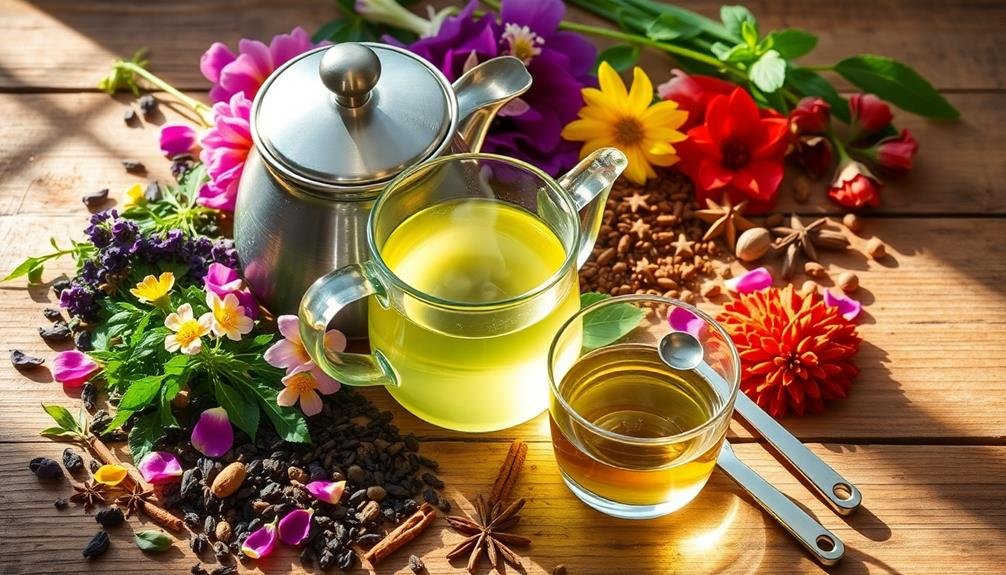
Tea blending is your gateway to creating personalized flavors that suit your palate perfectly. Start by understanding the main tea varieties: black, green, white, oolong, and pu-erh. Gather essential tools like precise scales, airtight containers, and infusers. Choose quality base teas and experiment with complementary herbs and spices. Balance flavors carefully, considering strength and complexity. Proper storage is vital to maintain freshness. You can craft blends for specific health benefits or seasonal themes. Host a tea blending party to share your newfound skills with friends. There's a world of aromatic possibilities waiting for you to explore.
Understanding Tea Varieties

Tea enthusiasts know that understanding different tea varieties is the foundation of successful blending. To create your perfect cup, you'll need to familiarize yourself with the main types: black, green, white, oolong, and pu-erh. Each variety offers unique flavors, aromas, and caffeine levels.
Black teas are fully oxidized, resulting in bold, robust flavors. They're often described as malty, fruity, or smoky.
Green teas are unoxidized, preserving their fresh, vegetal notes and offering a lighter taste.
White teas are minimally processed, yielding delicate, subtle flavors with floral or fruity undertones.
Oolong teas fall between green and black, with partial oxidation creating a diverse range of flavors from light and floral to rich and roasted.
Pu-erh teas are fermented, developing complex, earthy flavors that improve with age.
When blending, consider how these varieties complement each other. You might pair a strong Assam black tea with a delicate white peony for balance, or combine a grassy sencha with a roasted oolong for depth.
Experiment with different ratios to find your ideal blend, and don't be afraid to add herbs or spices for extra dimension.
Essential Tools for Tea Blending
Now that you're familiar with tea varieties, it's time to equip yourself with the right tools for blending.
You'll need a set of accurate digital scales to measure your ingredients precisely. Opt for scales that can measure in grams and ounces, with a precision of 0.1 grams.
Invest in airtight storage containers to keep your tea leaves and blends fresh. Glass or ceramic jars with tight-fitting lids work well. Don't forget to label them clearly.
A tea infuser or reusable tea bags are vital for testing your blends. Choose stainless steel mesh infusers or unbleached cotton bags for the best results.
You'll also need mixing bowls in various sizes. Glass or stainless steel bowls are ideal as they won't absorb flavors or odors. A set of measuring spoons is essential for consistent blending.
For aromatics and spices, a mortar and pestle or a small grinder will come in handy. This allows you to crush or grind ingredients to release their flavors more effectively.
Lastly, get a notebook to record your recipes and tasting notes. This will help you refine your blends over time.
Choosing Quality Base Teas

When choosing quality base teas for blending, you'll need to understand tea leaf grades to guarantee you're starting with the best ingredients.
You'll want to explore sourcing single-origin varieties, which can provide unique flavors and characteristics to your blends.
Evaluating the flavor profiles of potential base teas will help you create harmonious and balanced blends that showcase the best qualities of each component.
Understanding Tea Leaf Grades
Quality base teas form the foundation of any successful blend, making it essential to understand tea leaf grades. When you're selecting teas for blending, you'll encounter various grades that indicate the leaf's size, quality, and processing method. These grades can greatly impact your blend's flavor, aroma, and overall character.
Tea grades typically fall into two main categories: whole leaf and broken leaf. Whole leaf teas are generally considered higher quality, offering more complex flavors and aromas. Broken leaf teas, on the other hand, brew faster and produce a stronger cup.
As you explore tea grades, you'll come across terms like Orange Pekoe, Flowery Orange Pekoe, and Broken Orange Pekoe.
To help you navigate tea leaf grades, consider these key points:
- Larger leaf grades often yield more nuanced flavors
- Smaller grades brew faster and produce bolder cups
- FTGFOP (Finest Tippy Golden Flowery Orange Pekoe) is among the highest grades
- CTC (Cut, Tear, Curl) teas are ideal for strong, quick-brewing blends
Sourcing Single-Origin Varieties
Selecting the right single-origin teas is essential for crafting exceptional blends. When sourcing these teas, focus on quality and flavor profiles that'll complement your desired blend.
Start by researching reputable tea suppliers who specialize in single-origin varieties. Look for those who provide detailed information about the tea's origin, harvest date, and processing method.
Consider trying samples from different regions to familiarize yourself with their unique characteristics. Chinese teas like Keemun or Yunnan offer bold, earthy flavors, while Indian Assams provide malty, full-bodied notes. For lighter options, explore Japanese Senchas or Taiwanese oolongs.
Pay attention to the tea's aroma, color, and taste when evaluating samples. Fresh teas should have vibrant colors and distinct aromas.
Don't hesitate to ask suppliers about their sourcing practices and quality control measures.
Remember that seasonal variations can affect tea quality, so be prepared to adjust your blend recipes accordingly.
Keep detailed notes on each tea you sample, including tasting notes and potential blending ideas. This'll help you make informed decisions when creating your unique tea blends.
Evaluating Flavor Profiles
Before diving into blending, it's crucial to develop a discerning palate for evaluating base teas. Start by examining the dry leaves, noting their appearance, color, and aroma.
Next, brew the tea according to its recommended parameters and observe the liquor's color and clarity. As you sip, pay attention to the tea's body, mouthfeel, and aftertaste.
To evaluate flavor profiles effectively, focus on these key aspects:
- Aroma: Identify the tea's scent, from floral and fruity to earthy or smoky notes.
- Taste: Assess the primary flavors, such as sweetness, bitterness, or umami.
- Complexity: Look for layered flavors that unfold as you sip.
- Balance: Consider how well the various flavor elements work together.
Practice tasting different tea varieties side by side to sharpen your palate. Keep detailed notes on each tea's characteristics, including any unique qualities that stand out.
As you become more familiar with individual flavor profiles, you'll be better equipped to create harmonious blends. Remember, a great blend starts with high-quality base teas, so invest time in finding the best ingredients for your creations.
Herbs and Spices for Blending
Diving into the world of herbs and spices can elevate your tea blends to new heights. When selecting herbs and spices, consider their flavor profiles and how they'll complement your base tea. Popular choices include peppermint, chamomile, ginger, and cinnamon.
Peppermint adds a cool, invigorating note that pairs well with black or green teas. Chamomile offers a soothing, apple-like flavor that blends nicely with herbal or white teas. Ginger provides a spicy kick and works well with black or oolong teas. Cinnamon imparts a warm, sweet taste that complements black or rooibos teas.
Don't forget about less common options like lemongrass, lavender, or cardamom. Lemongrass adds a citrusy note to green or white teas. Lavender brings a floral aroma to herbal blends. Cardamom offers a unique, slightly sweet spice that enhances chai or black teas.
When blending, start with small amounts of herbs and spices. You can always add more, but it's difficult to remove excess flavor. Experiment with different combinations to find your perfect blend.
Balancing Flavors and Aromas

Creating a harmonious tea blend requires a delicate balance of flavors and aromas. As you experiment with different combinations, you'll need to take into account the strength, complexity, and complementary nature of each ingredient.
Start by identifying the primary flavor you want to highlight, then build around it with complementary notes. Pay attention to the intensity of each component, ensuring that no single element overpowers the others.
When balancing flavors and aromas, keep these key points in mind:
- Taste as you go: Sample your blend at various stages to fine-tune the proportions.
- Reflect on steep time: Some ingredients release flavors faster than others, affecting the overall balance.
- Use a light hand: It's easier to add more of an ingredient than to correct an overpowering flavor.
- Think about mouthfeel: Include ingredients that contribute to the texture and body of your blend.
Remember that temperature can affect how flavors and aromas are perceived. Experiment with brewing your blend at different temperatures to find the ideal balance.
With practice, you'll develop an intuition for creating well-balanced tea blends that delight the senses and satisfy your taste preferences.
Creating Signature Tea Blends
To create your signature tea blend, you'll need to start by choosing a base tea that complements your desired flavor profile.
Next, you'll want to carefully balance the flavors and aromas of your additional ingredients, ensuring they don't overpower the base tea.
Choose Base Tea Wisely
When crafting signature tea blends, selecting the right base tea is essential. Your choice will considerably impact the final flavor profile, aroma, and body of your blend.
Consider the characteristics of different base teas and how they'll interact with other ingredients you plan to add. Black teas provide a robust foundation, while green teas offer a lighter, more delicate base. Oolong teas can bring complexity, and white teas contribute subtle nuances.
To choose your base tea wisely, follow these steps:
- Identify your blend's main flavor profile: Is it meant to be bold, invigorating, or soothing?
- Consider the caffeine content: Do you want an energizing blend or a caffeine-free option?
- Think about the tea's origin: Different regions produce teas with unique flavor characteristics.
- Experiment with various grades: Higher-grade teas often have more nuanced flavors but may be costlier.
Don't be afraid to mix different base teas to create a more complex foundation.
Balance Flavors and Aromas
Carefully balancing flavors and aromas is the key to creating exceptional signature tea blends. Start by considering the taste profile you want to achieve. Do you want a bold, robust blend or a delicate, nuanced one?
Think about complementary flavors that work well together, such as floral notes with light green teas or spicy elements with black teas. Experiment with different ratios of ingredients to find the perfect balance.
Begin with small batches, adjusting the proportions until you're satisfied. Remember that some flavors are more potent than others, so use strong ingredients sparingly. Pay attention to the aroma of your blend, as it greatly impacts the overall experience.
Don't be afraid to mix different types of tea as your base. For example, combining a malty Assam with a smoky Lapsang Souchong can create an intriguing depth of flavor.
Consider adding dried fruits, herbs, or spices to enhance the taste and aroma profile. Keep in mind that some ingredients may overpower others, so add them gradually.
Experiment With Proportions
Creating signature tea blends often requires extensive experimentation with proportions. As you mix different teas and ingredients, you'll discover that small adjustments can greatly impact the final flavor profile. Don't be afraid to try various ratios of your chosen components. Start with a base tea and gradually add other elements, tasting as you go.
Keep detailed notes of your experiments, including the exact amounts used and your impressions of each blend.
To help you get started with proportion experimentation, consider these tips:
- Begin with a 70/30 ratio of base tea to additional ingredients
- Adjust in small increments, typically 5-10% at a time
- Use a kitchen scale for precise measurements
- Create multiple small batches to compare side-by-side
Remember that some ingredients, like strong spices or floral elements, can quickly overpower a blend. Use these sparingly and increase gradually.
As you become more familiar with how different teas and additives interact, you'll develop an intuition for balancing proportions. Trust your palate and be patient – creating the perfect blend takes time and practice.
Proper Storage of Tea Blends

The art of tea blending doesn't end with creating the perfect mix. Proper storage is essential to maintain the quality and flavor of your carefully crafted blends. You'll want to protect your teas from light, heat, moisture, and strong odors.
Store your tea blends in airtight containers made of opaque materials like ceramic, tin, or dark glass. These will shield your teas from light and prevent moisture from seeping in. Keep the containers in a cool, dry place away from direct sunlight and heat sources. Avoid storing tea near spices or other aromatic foods, as teas can absorb strong odors.
Here's a quick guide to ideal storage conditions for different tea types:
| Tea Type | Temperature | Shelf Life |
|---|---|---|
| Green | 65-70°F | 6-12 months |
| Black | 65-75°F | 1-2 years |
| Oolong | 65-75°F | 1-2 years |
Label your blends with the date of creation and ingredients used. This will help you track freshness and replicate successful mixes. Remember, even with proper storage, tea quality diminishes over time. For the best flavor, aim to consume your blends within six months to a year.
Health Benefits of Custom Blends
Custom tea blends offer you the opportunity to create personalized wellness concoctions tailored to your specific health needs.
You can mix herbs, spices, and teas known for their medicinal properties to target particular ailments or boost overall well-being.
Personalized Wellness Blends
Personalized wellness blends offer a unique approach to harnessing the health benefits of tea. By combining specific herbs, flowers, and tea leaves, you can create custom blends tailored to your individual health needs and goals.
Whether you're looking to boost immunity, improve digestion, or enhance relaxation, there's a perfect blend waiting to be discovered.
To create your own wellness blend, start by identifying your primary health concerns. Then, research the properties of various tea ingredients and select those that align with your objectives.
For example, if you're aiming to reduce stress, consider incorporating chamomile, lavender, or lemon balm into your blend. For an immunity boost, try adding elderberry, echinacea, or ginger.
Here are four steps to get you started on your personalized wellness blend journey:
- Identify your health goals
- Research beneficial tea ingredients
- Experiment with different combinations
- Adjust ratios to find your perfect balance
Targeting Specific Ailments
Precision in tea blending can be a powerful tool for addressing specific health concerns. By combining specific herbs and teas, you can create blends that target particular ailments.
For digestive issues, consider mixing peppermint, ginger, and chamomile. These herbs work together to soothe the stomach, reduce bloating, and ease nausea.
If you're struggling with insomnia, a blend of valerian root, passionflower, and lavender can promote relaxation and improve sleep quality.
For boosting immunity, combine echinacea, elderberry, and green tea. This potent mix provides antioxidants and supports your body's natural defenses.
To address inflammation, try turmeric, black pepper, and cinnamon. These spices have powerful anti-inflammatory properties and can help reduce pain and swelling.
For respiratory health, blend mullein, thyme, and licorice root. This combination can help clear congestion and soothe irritated airways.
Seasonal Tea Blending Ideas

Embracing the changing seasons through tea blending can elevate your sipping experience throughout the year. As the weather shifts, you'll find yourself craving different flavors and aromas that complement the atmosphere around you.
In spring, try light and floral blends with ingredients like jasmine, lavender, or cherry blossom. Summer calls for invigorating combinations, incorporating mint, lemongrass, or hibiscus for iced tea options.
When autumn arrives, warm up with spiced blends featuring cinnamon, ginger, and cloves. Winter is perfect for rich, comforting teas with vanilla, cocoa, or roasted nuts.
Don't be afraid to experiment with unconventional ingredients like dried fruits, herbs, or even edible flowers to create unique seasonal blends.
To get started with seasonal tea blending, consider these tips:
- Research which ingredients are in season and locally available
- Balance flavors by combining complementary tastes (sweet, bitter, spicy)
- Start with a base tea (black, green, white, or herbal) and add seasonal elements
- Keep notes on your blends to refine and recreate successful combinations
Hosting a Tea Blending Party
Why not kick off your tea journey by hosting a tea blending party? It's a fun and interactive way to explore different flavors and create unique blends with friends. Start by inviting a small group of tea enthusiasts or curious beginners.
Set up a blending station with a variety of base teas, herbs, spices, and dried fruits. Include black, green, white, and oolong teas as bases. For add-ins, offer options like chamomile, lavender, rose petals, mint, cinnamon, ginger, and dried berries.
Don't forget to provide measuring spoons, mixing bowls, and sealable bags or tins for guests to take their creations home.
Begin the party with a brief introduction to tea blending basics and tasting techniques. Encourage guests to experiment with different combinations, keeping notes on their favorite blends. Provide hot water and cups for tasting throughout the process. You can even turn it into a friendly competition, with guests voting on their favorite custom blend.
To wrap up, share recipes for successful blends and discuss how to adjust ratios for larger batches. Your guests will leave with new knowledge, unique tea blends, and memorable experiences.
Frequently Asked Questions
Can I Blend Tea Bags Instead of Loose Leaf Teas?
Yes, you can blend tea bags instead of loose leaf teas. Simply open the bags, mix the contents, and repack them or use a disposable tea filter. It's a convenient way to experiment with different flavor combinations.
How Long Does It Take to Become Proficient in Tea Blending?
You'll find proficiency in tea blending varies. It can take months or years, depending on your dedication and practice. Start experimenting with simple blends, refine your palate, and keep learning. You'll improve with each cup you create.
Are There Any Tea Blending Certifications or Professional Courses Available?
Yes, you'll find tea blending certifications and courses available. You can enroll in programs offered by tea academies, culinary schools, and online platforms. They'll teach you about flavor profiles, blending techniques, and industry standards to enhance your skills.
Can I Sell My Custom Tea Blends Commercially?
Yes, you can sell your custom tea blends commercially. You'll need to comply with food safety regulations, obtain necessary licenses, and consider packaging and marketing. It's important to research local laws and potentially consult a business advisor.
What's the Best Way to Label and Package Homemade Tea Blends?
For your homemade tea blends, use airtight containers to preserve freshness. Label them with blend names, ingredients, and brewing instructions. You'll want to include storage tips and expiration dates. Consider eco-friendly packaging to appeal to environmentally conscious customers.
In Summary
You're now equipped to create your own unique tea blends. With your newfound knowledge of tea varieties, blending techniques, and flavor combinations, you'll be crafting delicious custom teas in no time. Don't be afraid to experiment and trust your taste buds. Remember to store your blends properly and enjoy the health benefits of your creations. Why not share your passion by hosting a tea blending party? Your perfect cup awaits – happy blending!


Leave a Reply