
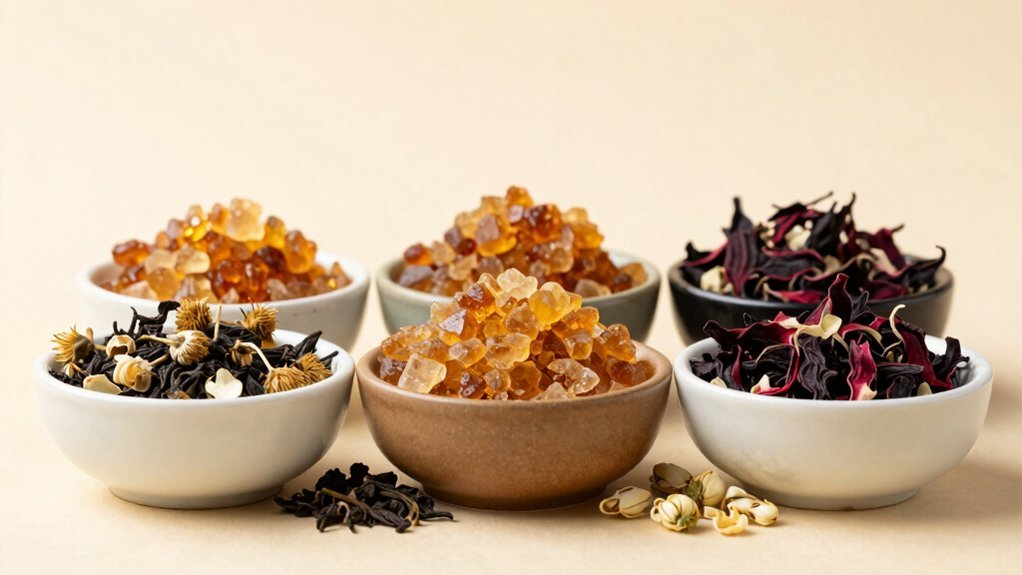
You’re looking to elevate your natural tea blends, but you’re not sure which coconut sugar will deliver the best flavor and health benefits. Whether you’re after subtle caramel notes, bulk savings, or that perfect maple undertone, the right choice can transform your tea experience. Let’s explore five options that’ll help you decide which one suits your brewing style best.
| MADHAVA Organic Coconut Sugar 3 Lb. Bag |  | Heritage Brand Excellence | Package Size: 48 oz (3 lbs) | Glycemic Index/Blood Sugar Impact: Not specified | Flavor Profile: Natural sweetener; no distinct flavor notes | CHECK ON AMAZON | Read Our Analysis |
| Terrasoul Organic Coconut Sugar 2 Lbs Low Glycemic |  | Budget-Friendly Pick | Package Size: 32 oz (2 lbs) | Glycemic Index/Blood Sugar Impact: Low glycemic; minimizes sugar spike | Flavor Profile: Not specified | CHECK ON AMAZON | Read Our Analysis |
| Z Natural Foods Organic Coconut Sugar 10 lbs |  | Best Overall Value | Package Size: 160 oz (10 lbs) | Glycemic Index/Blood Sugar Impact: Glycemic index 35; gentler energy rise | Flavor Profile: Toasted coconut, caramel, maple-like sweetness | CHECK ON AMAZON | Read Our Analysis |
| Copra Organic Coconut Sugar Natural Sweetener (2.2 lbs) |  | Best for Health-Conscious | Package Size: 35.2 oz (2.2 lbs) | Glycemic Index/Blood Sugar Impact: Low glycemic index; steadier blood sugar | Flavor Profile: Nutty, earthy, caramel-like notes | CHECK ON AMAZON | Read Our Analysis |
| Big Tree Farms Organic Golden Coconut Sugar (1 Pound) |  | Sustainability Leader | Package Size: 16 oz (1 lb) | Glycemic Index/Blood Sugar Impact: Low glycemic index | Flavor Profile: Light, clean taste | CHECK ON AMAZON | Read Our Analysis |
More Details on Our Top Picks
MADHAVA Organic Coconut Sugar 3 Lb. Bag
If you’re seeking a clean, unrefined sweetener that doesn’t compromise on purity or sustainability, MADHAVA Organic Coconut Sugar is your ideal choice. This 3-pound bag offers a 1:1 replacement for granulated sugar in your tea blends without requiring recipe adjustments. You’ll appreciate its natural sweetness derived from sustainably harvested coconut palms on Indonesian family farms. The product’s Clean Label Project certification confirms it’s tested for over 200 contaminants, including heavy metals and pesticides. With USDA Organic, Non-GMO Project Verified, and Kosher certifications, you’re getting a vegan, gluten-free sweetener backed by MADHAVA’s five-decade commitment to clean, organic foods since 1973.
- Package Size:48 oz (3 lbs)
- Glycemic Index/Blood Sugar Impact:Not specified
- Flavor Profile:Natural sweetener; no distinct flavor notes
- Certifications & Quality Standards:USDA Organic, Non-GMO Project Verified, Kosher, gluten-free, vegan; Clean Label Project tested
- Primary Sourcing Region:Indonesia
- Sustainability Commitment:Sustainably harvested from family farms; partnerships with local organic farmers
- Additional Feature:Clean Label Project tested
- Additional Feature:48-ounce bag size
- Additional Feature:Brand heritage since 1973
Terrasoul Organic Coconut Sugar 2 Lbs Low Glycemic
You’ll find Terrasoul Organic Coconut Sugar ideal for sweetening your daily tea without the blood sugar spike that comes with refined white sugar. This USDA-certified organic product delivers trace minerals your body needs while maintaining a low glycemic index. The 2-pound bag contains pure coconut palm sugar—nothing else—making it a genuinely unrefined choice. You can substitute it one-to-one for regular sugar in any recipe, whether you’re brewing tea or baking. It’s also certified kosher, non-GMO, gluten-free, and vegan, appealing to various dietary preferences. Use it to minimize energy crashes while enjoying natural sweetness in your favorite beverages.
- Package Size:32 oz (2 lbs)
- Glycemic Index/Blood Sugar Impact:Low glycemic; minimizes sugar spike
- Flavor Profile:Not specified
- Certifications & Quality Standards:USDA Organic, Kosher, Non-GMO, gluten-free, vegan
- Primary Sourcing Region:Not specified
- Sustainability Commitment:Not emphasized
- Additional Feature:Trace minerals included
- Additional Feature:32-ounce bag size
- Additional Feature:Minimizes sugar spike
Z Natural Foods Organic Coconut Sugar 10 lbs
For health-conscious tea enthusiasts seeking a natural sweetener that won’t spike blood sugar, Z Natural Foods Organic Coconut Sugar delivers what conventional sugar can’t. With a low glycemic index of 35, you’ll experience gentler energy rises without crashes. The 10-pound bulk package suits regular tea drinkers and bakers alike, offering excellent value. You’ll appreciate the fragrant toasted coconut and subtle maple-like notes that enhance black, green, and herbal teas beautifully. This organic, non-GMO, vegan option works as a 1:1 sugar substitute, making changes seamless. Sourced sustainably from coconut palms, you’re choosing an environmentally conscious sweetener that’s both nutrient-dense and unrefined.
- Package Size:160 oz (10 lbs)
- Glycemic Index/Blood Sugar Impact:Glycemic index 35; gentler energy rise
- Flavor Profile:Toasted coconut, caramel, maple-like sweetness
- Certifications & Quality Standards:Non-GMO, vegan, gluten-free
- Primary Sourcing Region:Not specified
- Sustainability Commitment:Sustainably sourced from coconut palm trees; replenishes depleted soils
- Additional Feature:Glycemic index 35
- Additional Feature:Toasted coconut caramel notes
- Additional Feature:Largest package size
Copra Organic Coconut Sugar Natural Sweetener (2.2 lbs)
Health-conscious tea enthusiasts seeking a natural sweetener without the blood sugar spike will find Copra Organic Coconut Sugar an ideal choice. This 2.2-lb package delivers pure, unrefined sweetness harvested from Thai coconut palm blossoms. You’ll appreciate its nutty, caramel-like flavor that complements tea beautifully while maintaining a 1:1 ratio to regular sugar. The low glycemic index keeps your energy stable, making it perfect for keto-friendly routines. Beyond tea, you can use it in coffee, baking, and cooking. Supporting sustainable farming practices, Copra sources directly from local Thai farmers using traditional harvesting techniques, ensuring your purchase preserves cultural heritage and rural communities.
- Package Size:35.2 oz (2.2 lbs)
- Glycemic Index/Blood Sugar Impact:Low glycemic index; steadier blood sugar
- Flavor Profile:Nutty, earthy, caramel-like notes
- Certifications & Quality Standards:Non-GMO, vegan, gluten-free
- Primary Sourcing Region:Thailand
- Sustainability Commitment:Sustainably sourced; supports rural Thai communities; preserves cultural heritage
- Additional Feature:Keto-friendly option
- Additional Feature:Thai farmer direct sourcing
- Additional Feature:Nutty earthy caramel notes
Big Tree Farms Organic Golden Coconut Sugar (1 Pound)
If you’re crafting natural tea blends and want a sweetener that dissolves seamlessly without overpowering delicate flavors, Big Tree Farms’ Golden Coconut Sugar is your ideal choice. You’ll appreciate its fine crystals and light, clean taste that complements herbal and delicate tea varieties. As a 1:1 substitute for refined cane sugar, you can swap it directly into your recipes without adjustments. The low glycemic index makes it suitable for special diets, while its rich mineral and amino acid content adds nutritional value. You’re also supporting sustainable farming practices—coconut trees aren’t cut after harvesting and yield 75% more sugar per acre than traditional crops, ensuring long-term environmental benefits.
- Package Size:16 oz (1 lb)
- Glycemic Index/Blood Sugar Impact:Low glycemic index
- Flavor Profile:Light, clean taste
- Certifications & Quality Standards:Organic, unrefined, unprocessed
- Primary Sourcing Region:Not specified
- Sustainability Commitment:World’s largest sustainable coconut supply chain; commitment to farmer communities
- Additional Feature:Quick-dissolving fine crystals
- Additional Feature:40-year nectar usability
- Additional Feature:Largest sustainable supply chain
Factors to Consider When Choosing Coconut Sugar for Natural Tea Blend Sweetening
When you’re selecting coconut sugar for your natural tea blends, you’ll want to evaluate how quickly it dissolves and whether it clouds your beverage, since clarity can affect the visual appeal of your final product. You should also consider how the sugar’s subtle caramel notes will complement your specific tea’s flavor profile and whether its lower glycemic index aligns with your health goals. Finally, verify the organic certification standards and sourcing practices to guarantee you’re choosing a product that meets your sustainability values.
Dissolution Rate And Clarity
You’ll find that golden coconut sugar with fine crystals dissolves quickly and blends seamlessly into your tea, making it an attractive alternative to refined white sugar. The crystal size directly impacts dissolution speed—finer granules break down faster in hot liquids, while coarser varieties may leave residue.
Keep in mind that coconut sugar’s natural golden hue can slightly tint lighter teas and beverages, affecting perceived clarity. If you prefer pristine transparency, this consideration matters. However, many prefer this subtle coloring as it complements herbal and white tea blends beautifully.
When selecting coconut sugar, check product descriptions for dissolution rates and crystal specifications. Most brands market their products as 1:1 substitutes precisely because proper processing guarantees smooth blending with minimal stirring required.
Flavor Profile Compatibility
Beyond its technical performance in your cup, coconut sugar brings distinct flavor notes that can either enhance or subtly shift your tea experience. You’ll notice its toasted coconut and caramel-like profile with subtle maple notes won’t overpower chai, black, or herbal teas. The nutty, earthy backbone delivers gentle, rounded sweetness rather than a sharp sugary edge, making it ideal for milder blends.
Consider that coconut sugar’s slight aromatic quality enhances aromatic teas beautifully but may influence delicate floral blends. Its 1:1 substitution ratio lets you adjust sweetness while preserving your tea’s natural character. Because coconut sugar is unrefined with a low glycemic profile, you’ll avoid strong aftertastes that compromise tea flavor.
Glycemic Index Impact
Since blood sugar management matters when sweetening your daily tea, coconut sugar’s low glycemic index (GI) of around 35 offers a meaningful advantage over refined white sugar. You’ll experience a slower, more gradual energy increase rather than the sharp spikes that high-GI sugars create. This steadier blood glucose response supports better energy stability throughout your day.
When selecting coconut sugar for your tea blend, check the product label for specific GI claims. Some brands emphasize “low glycemic” without listing numeric values, so verify the actual GI rating when possible. Since GI values vary by product, comparing options helps you choose the sweetener that best aligns with your blood sugar management goals and tea preferences.
Organic Certification Standards
What certifications should matter most when you’re selecting coconut sugar for your tea blends? USDA Organic certification proves your sweetener’s produced without synthetic pesticides, fertilizers, or irradiation while meeting strict farming and processing standards. You’ll also find products carrying Non-GMO Project Verified, Kosher, gluten-free, and vegan certifications—each signaling compliance with specific program criteria relevant to your preferences.
Beyond labels, independent testing programs like Clean Label Project assess purity and screen for contaminants such as heavy metals and pesticides. Organic certification requires documented traceability from harvest through processing, strengthening organic integrity. However, certifications don’t guarantee complete absence of all contaminants, so ongoing quality verification remains essential for your peace of mind.
Sourcing And Sustainability
How you source your coconut sugar matters as much as its certification. When selecting coconut sugar for your tea blends, prioritize producers who work with smallholder and family farms using traditional harvesting methods. This approach directly supports rural communities while maintaining sustainable practices.
Look for suppliers emphasizing organic, non-GMO, and pesticide-free farming. These practices protect soil health and biodiversity, ensuring long-term environmental stability. Coconut palms don’t require removal for sugar production—tappers harvest sap from blossoms, allowing trees to thrive for decades and yield nectar continuously.
High per-acre yields combined with extended tree lifespans contribute to efficient land use. By choosing responsibly sourced coconut sugar, you’re investing in a renewable supply chain that benefits both your tea blends and global farming communities.
Package Size Options
Coconut sugar comes in multiple package sizes, ranging from 1 lb to 10 lb bags, allowing you to match your purchase to your specific needs. If you’re experimenting with coconut sugar for the first time, a 1 lb pack lets you trial it without overcommitting. For regular household tea sweetening, 2 lb to 3 lb sizes strike the right balance between convenience and storage practicality. When you use coconut sugar frequently across multiple blends or prepare tea in bulk, a 10 lb bag becomes economical, though it demands more pantry space. Beyond quantity, evaluate bag resealability and material quality—these factors directly impact freshness and make measuring easier when sweetening your tea.
Mineral Content Benefits
Beyond selecting the right package size, you’ll want to contemplate what nutritional benefits coconut sugar brings to your tea blends. Coconut sugar contains trace minerals that complement a balanced diet when used moderately. While the mineral content per serving remains modest, it’s more nutrient-dense than refined sugar, offering small amounts of minerals with each cup.
You should view coconut sugar as a supplementary mineral source rather than a primary one. Many brands market their products with a low glycemic index alongside mineral content, potentially supporting steadier energy levels. When you incorporate coconut sugar into your tea routine, these minerals work alongside other nutrients in your daily intake, providing incremental nutritional value without overstating their significance.
Cost Per Serving
When you’re budgeting for coconut sugar in your tea blends, calculating cost per serving becomes essential to making an informed purchase decision. Divide the bag’s price by the total servings you’ll extract using a 1:1 sugar substitution ratio. Since one teaspoon weighs roughly four grams, your cost per teaspoon equals the bag’s price divided by its weight in grams times four. For tablespoons, which weigh about twelve grams, use the same formula with twelve as your divisor. Larger bags typically offer better per-serving costs, though you’ll want to account for potential storage issues like clumping or spoilage that reduce usable servings. Always verify the product label’s actual price per gram for the most accurate calculation.
Frequently Asked Questions
How Does Coconut Sugar’s Glycemic Index Compare to Regular Cane Sugar and Stevia?
You’ll find coconut sugar has a lower glycemic index than cane sugar, sitting around 35 compared to cane’s 68. Stevia’s got zero glycemic impact since you’re not digesting carbohydrates.
Can Coconut Sugar Crystallize or Clump in Humid Storage Conditions?
You’ll find that coconut sugar can crystallize and clump in humid conditions because it’s hygroscopic—it absorbs moisture from the air. You’ll want to store it in airtight containers with desiccant packets to prevent this.
What Is the Optimal Water Temperature for Dissolving Coconut Sugar in Tea?
You’ll dissolve coconut sugar best in water heated to 160-180°F (70-80°C). You don’t need boiling water; this temperature range allows you to fully dissolve the crystals while preserving your tea’s delicate flavors and beneficial compounds.
Does Coconut Sugar Have a Noticeable Taste That Affects Delicate Tea Flavors?
You’ll find coconut sugar has a subtle caramel undertone that doesn’t overpower delicate teas. It won’t mask floral or light notes, making it ideal for premium blends where you want the tea’s natural character to shine through.
How Long Does Unopened Coconut Sugar Remain Fresh and Potent?
You’ll find that unopened coconut sugar stays fresh and potent for two to three years when you store it in a cool, dry place. Proper sealing prevents moisture absorption and keeps its quality intact throughout that timeframe.

Leave a Reply