
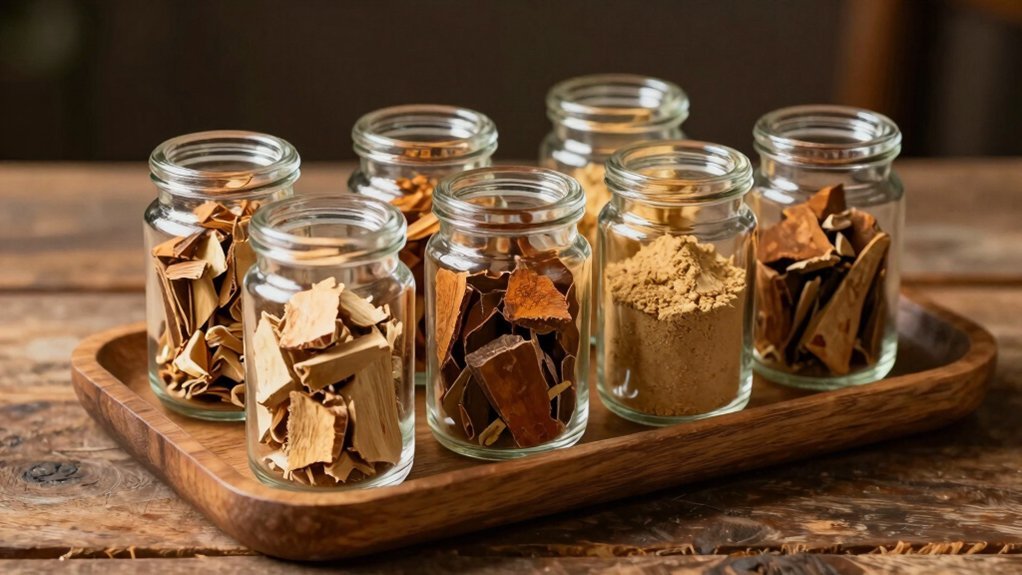
When you’re seeking relief from throat discomfort, you’ll find that slippery elm bark tea blends offer a natural solution worth considering. But with countless options flooding the market, you’re probably wondering which products actually deliver results. The right choice depends on several factors—from certification standards to ingredient quality. We’ve identified five standout options that deserve your attention, each with distinct advantages you should know about.
| Traditional Medicinals Organic Throat Coat Tea |  | Herbalist-Formulated Classic | Primary Throat-Soothing Ingredients: Licorice root, slippery elm bark | Organic Certification: USDA Certified Organic | Caffeine Content: Caffeine-free | CHECK ON AMAZON | Read Our Analysis |
| Premium Happy Throat Herbal Tea (75 Bags) |  | Most Comprehensive Blend | Primary Throat-Soothing Ingredients: Marshmallow root, slippery elm bark, licorice | Organic Certification: Non-GMO botanicals | Caffeine Content: Caffeine-free | CHECK ON AMAZON | Read Our Analysis |
| Slippery Elm Bark Tea Cut and Sifted |  | Pure & Customizable | Primary Throat-Soothing Ingredients: Slippery elm bark | Organic Certification: No certification stated | Caffeine Content: No caffeine stated | CHECK ON AMAZON | Read Our Analysis |
| Yogi Tea Throat Comfort Herbal Tea (4 Packs) |  | Balanced Flavor Profile | Primary Throat-Soothing Ingredients: Licorice root, slippery elm bark, wild cherry bark | Organic Certification: USDA Organic | Caffeine Content: Caffeine-free | CHECK ON AMAZON | Read Our Analysis |
| Traditional Medicinals Organic Throat Coat Tea |  | Respiratory Support Blend | Primary Throat-Soothing Ingredients: Eucalyptus, licorice root, slippery elm bark | Organic Certification: USDA Certified Organic | Caffeine Content: Caffeine-free | CHECK ON AMAZON | Read Our Analysis |
More Details on Our Top Picks
Traditional Medicinals Organic Throat Coat Tea
If you’re seeking an herbalist-formulated tea that soothes your throat while respecting environmental standards, Traditional Medicinals Organic Throat Coat Tea delivers both. This 16-bag box combines licorice root and domestically sourced slippery elm bark for a sweet, silky flavor that coats your throat effectively. You’ll appreciate the USDA Certified Organic and Fair Wild Certified credentials, ensuring sustainable sourcing practices. The caffeine-free blend supports throat health during conversations or provides digestive comfort as an alternative remedy. Kosher-certified and packaged in compostable tea bags, this herbalist-formulated option aligns with your wellness and environmental values without compromise.
- Primary Throat-Soothing Ingredients:Licorice root, slippery elm bark
- Organic Certification:USDA Certified Organic
- Caffeine Content:Caffeine-free
- Form & Packaging:16 pre-packaged tea bags
- Additional Flavor Components:Sweet, silky licorice flavor
- Vegan & Dietary Considerations:No animal products stated
- Additional Feature:Domestically sourced slippery elm
- Additional Feature:Fair Wild Certified Ingredients
- Additional Feature:Herbalist-formulated blend
Premium Happy Throat Herbal Tea (75 Bags)
You’ll find our Premium Happy Throat Herbal Tea is the ideal choice when you’re seeking soothing throat relief without compromise on taste or quality. This 75-bag collection combines marshmallow root, slippery elm bark, and licorice for powerful throat coating, enhanced with ginger and turmeric for additional support. Chamomile, peppermint, and cinnamon create a warm, naturally sweet infusion without bitterness. Fennel adds subtle sweetness, eliminating your need for added sugars. You get caffeine-free convenience suitable for any time, especially evenings. Our premium, non-GMO botanicals arrive individually wrapped to preserve freshness. Vegan and gluten-free, this blend contains zero artificial additives, delivering genuine herbal comfort in every cup.
- Primary Throat-Soothing Ingredients:Marshmallow root, slippery elm bark, licorice
- Organic Certification:Non-GMO botanicals
- Caffeine Content:Caffeine-free
- Form & Packaging:75 individually wrapped tea bags
- Additional Flavor Components:Ginger, turmeric, chamomile, peppermint, cinnamon, fennel
- Vegan & Dietary Considerations:Vegan, gluten-free, no added sugars
- Additional Feature:75 tea bags per box
- Additional Feature:Individually wrapped bags
- Additional Feature:No added sugars
Slippery Elm Bark Tea Cut and Sifted
This premium cut and sifted slippery elm bark is ideal for anyone seeking a natural throat soother that’s ready to brew without grinding or further preparation. You’ll appreciate the convenience of the 56-gram resealable bag containing Ulmus rubra from North America. Simply steep one tablespoon in boiling water for 10–15 minutes to activate the mucilage’s gel-like, soothing properties. Strain and enjoy with optional honey, cinnamon, or lemon for enhanced palatability. The mild earthy flavor becomes quite pleasant with sweeteners. This straightforward preparation method lets you harness slippery elm’s traditional throat-coating benefits efficiently and effectively.
- Primary Throat-Soothing Ingredients:Slippery elm bark
- Organic Certification:No certification stated
- Caffeine Content:No caffeine stated
- Form & Packaging:56 grams cut and sifted, resealable bag
- Additional Flavor Components:Mild earthy flavor; optional honey, cinnamon, or lemon
- Vegan & Dietary Considerations:No dietary specifications stated
- Additional Feature:Cut and sifted form
- Additional Feature:Throat Chakra meditation practice
- Additional Feature:Native American traditional use
Yogi Tea Throat Comfort Herbal Tea (4 Packs)
For anyone seeking a certified organic tea blend specifically formulated to soothe throat irritation, Yogi Tea Throat Comfort offers a thoughtfully balanced combination of slippery elm bark, licorice root, wild cherry bark, and orange peel. You’ll appreciate the vegan formula that delivers Western herbalism’s time-tested approach to minor throat irritation relief. Each pack contains 16 bags across four total packs, making it convenient for consistent daily use. Simply steep one or two bags in boiled water for seven minutes. You can comfortably consume three to six cups throughout your day. The blend earns USDA Organic and NON-GMO certifications, ensuring you’re getting quality botanicals without compromises. Yogi’s distinctive flavor profile makes throat comfort both effective and enjoyable.
- Primary Throat-Soothing Ingredients:Licorice root, slippery elm bark, wild cherry bark
- Organic Certification:USDA Organic
- Caffeine Content:Caffeine-free
- Form & Packaging:64 tea bags (4 packs of 16)
- Additional Flavor Components:Wild cherry bark, orange peel
- Vegan & Dietary Considerations:Vegan
- Additional Feature:Wild Cherry Bark inclusion
- Additional Feature:Orange Peel aromatic component
- Additional Feature:Yogi signature flavor profile
Traditional Medicinals Organic Throat Coat Tea
Those seeking a certified organic throat-support blend with deep herbal roots will find Traditional Medicinals Organic Throat Coat Tea an ideal choice. You’ll appreciate the herbalist-formulated combination of eucalyptus, licorice root, and slippery elm bark—ingredients rooted in Native American and Australian Aboriginal traditions. Each box contains 16 compostable tea bags, delivering a sweet, earthy flavor with invigorating mint notes. The USDA Certified Organic and Fair Wild Certified formulation supports both throat health and respiratory function. You’re getting caffeine-free, non-GMO quality in every sip, making this an exceptional option for natural throat comfort.
- Primary Throat-Soothing Ingredients:Eucalyptus, licorice root, slippery elm bark
- Organic Certification:USDA Certified Organic
- Caffeine Content:Caffeine-free
- Form & Packaging:16 pre-packaged tea bags
- Additional Flavor Components:Sweet earthy taste with refreshing mint hint
- Vegan & Dietary Considerations:No dietary specifications stated
- Additional Feature:Eucalyptus respiratory support blend
- Additional Feature:Australian Aboriginal herbal tradition
- Additional Feature:Refreshing mint hint flavor
Factors to Consider When Choosing Dried Slippery Elm Bark for Throat-Coating Tea Blends
When you’re selecting dried slippery elm bark for your throat-coating tea blends, you’ll want to evaluate sourcing practices that prioritize sustainability and environmental stewardship. You should also assess the mucilage content and potency of different suppliers, then decide whether cut-and-sifted or whole bark better suits your blending needs. Additionally, you’ll need to verify organic certification, confirm flavor compatibility with your other ingredients, and guarantee the product meets your quality standards.
Sourcing And Sustainability Practices
Why does sourcing matter so much? When you’re selecting slippery elm bark for your tea blends, you’re supporting either sustainable practices or contributing to overharvesting that threatens elm populations.
You’ll want to look for certifications like Fair Wild and USDA Organic, which guarantee ethical sourcing and biodiversity protection. Domestically sourced bark collected through sustainable harvesting practices guarantees responsible yield and regeneration of elm forests.
Beyond the bark itself, consider suppliers emphasizing non-GMO botanicals and vegan formulations as part of their broader quality standards. You’ll also find that many responsible companies use compostable packaging materials, reducing environmental impact throughout the entire product lifecycle.
These choices directly reflect your commitment to environmental stewardship while enjoying your throat-coating tea.
Mucilage Content And Potency
The throat-coating magic of slippery elm bark comes from mucilage—a gel-like polysaccharide that swells when it meets water and creates that soothing protective layer you’re seeking. You’ll want to prioritize fresher, well-preserved bark since mucilage potency directly depends on harvest age and storage conditions.
When selecting your bark, choose powdered or finely cut varieties. Higher surface area dramatically enhances extraction, delivering thicker, more effective coatings. You’ll maximize mucilage release by simmering the bark in hot water for 10–15 minutes rather than steeping it briefly.
Quality matters considerably here. Superior bark yields more viscous compounds, while poorly stored or aged bark produces weaker results. Inspect your source carefully—fresher bark translates directly to stronger throat-coating benefits in your final tea blend.
Cut And Sifted Versus Whole
Once you’ve understood how mucilage content drives effectiveness, you’ll need to decide between cut and sifted bark or whole pieces—a choice that directly impacts your brewing experience and results.
Cut and sifted bark offers superior convenience. You’ll measure easily with standard tablespoons and achieve consistent extraction. One tablespoon per cup of water simmered for 10–15 minutes reliably releases the mucilaginous properties you’re seeking. The smaller particles maximize surface area contact with hot water, ensuring efficient gel formation.
Whole pieces require longer steeping times and more careful measuring, making preparation less predictable. They’re bulkier to store and harder to portion accurately.
For throat-coating tea blends, cut and sifted bark delivers the straightforward preparation and dependable results you need. You’ll spend less time brewing while maximizing the soothing benefits.
Organic Certification Requirements
If you’re committed to sourcing the highest-quality slippery elm bark for your throat-coating tea blends, organic certification offers verifiable assurance that you’re getting a product produced without synthetic pesticides, fertilizers, or GMOs. Look for labels displaying “USDA Organic” or equivalent designations from accredited certification bodies. These organizations conduct regular inspections and maintain detailed documentation tracking your bark from farm through processing. You’ll benefit from guaranteed record-keeping that documents batch histories, purity tests, and contamination controls. Certified products must be processed in approved organic facilities with strict segregation from non-organic materials. This rigorous oversight guarantees the integrity and safety of every step—from harvest to your final tea blend—giving you genuine peace of mind about your purchase.
Flavor Profile Compatibility
Since slippery elm bark contributes a mild, earthy, and mucilage-rich base to your tea blends, you’ll want to pair it thoughtfully with complementary flavors rather than aggressive ones. Licorice root or natural sweeteners enhance the bark’s inherent sweetness while creating that silky mouthfeel you’re seeking. Floral and herbal accents like chamomile or peppermint balance earthiness and add invigorating aromatics. Warming spices such as cinnamon or ginger introduce comfort without overpowering the mucilage core. However, use citrus or orange peel sparingly—these bright notes can clash with the bark’s delicate profile and compromise the smooth, coating sensation that makes slippery elm beneficial for throat health.
Preparation Methods And Extraction
How you prepare dried slippery elm bark directly determines the quality of mucilage extraction and the tea’s therapeutic benefit for your throat. Start by simmering one tablespoon of dried bark in one cup of water for 10–15 minutes after bringing it to a boil. This gentle heating activates the inner bark’s mucilage, which swells and creates that signature smooth, soothing coating.
Strain the mixture carefully to remove all bark pieces while preserving the viscous gel-like liquid. If you want a stronger infusion, increase the bark amount or extend simmering time—just monitor how the flavor and texture develop. You can enhance palatability by adding honey, cinnamon, or lemon after steeping completes. These adjustments let you customize your tea’s strength and taste.
Packaging And Freshness Preservation
Your choice of packaging directly impacts the slippery elm bark’s shelf life and therapeutic potency. You’ll want resealable designs that minimize air exposure after opening, preserving the mucilage quality essential for throat-coating benefits.
Individually wrapped tea bags maintain aroma and freshness between uses, offering convenience without sacrificing quality. Opt for multi-pack quantities like 16-bag packages or multiple packs, which sustain freshness across extended storage periods.
Prioritize compostable or recyclable packaging that still provides adequate barrier protection against moisture and light—two primary freshness threats. Check the label for explicit storage guidance and freshness preservation recommendations, which help you optimize shelf life and maximize the product’s therapeutic effectiveness.
Blend Complementary Ingredients
While slippery elm bark delivers exceptional throat-coating benefits on its own, pairing it with complementary ingredients elevates both flavor and therapeutic value. You’ll enhance sweetness and soothing properties by combining slippery elm with licorice root or marshmallow root. Adding chamomile creates a calming infusion perfect for relaxation, while ginger and cinnamon introduce warmth and subtle spice without bitterness. For palate refreshment, incorporate peppermint or orange peel alongside your base. If you’re seeking respiratory support, blend in eucalyptus and fennel to create aromatic depth and balance. These strategic combinations transform your tea from functional to genuinely enjoyable, ensuring you’ll consistently reach for your throat-coating blend throughout the day.
Frequently Asked Questions
How Long Does Slippery Elm Bark Take to Work for Throat Relief?
You’ll typically notice slippery elm bark’s soothing effects within 15-30 minutes of consuming it as a tea. You’ll experience the throat-coating benefits relatively quickly, though you’ll achieve best relief with consistent use over several days.
Can I Mix Slippery Elm Bark With Other Herbal Remedies Safely?
Yes, you can safely mix slippery elm bark with other herbal remedies like ginger, honey, or licorice root. However, you shouldn’t combine it with medications you’re taking without consulting your healthcare provider first.
What Is the Recommended Daily Dosage for Slippery Elm Bark Tea?
You’ll want to consume 1-2 teaspoons of dried slippery elm bark per cup of water, up to three times daily. You shouldn’t exceed 6 grams daily without consulting your healthcare provider, especially if you’re taking medications.
Are There Any Side Effects or Contraindications With Slippery Elm Bark?
You’ll generally tolerate slippery elm well, but you shouldn’t take it if you’re pregnant or nursing. It may interact with medications, so you should consult your doctor first. Some people experience mild digestive upset.
How Should I Store Dried Slippery Elm Bark to Maintain Freshness?
You’ll keep your dried slippery elm bark fresh by storing it in an airtight container away from direct sunlight, heat, and moisture. A cool, dark cupboard or pantry works best. It’ll stay potent for up to two years.

Leave a Reply