
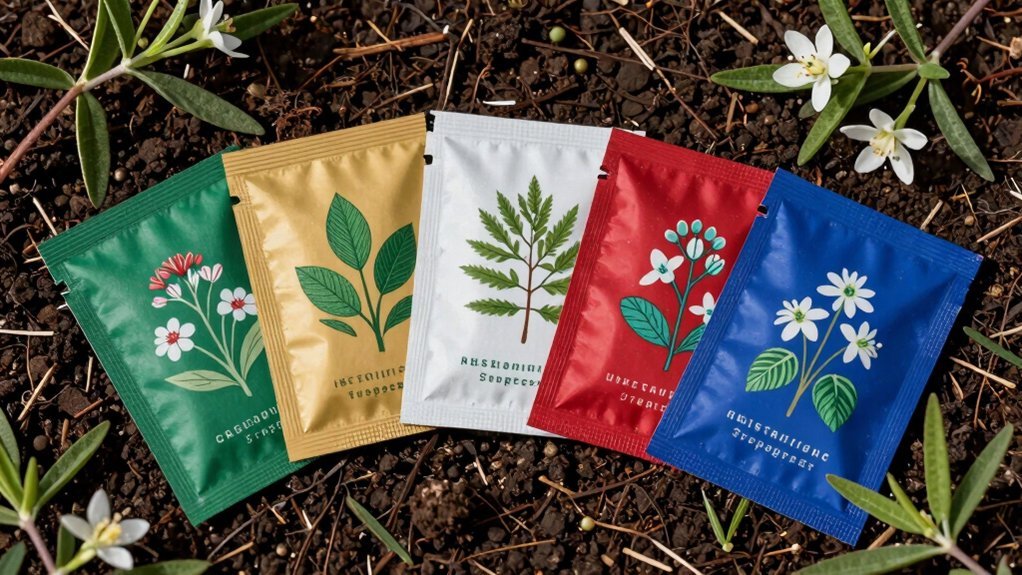
If you’re looking to grow your own stevia plants this year, you’ll want to know which seed packets actually deliver reliable germination and quality seeds. Not all stevia varieties perform equally, and choosing the wrong packet can waste your time and money. We’ve tested the top five options that’ll help you cultivate this natural sweetener successfully. But first, you’ll need to understand what separates the winners from the rest.
| Stevia Seeds for Planting – Natural Sweet Herb |  | Best for Experts | Seed Count: 20–24 seeds | Seed Quality: Heirloom, non-GMO, open-pollinated, untreated, quality tested | Germination Timeline: 7–14 days (at 75°F) | CHECK ON AMAZON | Read Our Analysis |
| 100PCS Sweetleaf Stevia Plant Seeds for Planting Stevia Plant Seeds |  | Best Value | Seed Count: 100 seeds | Seed Quality: Not specified | Germination Timeline: Not specified | CHECK ON AMAZON | Read Our Analysis |
| 100PCS Stevia Rebaudiana Seeds Herb Seeds |  | Best for Beginners | Seed Count: 100 seeds | Seed Quality: Not specified | Germination Timeline: Not specified | CHECK ON AMAZON | Read Our Analysis |
| Outsidepride Stevia Sweetleaf Seeds (50 Pcs) |  | Editor’s Choice | Seed Count: 50 seeds | Seed Quality: Natural, organic | Germination Timeline: 7–14 days (at 68–75°F) | CHECK ON AMAZON | Read Our Analysis |
| Plant Good Seed Organic Stevia Seeds Packet (35 Seeds) |  | Best Organic Option | Seed Count: 35 seeds (minimum) | Seed Quality: Organic, non-GMO, heirloom, untreated, open-pollinated, germination tested | Germination Timeline: Not specified | CHECK ON AMAZON | Read Our Analysis |
More Details on Our Top Picks
Stevia Seeds for Planting – Natural Sweet Herb
Are you searching for a way to grow your own natural sweetener at home? Stevia rebaudiana, commonly called sweetleaf, offers you exactly that. You’ll use the leaves as a healthy sugar alternative in teas, recipes, and homemade sweeteners. This tender perennial thrives in warm climates (Zones 8–11) or indoors with supplemental heat and frost protection. While challenging, it’s rewarding for experienced growers. Each packet contains 20–24 heirloom non-GMO seeds from Survival Garden Seeds, a family-owned USA business. Expect a 10–40% germination rate. You’ll sow seeds indoors 8–10 weeks before your last frost at 75°F, barely covering them since light aids germination. Sprouts typically emerge within 7–14 days, and you can propagate additional plants from cuttings once established.
- Seed Count:20–24 seeds
- Seed Quality:Heirloom, non-GMO, open-pollinated, untreated, quality tested
- Germination Timeline:7–14 days (at 75°F)
- Suitable Growing Zones:Zones 8–11 or indoors
- Soil Requirements:Thrives in poor soil
- Growing Instructions Included:Care and handling notes provided
- Additional Feature:Low germination rate disclosed
- Additional Feature:Propagatable from cuttings
- Additional Feature:USA family-owned business
100PCS Sweetleaf Stevia Plant Seeds for Planting Stevia Plant Seeds
The 100PCS Sweetleaf Stevia Plant Seeds packet is your ideal choice whether you’re a beginner looking to start your first herb garden or an experienced gardener ready to expand your cultivation. You’ll receive thorough planting care guidance covering everything from sowing to maintenance, ensuring successful growth. These perennial seeds thrive in multiple environments—outdoor gardens, greenhouses, or indoor containers. You can grow fresh stevia leaves for personal use, gifting, or selling at markets. The versatility of this packet makes it perfect for large-scale planting or modest home expansion. With clear instructions included, you’ll cultivate a natural sweetener supply that sustains year after year.
- Seed Count:100 seeds
- Seed Quality:Not specified
- Germination Timeline:Not specified
- Suitable Growing Zones:Indoor/outdoor flexible
- Soil Requirements:Not specified
- Growing Instructions Included:Comprehensive planting care guide included
- Additional Feature:Large bulk seed count
- Additional Feature:Multi-environment cultivation options
- Additional Feature:Commercial resale potential
100PCS Stevia Rebaudiana Seeds Herb Seeds
If you’re seeking a natural sweetener you can grow right in your garden, these 100PCS Stevia Rebaudiana seeds offer you an ideal solution. This tender perennial reaches 30-60 cm in height and thrives in warm, sunny locations. You’ll want to plant it in moist, fertile, well-drained soil while maintaining consistent watering throughout the growing season. Originally native to Brazil and Paraguay, stevia prefers humid, wet environments that mimic its natural habitat. The plant features elongated leaves arranged opposite along its stems, which you’ll harvest for their natural sweetening compounds. With proper care and attention to its moisture needs, you’ll successfully cultivate a productive stevia garden.
- Seed Count:100 seeds
- Seed Quality:Not specified
- Germination Timeline:Not specified
- Suitable Growing Zones:Not specified
- Soil Requirements:Moist, fertile, well-drained soil
- Growing Instructions Included:Cultivation tips provided
- Additional Feature:Native Brazil/Paraguay origin
- Additional Feature:Prefers humid environments
- Additional Feature:30-60 cm mature height
Outsidepride Stevia Sweetleaf Seeds (50 Pcs)
For gardeners seeking a natural sweetener they can cultivate year-round, Outsidepride’s Stevia Sweetleaf Seeds offer an exceptional solution with 50 seeds per packet. You’ll enjoy harvesting tender, deep green leaves that are 30–40 times sweeter than sugar, making them perfect for sweetening beverages and teas without refined sugar. These perennial seeds germinate within 7–14 days and thrive in USDA zones 9–10 with partial shade and moderate watering. Simply space plants 12 inches apart and maintain temperatures between 68–75°F for ideal growth. You can dry and grind the leaves into powder for baking and cooking, transforming your homemade recipes while reducing sugar intake effectively.
- Seed Count:50 seeds
- Seed Quality:Natural, organic
- Germination Timeline:7–14 days (at 68–75°F)
- Suitable Growing Zones:USDA zones 9–10
- Soil Requirements:Loam soil
- Growing Instructions Included:Complete growing specifications included
- Additional Feature:30-40x sweeter than sugar
- Additional Feature:Year-round harvest capability
- Additional Feature:Powder grinding option
Plant Good Seed Organic Stevia Seeds Packet (35 Seeds)
You’ll find Plant Good Seed’s organic stevia seeds ideal if you’re seeking a certified organic, non-GMO option that’s been germination-tested for reliability. Each packet contains a minimum of 35 heirloom, open-pollinated seeds grown in the USA by a California-based company committed to quality. You’ll harvest leaves within 60 days under ideal conditions, then enjoy your homegrown sweetener in teas or ground into powder. The packet includes complete growing instructions covering planting depth, spacing, germination timeline, and seasonal requirements. While you’ll grow stevia as an annual in most North American climates, zones 9B and above allow overwintering. You’ll appreciate the company’s expertise and dedication to delivering hardy, viable seeds.
- Seed Count:35 seeds (minimum)
- Seed Quality:Organic, non-GMO, heirloom, untreated, open-pollinated, germination tested
- Germination Timeline:Not specified
- Suitable Growing Zones:Most North American climates; zones 9B+ for overwintering
- Soil Requirements:Ideal soil and climate conditions
- Growing Instructions Included:Complete growing instructions with optimal requirements included
- Additional Feature:Harvest ready 60 days
- Additional Feature:Certified organic non-GMO
- Additional Feature:USA-grown seeds sourced
Factors to Consider When Choosing a Stevia Seed Packet for Growing Natural Tea Sweetener
When you’re selecting a stevia seed packet, you’ll want to examine the seed count to guarantee you’re getting enough plants for your needs, then verify the germination rate so you know what percentage will actually sprout. Check that the variety you’re choosing thrives in your climate zone and confirm whether the seeds carry organic and non-GMO certification if those qualities matter to your growing standards. Finally, review the growth timeline to harvest so you can plan when you’ll have fresh stevia leaves ready for your tea.
Seed Count And Quantity
Three main packet sizes dominate the stevia seed market, each serving different growing goals. Small packets containing 20–24 seeds work well if you’re starting a few container plants or testing stevia cultivation. Mid-range 50-piece packets strike a balance, providing enough seeds for modest garden spaces or multiple planting attempts without overwhelming your resources. Larger 100-piece offerings suit gardeners planning extensive plots or wanting seeds across several seasons.
When selecting your packet, remember that higher seed counts demand proportionally more growing space, soil, containers, and water. Some packets guarantee minimum quantities—like “at least 35 seeds”—ensuring you’ll have viable germination rates. Assess your available space and resources honestly before choosing. A 50-piece packet often proves ideal for most home growers balancing ambition with practicality.
Germination Rate Expectations
Why do stevia seeds germinate so inconsistently? You’ll typically see germination rates between 10% and 40% in home-growing conditions. Temperature plays a vital role—you’ll want to maintain around 75°F (24°C) for best results. Light also matters greatly, so you should barely cover your seeds rather than burying them deeply. Start seeds indoors 8–10 weeks before your last frost date to maximize success.
Expect sprouts to emerge within 7–14 days under ideal warmth and moisture. However, because germination remains unpredictable, you shouldn’t rely solely on seeds. Consider starting additional plants from cuttings to guarantee a steady, reliable supply. This dual approach gives you backup plants and reduces disappointment if your seed germination underperforms. When selecting seed packets, look for fresh seeds from reputable suppliers to improve your odds.
Climate Zone Compatibility
Before you buy stevia seeds, you’ll need to take into account your climate zone since Stevia rebaudiana thrives only in USDA zones 8–11 outdoors. If you’re in cooler regions, you’ll have two main options: treat stevia as an annual or grow it indoors year-round with proper heat and light protection.
For zones outside 8–11, indoor cultivation becomes your best strategy. You’ll need adequate light and temperature control to replicate warm growing conditions. Alternatively, greenhouses or heated indoor containers can extend compatibility beyond traditional outdoor zones, allowing you to successfully overwinter plants even in variable climates.
Evaluate your local conditions before selecting seeds. This assessment guarantees you’ll choose a realistic growing method that matches your climate’s capabilities and your commitment level.
Organic And Non-GMO Certification
When you’re selecting stevia seeds for cultivating your own natural tea sweetener, you’ll want to prioritize packets labeled as organic, non-GMO, and open-pollinated. These certifications guarantee you’re getting pure, untreated seeds without genetic modification, which aligns perfectly with your natural sweetener goals.
Look for packets that explicitly state organic certification and non-GMO status. Many suppliers market heirloom and open-pollinated varieties together, supporting sustainable cultivation practices. This combination matters because open-pollinated seeds enable you to save seeds from successful plants for future seasons, reducing long-term costs while maintaining genetic integrity.
Non-GMO status guarantees you’re avoiding genetically modified organisms entirely. When you choose certified organic seeds, you’re supporting natural farming methods that produce healthier plants and superior sweetening compounds for your tea.
Growth Timeline To Harvest
Understanding your stevia seed packet’s growth timeline is essential for planning a successful harvest. You’ll typically see germination within 7–14 days when seeds receive adequate light and warmth. From there, you’re looking at approximately 60 days to reach harvestable leaf stage in ideal soil conditions around 75°F.
For indoor sowing, start seeds 8–10 weeks before your region’s last frost date to align with this timeline. However, seed viability varies considerably—some lots germinate at only 10–40%—which can substantially delay your harvest window.
Consider your climate zone too. In most North American regions, you’ll grow stevia as an annual. Only in warmer zones (9B and above) can you overwinter plants for continued harvests. Planning around these timelines ensures realistic expectations and successful growing seasons.
Indoor Versus Outdoor Cultivation
As you decide between indoor and outdoor stevia cultivation, climate becomes your primary consideration. If you’re in zones 8–11 with warm, sunny spots, outdoor growing suits your needs—stevia tolerates poorer soil and gains ground access for better spacing. However, cooler climates demand indoor cultivation with supplemental heat and bright lighting to mimic natural sun exposure.
Starting seeds indoors 8–10 weeks before your last frost at 75°F considerably improves germination success. You’ll nurture seedlings in containers before transplanting outdoors, or maintain them indoors year-round for consistent harvests. Indoor environments provide reliable warmth and controlled conditions, while outdoor growing introduces seasonal limitations depending on cold protection available. Your choice ultimately hinges on temperature stability and available light in your growing space.
Soil Requirements And Drainage
Why does drainage matter so much for stevia seedlings? Poor drainage causes root rot, which kills your plants before they establish. You’ll want moist, fertile, well-drained soil that balances water retention with aeration.
Loam soil is your best option because it naturally provides this balance. If you’re working with heavy clay or nutrient-poor soil, amend it generously with organic matter to improve both drainage and aeration for your seedlings.
For container growing, you’ve got an easier path: use a light, well-draining potting mix in pots with drainage holes. This prevents standing water that’d otherwise damage your roots. Avoid waterlogged or compacted soils entirely—they’re stevia killers. Proper drainage sets the foundation for healthy growth throughout your plant’s life.
Brand Reputation And Source
Where you source your stevia seeds matters just as much as how you plant them. You’ll want to seek suppliers offering transparent germination data and viability testing results so you can gauge reliability upfront. Look for open-pollinated, non-GMO certification with honest labeling about seed origin. Check customer reviews and return policies—they’re telling indicators of trustworthiness. Responsive customer service signals a company that stands behind its products. Prioritize providers with long-standing track records in herb seeds, which reflects stable sourcing and quality control. These established brands have proven their ability to deliver consistent results season after season. By vetting your supplier thoroughly before purchasing, you’ll greatly increase your chances of growing robust, productive stevia plants.
Frequently Asked Questions
How Long Does It Take Stevia Seeds to Germinate and Produce Harvestable Leaves?
You’ll wait about 7-10 days for stevia seeds to germinate. Once sprouted, you’ll need 60-90 days before you can harvest leaves. So expect roughly 2-3 months total from planting to your first harvest.
Can Stevia Be Grown Indoors Under Artificial Lighting Year-Round?
Yes, you can grow stevia indoors year-round under artificial lighting. You’ll need to provide 14-16 hours of light daily, maintain temperatures between 70-80°F, and guarantee proper humidity levels for ideal growth and leaf production.
What Is the Shelf Life of Stevia Seeds and Proper Storage Methods?
You’ll get 3-4 years of viability if you’re storing stevia seeds properly. Keep them in a cool, dark place—ideally between 32-41°F—inside airtight containers with silica gel packets to control moisture effectively.
Does Stevia Require Pollination or Can It Self-Pollinate Naturally?
You’ll find that stevia’s primarily self-pollinating, though it can cross-pollinate with other stevia plants when insects visit your flowers. You don’t need external pollinators for seed production, but bees improve your yields greatly.
How Do You Extract and Process Stevia Leaves Into Usable Sweetener?
You’ll harvest mature leaves, dry them completely, then steep in water to extract sweetness. Filter the liquid, evaporate it down, and you’ve got concentrated stevia syrup or powder for sweetening.

Leave a Reply