
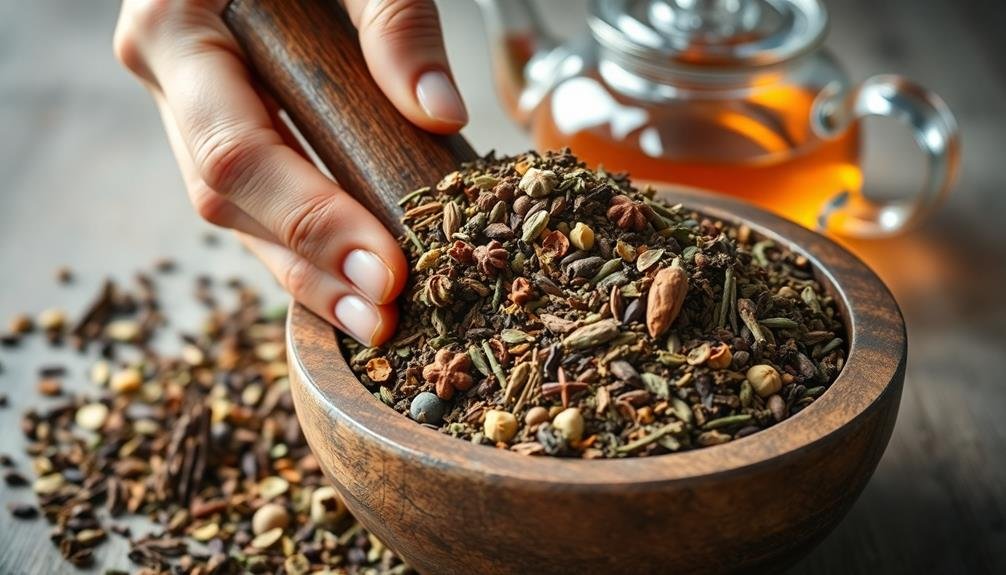
To craft custom herbal teas like an expert, focus on three key techniques. First, balance flavors and aromas by using a base herb (60-80%), accent herbs (20-30%), and enhancer herbs (5-10%). Second, select complementary herbs by evaluating flavor profiles, medicinal properties, and intensity. Pair strong herbs with milder ones and experiment with floral-citrus or earthy-sweet combinations. Third, experiment with ratios by starting with a 1:1 blend and adjusting based on your preferences and desired effects. Make small test batches and take notes on flavor, aroma, and impact. These techniques will elevate your tea-crafting skills, but there's always more to explore in the world of herbal blends.
Balancing Flavors and Aromas

Three key elements are essential when balancing flavors and aromas in custom herbal teas: base, accent, and enhancer herbs. Your base herb forms the foundation of your blend, typically comprising 60-80% of the mix. Choose a mild, pleasant-tasting herb like chamomile, peppermint, or rooibos for this role.
Accent herbs add complexity and depth, making up 20-30% of your blend. Select herbs with stronger flavors, such as lemon balm, hibiscus, or ginger, to complement your base.
Enhancer herbs are the final touch, comprising just 5-10% of the blend. These potent herbs, like lavender, cinnamon, or star anise, provide a subtle yet distinctive note. When combining herbs, consider their flavor profiles: sweet, bitter, sour, spicy, or astringent. Aim for a harmonious balance, avoiding overpowering tastes. Experiment with different ratios to find your perfect blend.
Don't forget about aroma; it's vital to the overall experience. Some herbs, like lemon verbena or jasmine, contribute more to scent than taste.
Selecting Complementary Herbs
When selecting complementary herbs for your custom tea blend, how do you guarantee they work well together? Start by considering the flavor profiles of each herb and how they might interact. Think about the dominant notes you want in your tea and choose herbs that support or enhance those flavors.
Don't forget to account for the medicinal properties of each herb, ensuring they align with your desired health benefits.
To create a harmonious blend, consider these factors:
- Balance intensity: Pair strong-flavored herbs with milder ones to avoid overpowering the blend.
- Complement flavors: Combine herbs with similar or complementary taste profiles, such as floral with citrus or earthy with sweet.
- Layer aromas: Include herbs that contribute different aromatic notes, creating a complex and inviting scent.
Experiment with small batches to fine-tune your blend. Start with a base herb that makes up about 50% of the mix, then add complementary herbs in smaller proportions.
Adjust the ratios until you achieve the desired flavor and aroma profile. Remember, crafting the perfect herbal tea blend is an art that requires patience and practice.
Experimenting With Ratios

Once you've selected your complementary herbs, it's time to fine-tune your blend by experimenting with ratios. Start with a basic 1:1 ratio for each herb and adjust from there. Keep in mind that some herbs have stronger flavors or effects than others, so you may need to use less of certain ingredients.
Begin by making small batches, typically 1-2 teaspoons total, and brew a cup to taste. Take notes on the flavor, aroma, and effects of each blend. If one herb overpowers the others, reduce its proportion in the next batch. Conversely, if you can't detect a particular herb, increase its ratio.
Consider the purpose of your tea when adjusting ratios. For a calming blend, you might use more chamomile or lavender. For an energizing mix, increase the amount of peppermint or ginger. Don't be afraid to make bold changes – you might discover unexpected combinations that work well together.
As you refine your blend, gradually increase the batch size to guarantee consistency. Remember that personal preference plays a significant role, so trust your taste buds and intuition when crafting your perfect herbal tea blend.
Frequently Asked Questions
How Long Should I Steep My Custom Herbal Tea Blend?
You'll want to steep your custom herbal tea blend for 5-10 minutes. It depends on the herbs you've used and your desired strength. Start with 5 minutes, then taste and steep longer if needed for a stronger flavor.
Can I Use Fresh Herbs Instead of Dried Ones?
Yes, you can use fresh herbs in your tea blends. They'll provide a vibrant flavor, but you'll need to use more than dried herbs. Remember, fresh herbs contain water, so adjust your steeping time accordingly.
What's the Best Way to Store My Homemade Herbal Tea Blends?
Store your homemade herbal tea blends in airtight containers away from light, heat, and moisture. You'll want to keep them in a cool, dark place. They'll stay fresh for about 6 months if stored properly.
Are There Any Herbs I Should Avoid Mixing for Safety Reasons?
You should avoid mixing certain herbs for safety. Don't combine St. John's Wort with antidepressants, or licorice root with blood pressure medications. Be cautious with comfrey, kava, and ephedra. Always research potential interactions before blending herbs.
How Can I Create Caffeine-Free Alternatives to Popular Tea Blends?
You can create caffeine-free alternatives by using herbal ingredients like rooibos, chamomile, or peppermint as bases. Experiment with adding spices, dried fruits, or flowers to mimic popular blends' flavors. Don't forget to balance tastes for a satisfying cup.
In Summary
You've now learned three expert techniques for crafting your own herbal teas. By balancing flavors and aromas, selecting complementary herbs, and experimenting with ratios, you'll be able to create unique blends tailored to your taste. Don't be afraid to try new combinations and adjust your recipes. With practice, you'll develop a keen sense for what works best. Remember, the art of tea blending is a journey of discovery. Enjoy the process and sip your creations with pride!


Leave a Reply