

You can naturally sweeten your tea blend in various delicious ways. Try adding honey for its rich flavor and potential health benefits, or use stevia leaves for a calorie-free option. Licorice root offers unique sweetness, while cinnamon provides warmth and antioxidants. Fresh fruit infusions, like berries or citrus zest, enhance your tea with natural sugars and vitamins. Experiment with vanilla bean for exotic sweetness, or mint leaves for a cool, revitalizing taste. Sweet basil adds unexpected complexity, and coconut flakes bring tropical flair. These natural sweeteners not only enhance flavor but can also offer nutritional advantages. Explore these options to transform your tea-drinking experience.
Honey: Nature's Golden Sweetener

With its rich flavor and natural sweetness, honey is a popular choice for tea lovers looking to add a touch of sweetness to their brew.
It's not just delicious; honey also offers potential health benefits, including antioxidants and antibacterial properties. When using honey in your tea, start with a small amount and adjust to taste, as it's sweeter than sugar.
To maximize honey's benefits, opt for raw, unprocessed varieties. These retain more of the natural enzymes and nutrients that can be lost during processing.
Dark honey varieties, like buckwheat or manuka, tend to have stronger flavors and higher antioxidant content.
Remember that honey can affect the taste of your tea, so choose a variety that complements your brew. For example, light, floral honeys pair well with green or white teas, while robust honeys can stand up to bold black teas.
If you're using honey in hot tea, add it after the tea has cooled slightly to maintain its beneficial properties. For iced tea, try stirring in honey while the tea is still warm to guarantee it dissolves completely.
Stevia Leaves for Zero-Calorie Sweetness
For those seeking a calorie-free alternative to honey, stevia leaves offer a natural sweetening solution. These small green leaves pack a powerful sweet punch, with compounds up to 300 times sweeter than sugar. You'll find stevia in many forms, but for the most natural option, use fresh or dried leaves.
To use fresh stevia leaves, simply add a leaf or two to your brewing tea. The heat will release the sweet compounds. For dried leaves, crush them into a fine powder and sprinkle a pinch into your cup. Start with a small amount, as stevia's intense sweetness can quickly overpower your tea's flavor.
Stevia's zero-calorie profile makes it an excellent choice for those watching their sugar intake or managing diabetes. It won't spike your blood sugar levels like traditional sweeteners.
However, some people find stevia has a slight bitter aftertaste. To minimize this, pair it with other natural flavors like mint or cinnamon in your tea blend. Experiment with different amounts to find your perfect balance of sweetness without compromising your tea's taste.
Licorice Root's Natural Sweetness
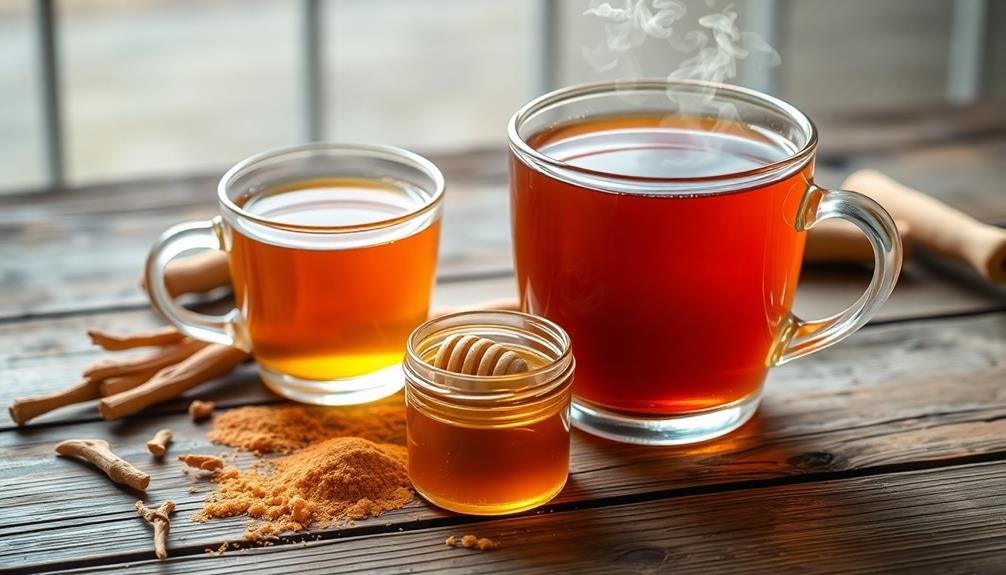
Licorice root offers a unique sweet flavor profile that can enhance your tea without added calories.
You'll find that this natural sweetener comes with potential health benefits, including anti-inflammatory properties and digestive support.
To brew, simply add a small piece of licorice root to your tea during steeping, adjusting the amount to suit your taste preferences.
Sweet Flavor Profile
Although many natural sweeteners offer a simple sugar substitute, licorice root stands out for its unique flavor profile. When you add it to your tea, you'll experience a complex sweetness that's distinctly different from sugar or honey. Licorice root's sweetness comes from glycyrrhizin, a compound that's up to 50 times sweeter than sucrose.
You'll notice that licorice root imparts a rich, full-bodied sweetness with subtle notes of anise and a slight earthiness. It's not just sweet; it adds depth and character to your tea. The sweetness lingers on your palate, creating a satisfying aftertaste that enhances the overall tea-drinking experience.
What's particularly interesting about licorice root's flavor profile is how it interacts with different types of tea. In black teas, it can complement the robust flavors, while in herbal blends, it might highlight floral or fruity notes.
With green teas, it can soften any bitter edges. By experimenting with different tea and licorice root combinations, you'll discover how this natural sweetener can transform your favorite brews into more complex and enjoyable beverages.
Health Benefits Overview
Beyond its delightful sweetness, licorice root offers a range of potential health benefits when used as a natural tea sweetener. You'll find that this versatile herb has been used for centuries in traditional medicine practices worldwide. Licorice root contains glycyrrhizin, a compound that's 50 times sweeter than sugar and boasts anti-inflammatory properties.
When you add licorice root to your tea, you're not just enhancing its flavor; you're also supporting your digestive health. It can help soothe upset stomachs and reduce acid reflux. Additionally, licorice root may boost your immune system, thanks to its antiviral and antimicrobial properties. It's known to help fight off common colds and flu symptoms.
Licorice root might also benefit your respiratory system by acting as an expectorant, helping to clear mucus from your airways. Some studies suggest it can aid in managing stress by regulating cortisol levels in your body.
However, it's crucial to use licorice root in moderation, as excessive consumption can lead to side effects like increased blood pressure. Always consult with a healthcare professional before incorporating it into your regular tea routine, especially if you have existing health conditions.
Brewing Tips
Brewing the perfect licorice root-sweetened tea requires a bit of finesse. You'll want to start with high-quality licorice root, either in dried form or as a tea bag. For loose root, use about 1-2 teaspoons per cup of water. Steep the licorice root in hot water (not boiling) for 5-10 minutes, depending on your desired strength.
To enhance the natural sweetness, you can combine licorice root with other herbs. Here's a quick guide:
| Herb Combination | Steeping Time | Flavor Profile |
|---|---|---|
| Licorice + Mint | 5-7 minutes | Cool, invigorating |
| Licorice + Ginger | 7-10 minutes | Spicy, warming |
| Licorice + Chamomile | 5-8 minutes | Floral, soothing |
Cinnamon: Spice With Sweet Notes
Cinnamon sticks add a warm, sweet flavor to tea without any extra calories. You'll find that this aromatic spice not only enhances the taste of your brew but also provides potential health benefits. When you're looking to sweeten your tea naturally, cinnamon is an excellent choice.
To use cinnamon in your tea, simply add a stick to your cup or teapot while brewing. The longer you steep it, the stronger the flavor will become. You can reuse the same cinnamon stick multiple times before discarding it, making it a cost-effective option.
Here are some benefits of using cinnamon to sweeten your tea:
- It's sugar-free and calorie-free
- Contains antioxidants
- May help regulate blood sugar levels
- Adds a comforting aroma
- Can be combined with other natural sweeteners
If you prefer a more intense cinnamon flavor, try grinding the stick into a powder and adding it directly to your tea.
You'll find that cinnamon pairs well with black, green, and herbal teas, especially those with fruity or spicy notes. Experiment with different combinations to discover your perfect cinnamon-infused tea blend.
Fresh Fruit Infusions

You'll love adding fresh fruits to your tea for a natural sweetness boost.
Try tossing in a handful of berries for a sweet punch, or add some citrus zest for a bright flavor lift.
For a luxurious twist, experiment with stone fruits like peaches or plums to infuse your tea with delightful summer flavors.
Berries for Sweet Punch
Bursting with natural sweetness, fresh berries offer a delightful way to infuse your tea with flavor and a touch of sweetness. They're not only tasty but also packed with antioxidants and vitamins. You can add berries directly to your hot or cold tea, or muddle them slightly to release more flavor.
For a revitalizing berry-infused tea, try these options:
- Strawberries: Add a subtle sweetness and vibrant red color
- Blueberries: Provide a mild, earthy flavor with a hint of tartness
- Raspberries: Offer a delicate balance of sweet and tart notes
- Blackberries: Bring a rich, bold flavor with a slight tang
- Mixed berries: Create a complex, multi-dimensional taste
When using berries to sweeten your tea, you'll want to experiment with quantities to find your perfect balance. Start with a small handful and adjust as needed.
You can also combine berries with other natural sweeteners like honey or stevia for a more pronounced sweetness. Remember that some teas pair better with certain berries, so don't be afraid to try different combinations.
For an extra burst of flavor, muddle the berries gently before adding them to your tea.
Citrus Zest Boost
Zesty and invigorating, citrus fruits offer a vibrant way to enhance your tea's flavor profile while adding a subtle sweetness. You'll find that incorporating citrus zest into your tea can transform an ordinary brew into a revitalizing and aromatic experience. Lemon, lime, orange, and grapefruit are all excellent options to experiment with.
To add citrus zest to your tea, simply use a zester or fine grater to remove the colored outer layer of the fruit's peel. Be careful to avoid the bitter white pith underneath. Add a pinch of zest to your tea leaves before brewing, or sprinkle it on top of your finished cup for an instant flavor boost.
For a more intense citrus infusion, try adding a few strips of peel to your tea as it steeps. This method works particularly well with black and green teas.
You can also create a citrus-infused simple syrup by simmering equal parts water and sugar with citrus peels, then straining and adding the syrup to your tea. This technique allows you to control the sweetness level while enjoying the bright, fresh flavors of citrus.
Stone Fruit Delights
Sweetness and complexity await in the world of stone fruit tea infusions. You'll find that adding fresh stone fruits to your tea can create a naturally sweet and flavorful beverage without the need for sugar or artificial sweeteners. Peaches, nectarines, apricots, plums, and cherries are all excellent choices for infusing your tea with fruity goodness.
To incorporate stone fruits into your tea, simply slice them thinly and add them to your brewed tea while it's still hot. Let the fruits steep for 3-5 minutes, allowing their natural sugars and flavors to infuse the drink. You can also muddle the fruits gently to release more of their juices.
Here are some stone fruit tea combinations to try:
- Peach and green tea
- Nectarine and white tea
- Apricot and oolong tea
- Plum and black tea
- Cherry and rooibos tea
Experiment with different fruit and tea pairings to find your favorite combination. You'll discover that stone fruits not only add sweetness but also bring a depth of flavor and aroma to your tea.
As an added bonus, you'll be increasing your fruit intake while enjoying a delicious, natural beverage.
Dried Berries for Subtle Sweetness
Dried berries offer a delightful way to add subtle sweetness to your tea without relying on refined sugar. These tiny flavor bombs pack a punch of natural sweetness and fruity notes that can enhance your tea's taste profile. You'll find a variety of dried berries to choose from, including strawberries, blueberries, raspberries, and goji berries.
To use dried berries in your tea, simply add a small handful to your loose leaf blend or tea infuser. As the tea steeps, the berries will rehydrate slightly, releasing their natural sugars and flavors into your brew. You can also experiment with crushing the berries before adding them to your tea for a more intense flavor.
Different berries offer unique taste experiences. Dried strawberries provide a sweet, slightly tart flavor, while blueberries offer a more subtle, earthy sweetness. Raspberries add a tangy kick, and goji berries bring a mild, sweet-tart taste with a hint of herbaceous notes.
Try mixing different berries to create your own custom blend that suits your palate. Remember, a little goes a long way, so start with a small amount and adjust to your liking.
Vanilla Bean's Aromatic Sweetness

Vanilla beans bring a touch of exotic sweetness to your tea, offering a rich and aromatic flavor profile. You'll find that adding a small piece of vanilla bean to your tea infusion can transform an ordinary brew into a luxurious experience. The natural sweetness of vanilla complements a wide variety of teas, from black to green and even herbal blends.
To use vanilla beans in your tea, simply split a bean lengthwise and add a small section to your tea leaves before brewing. As the tea steeps, the vanilla's essence will infuse into the liquid, imparting its distinctive flavor and aroma. You can also create a vanilla-infused simple syrup to sweeten your tea after brewing.
Here are some benefits of using vanilla beans to sweeten your tea:
- Natural, chemical-free sweetening option
- Low in calories compared to sugar
- Adds depth and complexity to tea flavors
- Contains antioxidants and anti-inflammatory properties
- May help reduce sugar cravings
Remember that a little goes a long way with vanilla beans, so start with a small amount and adjust to your taste preferences.
You'll soon discover that vanilla's aromatic sweetness can elevate your tea-drinking experience to new heights.
Mint Leaves for Cool Sweetness
While vanilla offers a warm, aromatic sweetness, mint leaves provide an invigorating and cool alternative for sweetening your tea. You'll find that adding fresh mint leaves to your brew not only imparts a natural sweetness but also delivers a revitalizing burst of flavor.
To use mint, simply add a few fresh leaves to your tea while it's steeping. The longer you let it steep, the stronger the mint flavor will become. You can experiment with different varieties of mint, such as peppermint or spearmint, to find your preferred taste. If you don't have fresh mint on hand, dried mint leaves can also work well.
Mint pairs exceptionally well with green and black teas, creating a harmonious blend of flavors. It's particularly invigorating in iced tea during hot summer months. You'll also appreciate mint's potential health benefits, including aiding digestion and reducing bloating.
For a more intense sweetness, you can muddle the mint leaves before adding them to your tea. This releases more of the plant's natural oils and enhances its flavor.
Sweet Basil's Unexpected Flavor
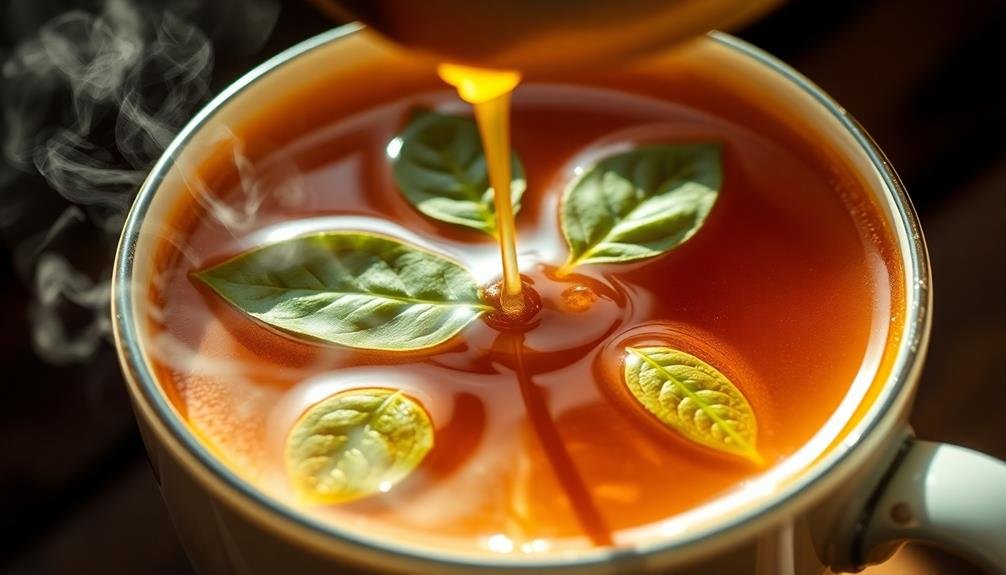
Sweet basil mightn't be the first herb you think of for sweetening tea, but it's an unexpected gem that can add a unique flavor profile to your brew. This aromatic herb, commonly used in Italian cuisine, offers a complex sweetness with hints of pepper and anise. To incorporate sweet basil into your tea, simply add a few fresh leaves to your cup or teapot during steeping.
The benefits of using sweet basil in your tea extend beyond its sweetening properties:
- Enhances digestion
- Boosts immunity
- Reduces inflammation
- Provides antioxidants
- Improves mental clarity
You'll find that sweet basil pairs exceptionally well with green and white teas, complementing their delicate flavors without overpowering them.
For a more intense basil flavor, try crushing the leaves slightly before adding them to your tea. This releases the essential oils, resulting in a more pronounced taste.
If you're feeling adventurous, combine sweet basil with other herbs like mint or lemon balm for a multi-dimensional flavor experience.
Coconut Flakes: Tropical Sweetness
For those seeking a taste of the tropics in their tea, coconut flakes offer a delightful and natural sweetening option. They're not just for baking or garnishing desserts; coconut flakes can transform your tea into a tropical paradise. When added to hot tea, they release their natural oils and sugars, infusing your brew with a subtle sweetness and creamy texture.
You'll find that coconut flakes work well with a variety of tea types. Here's a quick guide to help you pair them effectively:
| Tea Type | Flavor Profile | Coconut Pairing | Steeping Time |
|---|---|---|---|
| Black | Bold, robust | Excellent | 3-5 minutes |
| Green | Light, grassy | Good | 2-3 minutes |
| Oolong | Floral, complex | Very good | 2-5 minutes |
| Herbal | Varies | Depends on blend | 5-7 minutes |
To use coconut flakes, simply add a teaspoon to your tea infuser along with your loose leaf tea. As you sip, you'll notice the coconut's natural sweetness enhancing the tea's flavors without overpowering them. It's a healthier alternative to refined sugar and adds a unique dimension to your daily tea ritual.
Frequently Asked Questions
Can Sweeteners Affect the Antioxidant Properties of Tea?
Yes, sweeteners can affect your tea's antioxidant properties. Some may enhance absorption, while others might reduce effectiveness. It's best to use natural sweeteners in moderation and consider drinking unsweetened tea for maximum health benefits.
Are There Any Natural Sweeteners That Pair Better With Specific Tea Types?
You'll find that certain natural sweeteners complement specific tea types. Try honey with green tea, maple syrup with black tea, or agave with oolong. Stevia's a great option for herbal teas, while fruit-infused simple syrups enhance white teas.
How Do Natural Sweeteners Impact the Caffeine Content of Tea?
Natural sweeteners don't directly affect your tea's caffeine content. They'll only change the taste, not the stimulant properties. However, if you're adding more liquid sweeteners, you're diluting the tea slightly, which may reduce caffeine concentration per sip.
Can Natural Tea Sweeteners Be Used in Iced Tea Preparations?
Yes, you can use natural sweeteners in iced tea. They'll dissolve easily in cold brews or hot-brewed teas that are then chilled. You'll find honey, agave, and stevia work well, enhancing flavor without overpowering the tea's natural taste.
Are There Any Potential Side Effects of Using Natural Sweeteners in Tea?
While natural sweeteners are generally safe, you may experience digestive issues or allergic reactions if you're sensitive to certain ingredients. It's best to start with small amounts and monitor your body's response when trying new sweeteners.
In Summary
You've now discovered a variety of natural ways to sweeten your tea without resorting to processed sugar. Whether you're looking for calorie-free options, unique flavors, or healthier alternatives, there's something for everyone. Don't be afraid to experiment with these natural sweeteners, mixing and matching to create your perfect blend. You'll find that enhancing your tea's flavor profile can be an enjoyable journey of discovery. Embrace these natural options and elevate your tea-drinking experience today.


Leave a Reply