
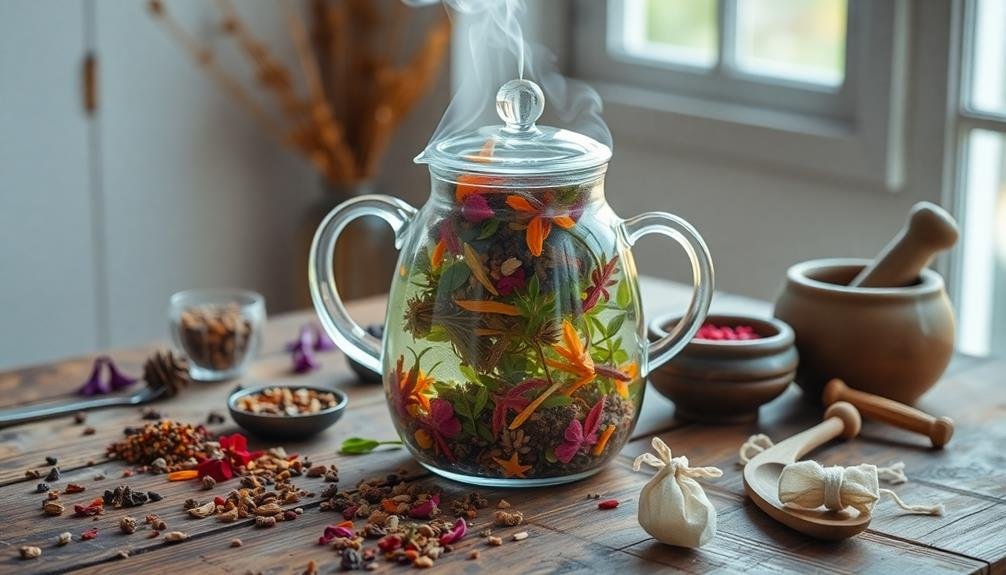
Discover the art of crafting personalized herbal teas through these 10 engaging classes. You'll start with a Beginner's Guide to Tea Blending, then explore Seasonal Herbal Infusions and Medicinal Tea Crafting. Immerse yourself in Aromatherapy and Tea Fusion, and experiment with Exotic Herb Combinations. Hone your skills in Flavor Profiling and Wildcrafting with Local Herbs. Learn to pair teas with food and master Advanced Tea Alchemy techniques. These classes cover everything from basic blending principles to specialized methods, helping you create unique, flavorful, and therapeutic infusions. Uncover a world of herbal possibilities as you commence this aromatic journey.
Beginner's Guide to Tea Blending
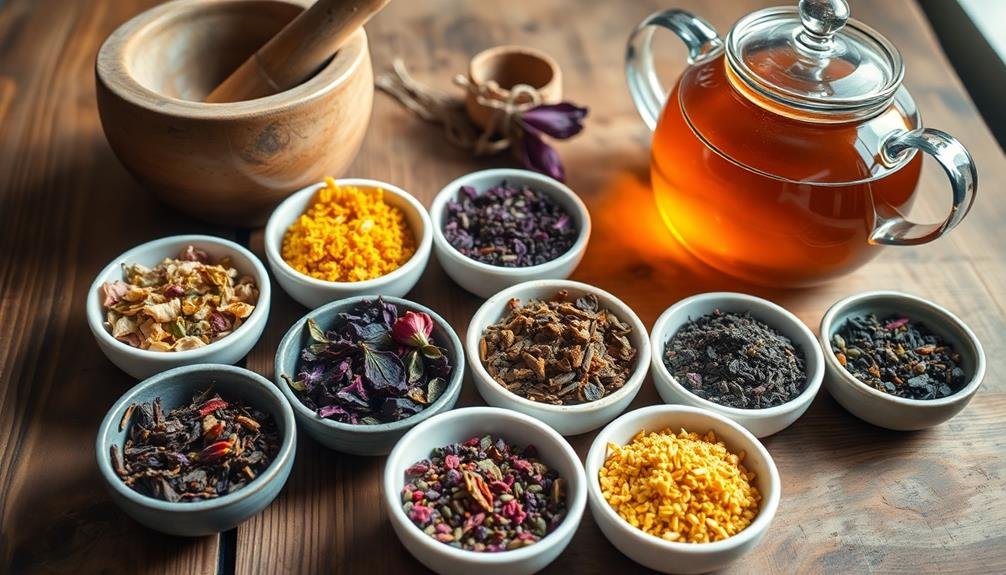
Three key principles form the foundation of tea blending for beginners. First, understand the flavor profiles of individual herbs and how they interact. Start with familiar ingredients like chamomile, peppermint, and ginger, noting their tastes and aromas.
Second, balance is essential. Combine bold flavors with milder ones to create a harmonious blend. For example, pair strong licorice root with gentle lemon balm.
Third, evaluate the purpose of your blend. Are you aiming for relaxation, energy, or digestive support?
When crafting your first blends, start simple. Use no more than three to five ingredients. Experiment with different ratios to find your preferred taste.
Don't forget to assess the visual appeal of your blend, incorporating colorful elements like rose petals or cornflowers.
As you gain confidence, explore less common herbs and spices. Try rooibos, lemongrass, or hibiscus for unique flavors. Keep a journal to record your blends and tasting notes.
This will help you refine your skills and develop signature recipes. Remember, tea blending is an art that improves with practice and experimentation.
Seasonal Herbal Infusion Workshop
As the seasons change, so too can your herbal tea blends. In a Seasonal Herbal Infusion Workshop, you'll learn to craft teas that complement each time of year. You'll discover how to select herbs that align with seasonal health needs and flavors.
For spring, you might focus on detoxifying blends with dandelion root and nettle leaf. Summer workshops often emphasize cooling herbs like peppermint and hibiscus. In autumn, you'll explore warming spices such as ginger and cinnamon. Winter classes typically feature immune-boosting herbs like elderberry and echinacea.
During the workshop, you'll learn about the properties of seasonal herbs and how they interact. You'll practice blending techniques to create balanced flavors and therapeutic effects. The instructor will guide you through tasting exercises to refine your palate and help you understand how different herbs contribute to the overall taste profile.
You'll also learn about proper harvesting times for various herbs and how to store them to maintain freshness. By the end of the workshop, you'll have created several seasonal blends and gained the skills to continue crafting custom infusions at home throughout the year.
Medicinal Tea Crafting Class
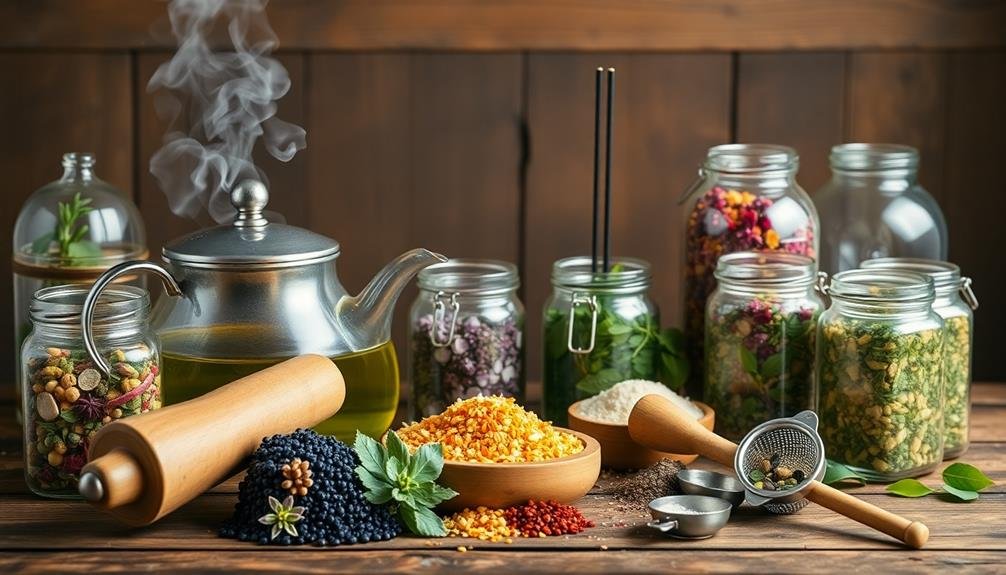
Medicinal tea crafting takes herbal infusions to the next level, focusing on their therapeutic properties. In this class, you'll learn to create blends that target specific health concerns and boost overall wellness. You'll discover how to combine herbs synergistically, maximizing their healing potential while ensuring a pleasant taste.
The course covers essential topics like proper dosage, contraindications, and safe herb sourcing. You'll practice measuring, mixing, and packaging your custom blends. By the end, you'll have a solid foundation in medicinal tea crafting and several recipes to take home.
Here's a snapshot of what you'll learn:
| Herb | Primary Benefits |
|---|---|
| Chamomile | Stress relief, sleep aid |
| Peppermint | Digestive support, headache relief |
| Echinacea | Immune system boost |
| Ginger | Anti-inflammatory, nausea relief |
| Elderberry | Cold and flu prevention |
Aromatherapy and Tea Fusion
A fragrant mist rises from your teacup as you explore the world of aromatherapy and tea fusion. In this class, you'll discover how to blend essential oils with tea to create sensory experiences that engage both taste and smell.
You'll learn about the properties of various essential oils and their effects on mood and well-being. Start by selecting a base tea, such as chamomile or green tea, and experiment with adding drops of lavender, peppermint, or citrus oils.
You'll find that different combinations can energize, relax, or focus your mind. The instructor will guide you through safe practices for using essential oils in teas, including proper dilution ratios and which oils are suitable for ingestion.
You'll also explore how to create aromatic tea blends using dried herbs and flowers. Learn to balance scents like rose petals, lemongrass, and jasmine to craft teas that are as pleasing to the nose as they're to the palate.
Exotic Herb Combination Masterclass
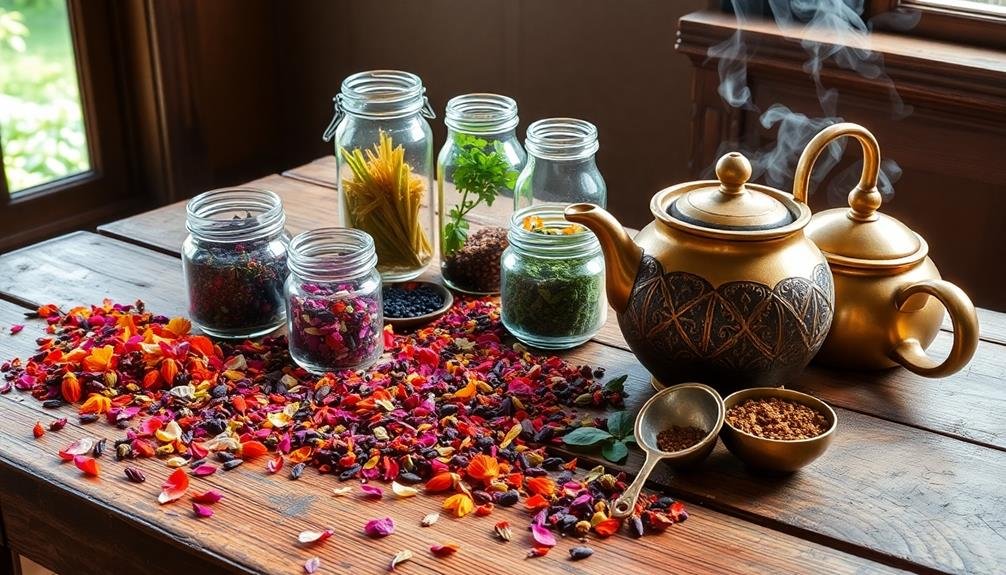
Explore the world of unique and rare herbs from across the globe in this Exotic Herb Combination Masterclass. You'll learn about the flavors, aromas, and health benefits of lesser-known herbs and how to blend them into extraordinary teas. From South American yerba mate to African rooibos and Asian schisandra berries, you'll discover a vast array of exotic ingredients to elevate your tea blending skills.
During the masterclass, you'll experiment with unusual flavor pairings and learn techniques to balance bold and subtle notes. You'll also gain insights into the cultural significance and traditional uses of these herbs in their native regions. By the end of the session, you'll have created your own signature exotic tea blend.
| Herb | Origin | Flavor Profile |
|---|---|---|
| Yerba Mate | South America | Earthy, grassy |
| Rooibos | South Africa | Nutty, sweet |
| Schisandra | Asia | Sweet, sour, salty |
This hands-on class will expand your herbal knowledge and inspire you to think outside the box when crafting custom infusions. You'll leave with a newfound appreciation for the diversity of herbs available and the confidence to incorporate them into your tea blending repertoire.
Ayurvedic Tea Blending Principles
Rooted in ancient Indian wisdom, Ayurvedic tea blending principles offer a holistic approach to creating balanced and healing herbal infusions.
You'll learn to craft teas that align with your body's constitution, or dosha, promoting overall well-being. These classes will teach you to select herbs based on their energetic properties and their effects on the mind, body, and spirit.
In Ayurvedic tea blending, you'll discover how to:
- Identify your dominant dosha (Vata, Pitta, or Kapha) and choose herbs that balance it
- Combine herbs with complementary tastes and energetics to create harmonious blends
- Incorporate seasonal considerations to support your body's natural rhythms
You'll explore common Ayurvedic herbs like tulsi, ginger, and cardamom, understanding their unique qualities and benefits.
You'll also learn about the six tastes recognized in Ayurveda and how to incorporate them into your blends for ideal health.
Flavor Profiling for Tea Mixtures
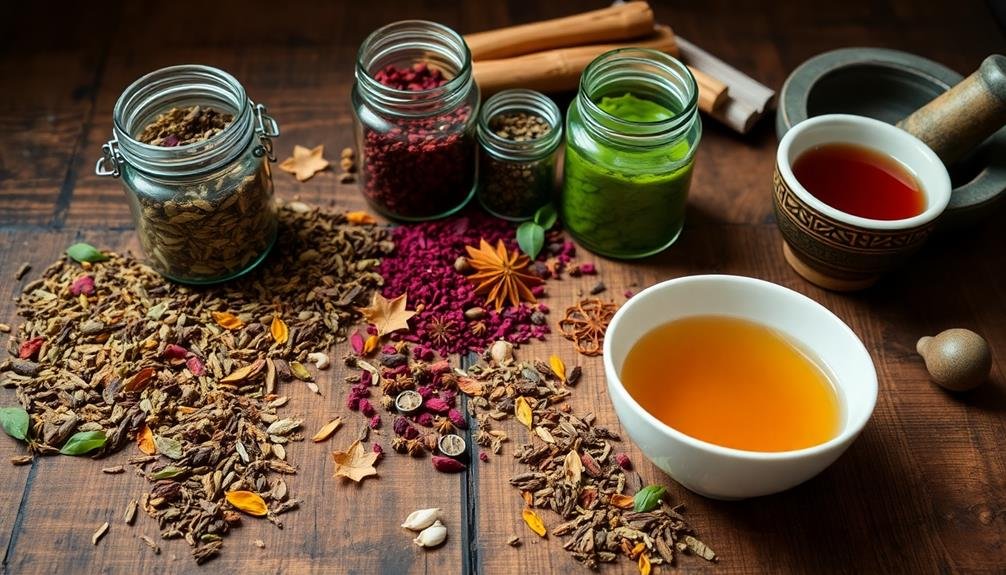
Mastering flavor profiling is essential for creating exceptional tea mixtures. You'll need to develop a keen palate and understand how different herbs and botanicals interact. Start by categorizing ingredients into flavor groups: sweet, bitter, spicy, floral, earthy, and citrusy. This will help you balance your blends and create harmonious combinations.
When crafting your tea, consider the base flavor first. Common bases include chamomile, peppermint, or rooibos. Then, add complementary flavors that enhance the base without overpowering it. For example, pair chamomile with lavender for a soothing blend, or mix peppermint with ginger for a zesty kick.
Pay attention to the intensity of each ingredient. Some herbs, like lemon balm, have a subtle flavor, while others, such as cinnamon, can be quite strong. Adjust quantities accordingly to achieve the desired taste profile.
Don't forget about mouthfeel and aftertaste. Ingredients like licorice root can add sweetness and a silky texture, while hibiscus brings tartness and a dry finish.
Experiment with different combinations and ratios to find the perfect balance for your unique tea blends.
Wildcrafting and Local Herb Utilization
Venturing into the world of wildcrafting and local herb utilization can transform your tea blending experience. By foraging for herbs in your local environment, you'll connect with nature and discover unique flavors that aren't available in store-bought teas.
Before you begin, it's essential to educate yourself on plant identification and local regulations to guarantee safe and responsible harvesting.
When wildcrafting for your herbal teas, consider these key points:
- Sustainability: Only harvest plants that are abundant in your area, and never take more than 10% of a single plant or population.
- Seasonal awareness: Learn the best times to harvest different plants for peak flavor and medicinal properties.
- Proper drying techniques: Master the art of drying herbs to preserve their flavors and benefits for your tea blends.
As you explore local herb utilization, you'll find that your region offers a wealth of tea ingredients. From wild mint and chamomile to dandelion leaves and rose hips, you'll discover flavors unique to your area.
Don't forget to research any potential medicinal properties or contraindications of the herbs you collect. With practice, you'll create truly distinctive tea blends that reflect your local terroir.
Tea and Food Pairing Seminar
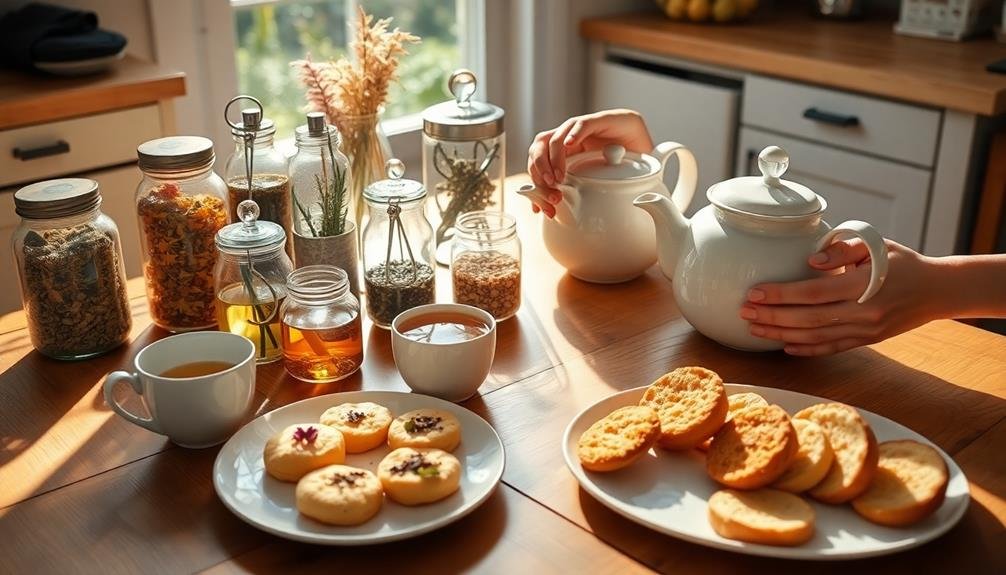
After exploring the art of wildcrafting, you'll want to showcase your unique tea blends in the best possible way.
That's where the Tea and Food Pairing Seminar comes in. This session will teach you how to create harmonious combinations that elevate both your herbal infusions and culinary creations.
You'll learn to identify complementary flavors and aromas, understanding how different tea profiles interact with various food groups.
The seminar covers pairing principles, such as matching intensity levels, finding flavor bridges, and creating contrasts.
You'll discover how to enhance the dining experience by selecting teas that cleanse the palate or amplify specific taste notes in dishes.
Hands-on exercises will allow you to experiment with different pairings, from delicate white teas with light appetizers to robust chai blends with desserts.
You'll also explore cultural tea pairings from around the world, gaining insight into traditional and modern combinations.
Advanced Techniques in Tea Alchemy
You'll learn advanced tea alchemy techniques to elevate your herbal blends.
Discover how to layer flavors and aromas, creating complex profiles that evolve with each sip.
You'll master the art of balancing therapeutic properties and perfecting infusion timing to reveal the full potential of your carefully crafted teas.
Layering Flavors and Aromas
Advanced tea alchemy reveals a world of complex flavor profiles through the art of layering. You'll learn to build depth and complexity in your herbal blends by carefully combining complementary and contrasting flavors. This technique allows you to create teas that unfold on the palate, offering a journey of tastes and aromas with each sip.
To master layering, you'll need to understand the following principles:
- Base notes: Start with robust, long-lasting flavors that form the foundation of your blend.
- Middle notes: Add complexity with herbs that bridge the gap between base and top notes.
- Top notes: Finish with delicate, aromatic elements that provide the initial sensory experience.
As you experiment, you'll discover how different herbs interact and influence each other. You might pair earthy rooibos with bright citrus and floral lavender, or combine spicy ginger with sweet licorice root and cooling peppermint.
The key is to balance each layer, ensuring no single flavor overpowers the others. Through practice, you'll develop an intuitive understanding of how to create harmonious blends that tantalize the senses and provide a truly unique tea experience.
Balancing Therapeutic Properties
Beyond the artistry of flavor layering, herbal tea blending encompasses a deeper dimension: the balancing of therapeutic properties. In advanced classes, you'll learn to harmonize herbs not just for taste, but for their medicinal effects. You'll discover how to pair calming chamomile with invigorating peppermint, creating a blend that soothes without sedating.
Understanding herb interactions is essential. You'll study how certain combinations can enhance or diminish each other's effects. For instance, you'll learn to combine echinacea with elderberry for a potent immune-boosting blend, or mix lemon balm with passionflower for anxiety relief without excessive drowsiness.
Safety is paramount in therapeutic blending. You'll be taught to evaluate contraindications, dosages, and potential side effects. This knowledge allows you to create powerful yet safe blends tailored to specific health needs.
You'll also explore adaptogens like ashwagandha and holy basil, learning to incorporate these stress-fighting herbs into your blends.
Infusion Timing Mastery
While mastering flavor profiles and therapeutic properties is essential, the art of tea alchemy truly shines in the domain of infusion timing. You'll learn to coax out the perfect balance of flavors and benefits through precise steeping techniques. As you investigate this advanced aspect of herbal tea crafting, you'll discover that timing isn't just about avoiding bitterness or weakness—it's about revealing the full potential of your carefully curated blend.
In your journey to master infusion timing, you'll explore:
- Temperature variations: How different heat levels affect the release of compounds from various herbs
- Steeping durations: The impact of time on flavor intensity and therapeutic potency
- Sequential steeping: Techniques for layering flavors by adding ingredients at different stages
You'll experiment with cold brews, sun teas, and traditional hot infusions, understanding how each method alters the final product.
You'll also learn to adjust timing based on the specific herbs in your blend, considering factors like leaf size, stem inclusion, and root components.
With practice, you'll develop an intuitive sense of when to strain, when to add, and when to serve, elevating your tea blending skills to new heights.
Frequently Asked Questions
Are There Any Age Restrictions for Attending Herbal Tea Blending Classes?
You'll find age restrictions vary by class. Some are open to all ages, while others may require participants to be 18+. It's best to check with the specific class organizer for their age requirements.
Can I Bring My Own Herbs to Use in the Classes?
You're welcome to bring your own herbs, but it's best to check with the instructor first. They'll let you know if it's allowed and can advise on any safety concerns or compatibility issues with the class materials.
Are the Classes Suitable for People With Allergies or Sensitivities?
You'll find these classes accommodating for allergies and sensitivities. You're encouraged to inform the instructor about your specific concerns. They'll help you avoid problematic ingredients and suggest safe alternatives for your custom blends.
How Long Does a Typical Herbal Tea Blending Class Last?
You'll typically spend about 2-3 hours in a tea blending class. It's enough time to learn the basics, experiment with different herbs, and create your own unique blends. Don't worry, you'll be sipping and savoring throughout!
Are There Any Certification Programs Available for Herbal Tea Blending?
You'll find certification programs for herbal tea blending offered by various schools and organizations. They're typically online or in-person courses that cover topics like botany, flavor profiles, and blending techniques. You can earn a certificate upon completion.
In Summary
You've explored a world of herbal tea blending possibilities. From beginner basics to advanced alchemy, you're now equipped to craft unique infusions tailored to your taste and needs. Don't be afraid to experiment with wildcrafting, aromatherapy, and exotic herbs. Remember, the perfect blend is a personal journey. Keep honing your skills, trust your palate, and you'll soon be creating teas that aren't just drinks, but experiences. Your cup of creativity awaits!


Leave a Reply