

Pregnancy-safe herbal teas offer numerous benefits for expectant mothers. You'll find relief from common discomforts like morning sickness and bloating, while staying hydrated and nourished. Ginger, peppermint, and red raspberry leaf are popular choices, each with unique properties to support your pregnancy journey. Calming blends with chamomile or lemon balm can reduce stress and improve sleep quality. For an energy boost without caffeine, try rooibos or adaptogenic herb blends. Always consult your healthcare provider before introducing new teas into your routine. As you explore these nourishing blends, you'll discover a world of comforting and beneficial options for moms-to-be.
Benefits of Herbal Teas During Pregnancy

Many expectant mothers turn to herbal teas during pregnancy for their potential health benefits. These soothing beverages can offer natural relief from common pregnancy discomforts while providing essential nutrients. You'll find that certain herbal teas may help alleviate morning sickness, reduce bloating, and ease constipation.
Herbal teas can also boost your hydration levels, which is vital during pregnancy. They're a flavorful alternative to plain water, encouraging you to drink more fluids throughout the day. Some blends contain herbs rich in calcium, iron, and magnesium, supporting your baby's development and your overall health.
You might experience reduced stress and improved sleep quality when incorporating calming herbal teas into your routine. Chamomile and lemon balm, for instance, are known for their relaxing properties.
Additionally, certain herbal teas can strengthen your immune system, helping you ward off illnesses during this vulnerable time.
It's important to note that while herbal teas offer numerous benefits, you should always consult your healthcare provider before adding them to your diet. They can advise you on safe options and appropriate consumption levels tailored to your specific needs.
Safe Herbal Tea Ingredients
While numerous herbal teas are available, not all are safe during pregnancy. It's vital to choose your brews carefully to guarantee both you and your baby's well-being. Some of the safest herbal tea ingredients during pregnancy include ginger, peppermint, and red raspberry leaf.
Ginger can help alleviate morning sickness and nausea, while peppermint may soothe digestive discomfort. Red raspberry leaf is often recommended in the third trimester to help prepare the uterus for labor.
Other pregnancy-safe herbs include chamomile, lemon balm, and rooibos. Chamomile can promote relaxation and better sleep, while lemon balm may help reduce anxiety. Rooibos, a caffeine-free alternative to black tea, is rich in antioxidants and minerals.
Nettle leaf is another excellent choice, providing iron and other essential nutrients.
When selecting herbal teas, always opt for organic varieties to avoid potential pesticide exposure. It's also wise to limit your intake to 1-2 cups per day and consult your healthcare provider before introducing new herbs into your diet.
Blends for Morning Sickness Relief

If you're struggling with morning sickness, certain herbal tea blends can offer relief.
Try a Ginger-Peppermint Calming Blend, which combines two powerful anti-nausea ingredients to soothe your stomach.
For a different approach, you can opt for a Lemon-Chamomile Soothing Infusion, which pairs the calming effects of chamomile with the invigorating zest of lemon to ease queasiness.
Ginger-Peppermint Calming Blend
A soothing blend of ginger and peppermint can offer welcome relief from morning sickness during pregnancy. This powerful combination harnesses the anti-nausea properties of ginger and the stomach-calming effects of peppermint to create a comforting and effective herbal tea.
To make this blend, you'll need equal parts dried ginger root and peppermint leaves. Steep one teaspoon of the mixture in a cup of hot water for 5-10 minutes. You can adjust the strength to your liking by adding more or less of the herb blend.
Ginger has been shown to reduce nausea and vomiting in pregnant women, while peppermint can help ease digestive discomfort. Together, they create a rejuvenating and invigorating tea that's both safe and beneficial during pregnancy.
Remember to consult your healthcare provider before incorporating any new herbal teas into your routine. While ginger and peppermint are generally considered safe, it's always best to err on the side of caution.
You can enjoy this blend up to three times daily, preferably between meals, to maximize its effectiveness in combating morning sickness and promoting overall digestive comfort throughout your pregnancy.
Lemon-Chamomile Soothing Infusion
Another effective blend for combating morning sickness during pregnancy is the Lemon-Chamomile Soothing Infusion. This delightful combination harnesses the power of lemon's zesty freshness and chamomile's calming properties to provide relief from nausea and promote relaxation.
To prepare this infusion, steep a chamomile tea bag and a slice of fresh lemon in hot water for 5-7 minutes. You can add a touch of honey for sweetness if desired. Sip this soothing blend throughout the day, especially when you're feeling queasy or anxious.
The Lemon-Chamomile Soothing Infusion offers several benefits for expectant mothers:
- Reduces nausea and vomiting associated with morning sickness
- Calms an upset stomach and aids digestion
- Promotes relaxation and reduces stress
- Boosts the immune system with vitamin C from lemon
Remember to consult your healthcare provider before incorporating any new herbal teas into your pregnancy routine.
While chamomile is generally considered safe during pregnancy, it's important to use it in moderation. Limit your intake to 1-2 cups per day and avoid consuming large quantities, especially in the first trimester.
Relaxing Bedtime Tea Recipes
As your pregnancy progresses, you'll likely find yourself in need of calming bedtime rituals.
Fortunately, there are several pregnancy-safe herbal tea blends that can help you unwind and prepare for a restful night's sleep.
Let's explore three soothing options: a Chamomile and Lavender Blend, a Lemon Balm Sleep Aid, and a Rooibos Vanilla Nightcap.
Chamomile and Lavender Blend
Bedtime bliss awaits with a soothing chamomile and lavender tea blend. This gentle combination offers a natural way to unwind and prepare for restful sleep during pregnancy. Chamomile's mild sedative properties help relax your mind and body, while lavender's calming aroma eases tension and promotes tranquility.
To create this pregnancy-safe blend, you'll need dried chamomile flowers and lavender buds. Mix equal parts of each herb, storing the blend in an airtight container. When brewing, use one teaspoon of the mixture per cup of hot water, and steep for 5-7 minutes. Enjoy this comforting tea about an hour before bedtime to maximize its relaxing effects.
While chamomile and lavender are generally considered safe during pregnancy, it's always wise to consult your healthcare provider before incorporating new herbs into your routine.
This blend offers more than just a pleasant taste:
- Supports better sleep quality
- Reduces stress and anxiety
- Aids in digestion and relieves bloating
- Boosts your immune system
Lemon Balm Sleep Aid
Lemon balm, with its gentle citrusy aroma, stands out among herbal sleep aids for expectant mothers. This calming herb can help you relax and unwind before bedtime, promoting better sleep quality during pregnancy. When brewed into a tea, lemon balm's natural compounds work to reduce anxiety and promote a sense of tranquility.
To create a soothing lemon balm sleep aid tea, you'll need just a few simple ingredients. Here's a quick recipe guide:
| Ingredient | Amount | Benefits |
|---|---|---|
| Lemon balm | 1-2 tsp | Calming, stress-reducing |
| Honey | 1 tsp | Natural sweetener |
| Hot water | 8 oz | Steeping medium |
| Lemon slice | Optional | Flavor enhancer |
Steep the lemon balm in hot water for 5-7 minutes, then strain and add honey to taste. You can enjoy this tea 30-60 minutes before bedtime to help you relax and prepare for sleep. Remember to consult your healthcare provider before incorporating new herbal teas into your pregnancy routine, as individual needs may vary.
Rooibos Vanilla Nightcap
Another excellent option for expectant mothers seeking a calming bedtime brew is the Rooibos Vanilla Nightcap. This caffeine-free herbal tea combines the smooth, nutty flavor of rooibos with the soothing essence of vanilla.
Rooibos, also known as red bush tea, is packed with antioxidants and is naturally sweet, making it an ideal base for a relaxing nighttime blend.
To create your own Rooibos Vanilla Nightcap, steep one rooibos tea bag in hot water for 5-7 minutes. Add a splash of vanilla extract or a small piece of vanilla bean for extra flavor. If desired, you can sweeten it with a touch of honey. This comforting beverage can help you unwind and prepare for a restful night's sleep.
Benefits of the Rooibos Vanilla Nightcap:
- Rich in antioxidants, supporting overall health during pregnancy
- Caffeine-free, ensuring a peaceful night's sleep
- May help reduce pregnancy-related acid reflux and heartburn
- Contains minerals like calcium and manganese, supporting bone health
Remember to consult your healthcare provider before incorporating any new herbal teas into your pregnancy diet. While rooibos is generally considered safe, it's always best to err on the side of caution when expecting.
Nutrient-Rich Pregnancy Support Teas
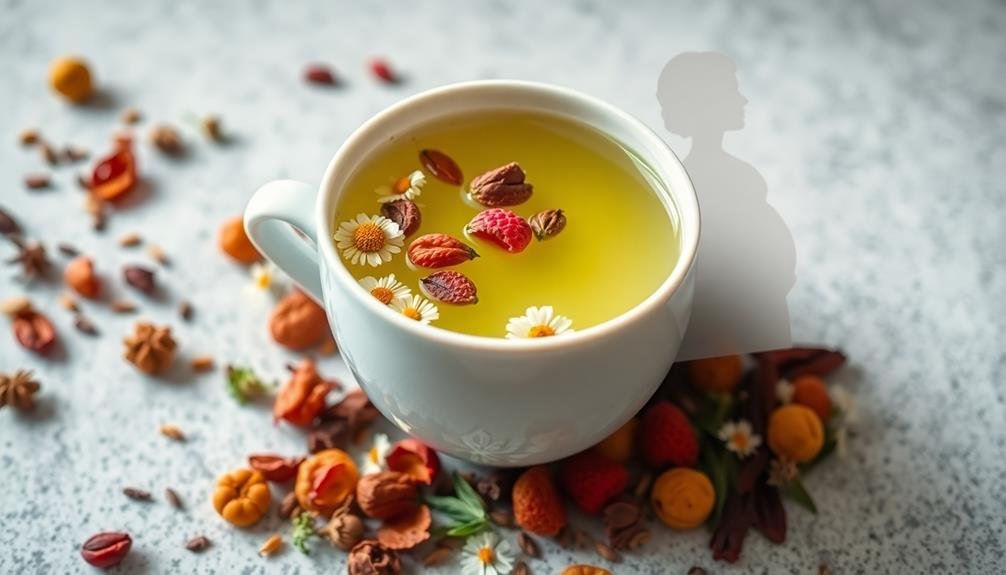
Nature's bounty offers a wealth of nutrient-rich teas that can support a healthy pregnancy. These herbal blends are carefully crafted to provide essential nutrients and promote overall well-being for expectant mothers.
One popular option is nettle leaf tea, which is rich in iron, calcium, and vitamins A and C. It's known to support healthy blood formation and may help prevent anemia during pregnancy.
Red raspberry leaf tea is another excellent choice, as it's believed to strengthen the uterus and potentially ease labor.
You'll also find pregnancy support teas containing alfalfa, which is packed with vitamin K and minerals like iron and calcium. Dandelion root tea can help support liver function and aid in digestion, while ginger tea may alleviate morning sickness and nausea.
When selecting nutrient-rich pregnancy teas, always opt for organic blends to avoid potential pesticide exposure.
It's vital to consult your healthcare provider before incorporating any new herbal teas into your routine, as some herbs may not be suitable for all pregnancies.
Remember to enjoy these teas in moderation and listen to your body's responses to guarantee a safe and nourishing pregnancy experience.
Caffeine-Free Energy Boosting Blends
During pregnancy, maintaining energy levels without relying on caffeine can be challenging. Fortunately, there are several caffeine-free herbal tea blends that can provide a natural energy boost. These teas offer a safe and invigorating alternative to help you stay alert and focused throughout the day.
Consider trying blends that include ingredients like ginger, peppermint, or lemon balm. These herbs can help invigorate your senses and provide a gentle pick-me-up without the risks associated with caffeine consumption during pregnancy. Rooibos tea is another excellent option, as it's rich in antioxidants and naturally caffeine-free.
When selecting energy-boosting teas, look for blends that:
- Contain adaptogenic herbs to help your body manage stress
- Include vitamin B-rich ingredients for natural energy support
- Feature zingy citrus flavors to awaken your senses
- Incorporate herbs known for their revitalizing properties
Remember to always consult with your healthcare provider before adding new herbal teas to your pregnancy diet. While many herbs are safe, some may interact with medications or have contraindications for pregnant women.
Third Trimester Comfort Teas

As you enter the third trimester, your body's needs change, and so do the herbal teas that can offer the most comfort. During this final stretch of pregnancy, you'll want to focus on blends that address common third-trimester discomforts and prepare your body for labor.
Red raspberry leaf tea is a popular choice for the third trimester. It's believed to tone the uterus, potentially easing labor and delivery.
Nettle leaf tea can help boost your iron levels and reduce water retention. For heartburn relief, try a soothing chamomile and marshmallow root blend.
If you're experiencing leg cramps, a tea with magnesium-rich herbs like oatstraw or alfalfa might help.
To promote relaxation and better sleep, consider a blend of lemon balm and passionflower. Ginger tea can help with digestion and nausea, which may still persist in the third trimester.
Remember to consult your healthcare provider before introducing new herbal teas into your routine. While these teas are generally considered safe, it's always best to err on the side of caution.
Stick to moderate consumption and listen to your body's responses to guarantee a comfortable and healthy final trimester.
Frequently Asked Questions
Can I Drink Herbal Teas While Breastfeeding?
You can drink many herbal teas while breastfeeding, but it's crucial to be cautious. Some herbs may affect milk supply or be unsafe for your baby. Always consult your healthcare provider before consuming any herbal teas during lactation.
How Much Herbal Tea Is Safe to Consume During Pregnancy?
You should limit your herbal tea intake during pregnancy. It's best to consume no more than 2-3 cups daily of pregnancy-safe teas. Always consult your healthcare provider before adding any new herbal teas to your diet.
Are There Any Herbal Teas That Can Induce Labor?
You'll find some herbal teas that might induce labor, like raspberry leaf, evening primrose, and castor oil. However, it's essential to consult your doctor before trying any of these, as they can have potential risks.
Can Herbal Teas Interact With Prenatal Vitamins or Medications?
Yes, herbal teas can interact with prenatal vitamins and medications. You should always consult your healthcare provider before consuming any herbal teas during pregnancy. They'll help you understand potential risks and guarantee your safety.
Are There Specific Herbal Teas to Avoid During Different Trimesters?
Yes, you should avoid certain herbal teas during different trimesters. In the first trimester, steer clear of chamomile and licorice root. Throughout pregnancy, avoid teas containing caffeine, sage, and parsley. Always consult your healthcare provider for personalized advice.
In Summary
You've now explored a variety of pregnancy-safe herbal teas to support your journey. Remember, always consult your healthcare provider before introducing new herbs into your diet. With these nourishing blends, you're equipped to soothe morning sickness, relax before bed, boost your nutrient intake, and find comfort in your third trimester. Enjoy the benefits of these caffeine-free options as you prepare for motherhood. Sip wisely and savor this special time in your life.

Leave a Reply