

You can find relief from seasonal allergies by crafting your own soothing herbal tea blend. Start with a base of green or white tea, then add powerful herbs like nettle, peppermint, and chamomile. These ingredients act as natural antihistamines and anti-inflammatories, helping to reduce allergy symptoms. Steep your blend at the correct temperature and time for maximum benefits. Enhance flavor with raw honey or lemon, and experiment with additional ingredients like ginger or cinnamon. Aim for 2-3 cups daily, storing your blend in an airtight container. By combining this tea routine with lifestyle changes, you'll be on your way to managing those pesky allergies more effectively.
Understanding Seasonal Allergies and Tea
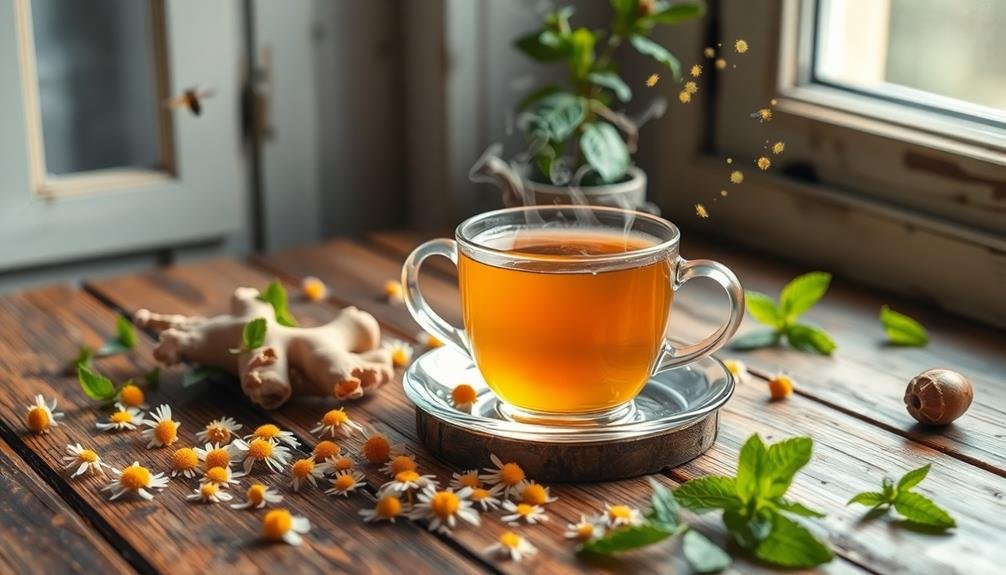
Seasonal allergy sufferers often seek natural remedies to alleviate their symptoms, and herbal teas can be a soothing solution. When you're dealing with sneezing, congestion, and itchy eyes, certain teas can provide relief by reducing inflammation and boosting your immune system.
Understanding how tea works against allergies is key to finding the right blend. Many herbal teas contain antihistamine and anti-inflammatory properties, which help combat your body's overreaction to allergens. For instance, nettle tea is known for its ability to reduce histamine production, while chamomile can calm irritated sinuses.
It's important to note that while tea can offer relief, it's not a cure for allergies. You'll get the best results by incorporating it into your overall allergy management plan.
When choosing teas, look for those with natural decongestant properties, such as peppermint or eucalyptus. These can help clear your airways and make breathing easier.
Essential Herbs for Allergy Relief
When it comes to battling seasonal allergies, certain herbs can be your natural allies.
You'll find nettle acting as nature's antihistamine, while peppermint works wonders in clearing nasal passages.
Chamomile rounds out this trio by calming allergy symptoms, making it an essential addition to your allergy-fighting arsenal.
Nettle: Nature's Antihistamine
While many people reach for over-the-counter antihistamines to combat allergy symptoms, nature offers a powerful alternative in the form of nettle. This versatile herb has been used for centuries to alleviate allergic reactions and reduce inflammation. Nettle's antihistamine properties come from its ability to block the body's production of histamine, the compound responsible for allergy symptoms like sneezing, itching, and congestion.
You'll find nettle particularly effective when consumed as a tea. To prepare it, steep 1-2 teaspoons of dried nettle leaves in hot water for 5-10 minutes. For best results, drink 2-3 cups daily during allergy season. You can also combine nettle with other allergy-fighting herbs like peppermint or chamomile for added benefits.
When harvesting fresh nettle, wear gloves to avoid its stinging hairs. Once dried or cooked, these hairs become harmless.
If you're pregnant, breastfeeding, or taking medications, consult your healthcare provider before using nettle. With its natural antihistamine properties and minimal side effects, nettle can be a valuable addition to your allergy-fighting arsenal.
Peppermint: Clearing Nasal Passages
As a invigorating change for allergy sufferers, peppermint offers powerful relief for congested nasal passages. This aromatic herb contains menthol, a natural decongestant that can help open up your airways and ease breathing difficulties.
When you brew peppermint tea or inhale its steam, you'll experience a cooling sensation that soothes inflamed nasal tissues and reduces swelling.
Peppermint's benefits extend beyond just clearing your sinuses. It's also known for its anti-inflammatory properties, which can help alleviate allergy symptoms like sneezing and itching.
The herb's natural antispasmodic qualities may relieve coughing and throat irritation often associated with seasonal allergies.
To harness peppermint's allergy-fighting power, steep fresh or dried peppermint leaves in hot water for 5-10 minutes.
You can also add a few drops of peppermint essential oil to a diffuser or inhale the steam from a bowl of hot water with peppermint leaves.
For an extra boost, combine peppermint with other allergy-fighting herbs like nettle or chamomile in your tea blend.
Remember to consult with your healthcare provider before incorporating new herbal remedies into your allergy management routine, especially if you're taking medications.
Chamomile: Calming Allergy Symptoms
A gentle powerhouse in the world of herbal remedies, chamomile offers significant relief for allergy sufferers. This daisy-like flower contains compounds that can reduce inflammation and ease allergy symptoms. When you drink chamomile tea, you'll benefit from its natural antihistamine properties, which help combat the body's overreaction to allergens.
Chamomile's soothing effects extend beyond just calming your allergy symptoms. It can also help relax your mind and body, potentially reducing stress-induced allergy flare-ups. The herb's anti-inflammatory properties may help decrease swelling in your nasal passages, making it easier to breathe.
To harness chamomile's allergy-fighting power, steep 1-2 teaspoons of dried chamomile flowers in hot water for 5-10 minutes. You can drink this tea up to three times a day for maximum benefits. For an extra boost, add a squeeze of lemon, which can enhance the tea's effectiveness and provide additional vitamin C.
If you're prone to ragweed allergies, use chamomile cautiously, as the two plants are related. Always consult your healthcare provider before incorporating new herbal remedies into your allergy management routine.
Crafting Your Custom Tea Blend
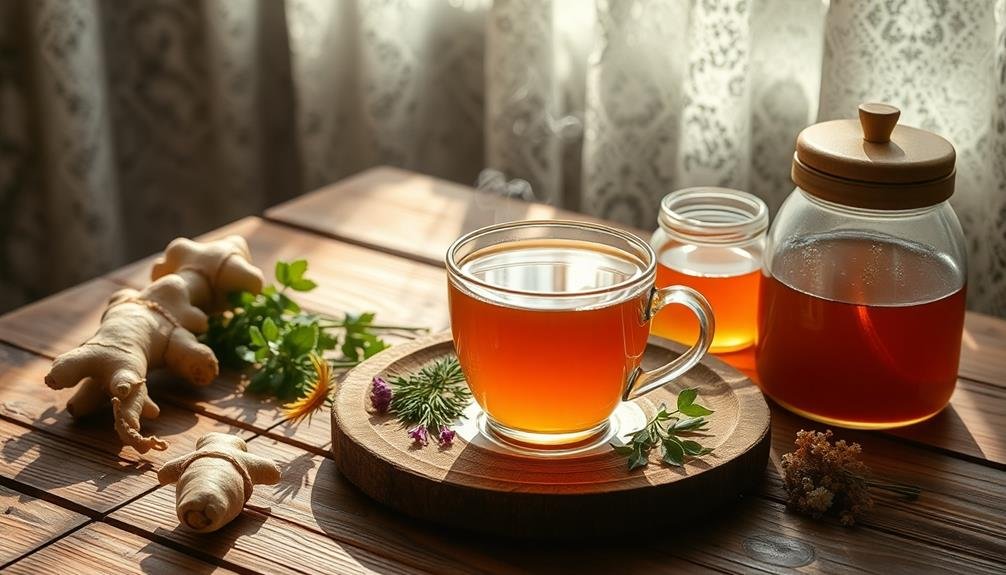
Creating your own allergy-fighting tea blend is both fun and rewarding. You'll need to choose your base tea, select complementary herbs, and determine the right proportions. Start with a mild green or white tea as your foundation, then add herbs known for their allergy-fighting properties.
Here's a simple guide to get you started:
| Ingredient | Benefit | Proportion |
|---|---|---|
| Green Tea | Antioxidants | 1 part |
| Nettle | Antihistamine | 1 part |
| Peppermint | Decongestant | 1/2 part |
Experiment with different combinations to find what works best for you. You might add a pinch of ginger for its anti-inflammatory properties or a touch of licorice root to soothe your throat. Remember, it's important to use high-quality, organic ingredients to maximize the benefits.
To craft your blend, mix the dry ingredients in a bowl, then store in an airtight container. When you're ready to brew, use one teaspoon of your mixture per cup of hot water. Steep for 5-7 minutes, strain, and enjoy. You can adjust the strength by adding more or less of your custom blend to suit your taste and allergy needs.
Steeping Techniques for Maximum Benefits
The proper steeping technique can make all the difference in releasing your tea's full allergy-fighting potential. Start by heating your water to the right temperature: 175°F for green teas, 185°F for white teas, and 200°F for herbal and black teas. Use a thermometer to verify accuracy. Once you've reached the ideal temperature, pour the water over your tea blend.
Steep your tea for the appropriate time: 2-3 minutes for green and white teas, 3-5 minutes for black teas, and 5-7 minutes for herbal teas. Don't over-steep, as this can lead to a bitter taste and reduced benefits. Use a timer to keep track.
To maximize the extraction of beneficial compounds, gently stir your tea once or twice during steeping. This helps distribute the water evenly among the herbs and guarantees a more balanced flavor. After steeping, remove the tea leaves or bag promptly to prevent over-extraction.
For a stronger brew, increase the amount of tea leaves rather than steeping longer. This preserves the delicate flavors and beneficial compounds without introducing bitterness.
Enhancing Flavor With Natural Ingredients

Natural ingredients can elevate your allergy-fighting tea from good to great. To enhance flavor while maintaining the tea's medicinal properties, consider adding a touch of raw honey. It's not only sweet but also possesses natural antihistamine qualities.
A slice of fresh lemon can brighten the taste and provide an extra dose of vitamin C, boosting your immune system. For a warming effect, try grating fresh ginger into your brew. It'll add a spicy kick and help reduce inflammation.
If you're looking for a minty freshness, toss in a few peppermint leaves. They'll soothe your throat and may help clear congestion. Cinnamon sticks can impart a rich, comforting flavor while potentially reducing allergy symptoms.
Don't overlook the power of herbs like thyme or rosemary. They can add depth to your tea's flavor profile and possess natural antihistamine properties.
For a floral note, consider adding a pinch of dried lavender or chamomile. These herbs not only taste great but can also promote relaxation, helping you cope with allergy-related stress.
Storage and Shelf Life
Proper storage is essential for maintaining the potency and flavor of your allergy-fighting tea blend. Keep your tea mixture in an airtight container, away from light, heat, and moisture. A dark, cool pantry or cupboard is ideal. Glass or ceramic containers are preferable to plastic, as they won't absorb odors or flavors. Label your container with the blend's name and date of creation to track freshness.
The shelf life of your seasonal allergy tea depends on its ingredients. Most herbal teas remain potent for 6-12 months when stored correctly. However, some components may lose their efficacy sooner. To guarantee you're getting the most benefit from your blend, follow these guidelines:
- Use fresh, high-quality ingredients when creating your tea mixture.
- Smell and visually inspect your tea before each use.
- Replace your blend every 6 months or when you notice a decline in aroma or flavor.
If you've added any fresh ingredients to your blend, such as ginger or lemon peel, consider storing it in the refrigerator and using it within 1-2 weeks.
For long-term storage, you can freeze individual portions of your tea blend in airtight bags, preserving its potency for up to a year.
Daily Consumption Recommendations
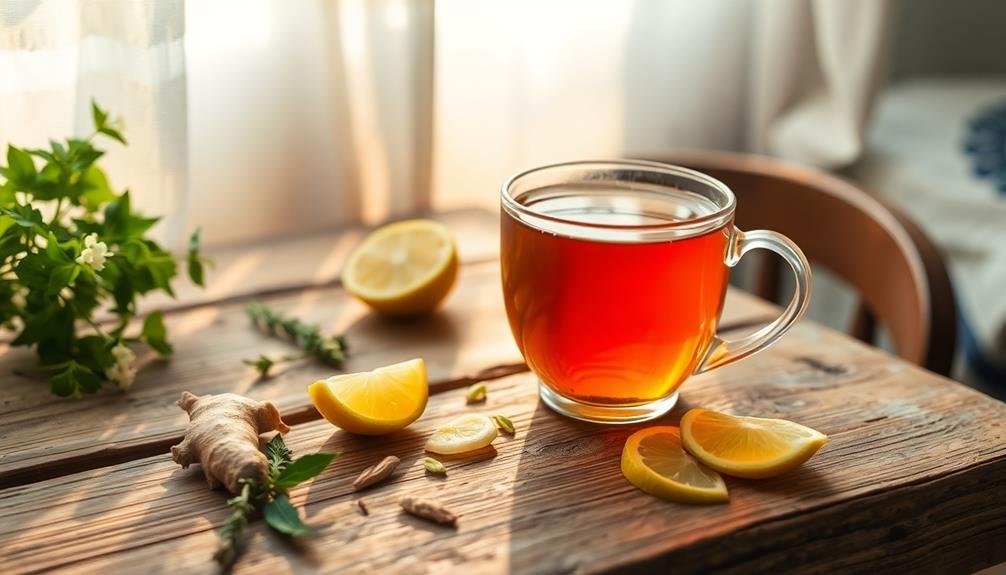
Moderation is key when consuming seasonal allergy tea, despite its natural ingredients. To reap the benefits without overdoing it, aim for 2-3 cups per day. Start with one cup in the morning to kickstart your body's defenses, and enjoy another in the evening to soothe any lingering symptoms.
If you're new to herbal teas, begin with a weaker brew and gradually increase the strength as your body adjusts. Don't exceed 4 cups daily, as some herbs may cause side effects when consumed in large quantities. It's best to space out your tea consumption throughout the day rather than drinking multiple cups at once.
Remember, this tea isn't a replacement for prescribed allergy medications. Consult your healthcare provider before incorporating it into your routine, especially if you're pregnant, nursing, or taking other medications. Some herbs can interact with certain drugs or exacerbate existing health conditions.
For ideal results, drink your tea consistently during allergy season. You may even consider starting a few weeks before your typical symptom onset to build up your body's natural defenses.
Complementary Lifestyle Changes
Along with drinking seasonal allergy tea, you can make several lifestyle changes to bolster its effects. These adjustments will help reduce your exposure to allergens and strengthen your body's natural defenses. By combining these practices with your allergy-fighting tea, you'll create a thorough approach to managing seasonal allergies.
- Keep your home allergen-free
- Boost your immune system
- Monitor pollen levels
Start by maintaining a clean living space. Vacuum regularly, use air purifiers, and keep windows closed during high pollen days. Shower and change clothes after spending time outdoors to remove pollen from your body and prevent it from spreading in your home.
Next, focus on strengthening your immune system through a balanced diet rich in vitamins C and D, regular exercise, and adequate sleep. These habits will help your body better respond to allergens.
Finally, stay informed about local pollen levels by checking daily forecasts. Plan outdoor activities when pollen counts are lower, typically in the evenings or after rain.
Frequently Asked Questions
Can Children Safely Consume Allergy Relief Teas?
You should consult your pediatrician before giving allergy relief teas to children. While some herbal teas can be safe, others may cause side effects or interact with medications. It's best to get professional advice for your child's specific needs.
Are There Any Potential Side Effects of Drinking Allergy Relief Teas?
While generally safe, allergy relief teas can cause side effects. You might experience digestive issues, headaches, or drowsiness. Some herbs may interact with medications or trigger allergic reactions. It's best to consult your doctor before regular consumption.
How Long Does It Take to Notice Improvements From Drinking These Teas?
You'll typically notice improvements within 15-30 minutes of drinking allergy relief teas. However, consistent consumption over several days or weeks may lead to more lasting effects. Everyone's response is different, so be patient and observe your symptoms.
Can Allergy Relief Teas Be Combined With Over-The-Counter Allergy Medications?
You can generally combine allergy relief teas with over-the-counter medications, but it's best to consult your doctor first. They'll help you avoid potential interactions and guarantee you're not doubling up on similar ingredients or effects.
Are There Any Specific Teas to Avoid for People With Certain Allergies?
If you've got allergies, you'll want to steer clear of certain teas. Avoid chamomile if you're allergic to ragweed, and skip licorice root if you've got high blood pressure. Always check ingredients for potential allergens.
In Summary
You've now got the knowledge to create your own soothing seasonal allergy tea. Remember, it's all about finding the right blend for your symptoms. Don't be afraid to experiment with different herbs and flavors. Steep your tea properly, store it correctly, and enjoy it daily for best results. Pair your custom blend with smart lifestyle choices, and you'll be breathing easier in no time. Here's to natural relief!


Leave a Reply