

To soothe your sore throat, try this easy herbal tea recipe. Combine anti-inflammatory ingredients like ginger, turmeric, and licorice root with soothing elements such as marshmallow root and slippery elm. Steep 1-2 teaspoons of dried herbs in hot water for 5-10 minutes, then strain. Add honey for extra relief and sweetness. Sip this healing tea 3-4 times daily, especially when symptoms are acute. For best results, use fresh, filtered water and cover your cup while steeping to trap beneficial oils. Remember to stay hydrated and consider pairing your tea with other natural remedies for maximum comfort. Explore further to reveal even more throat-soothing secrets.
Understanding Sore Throats
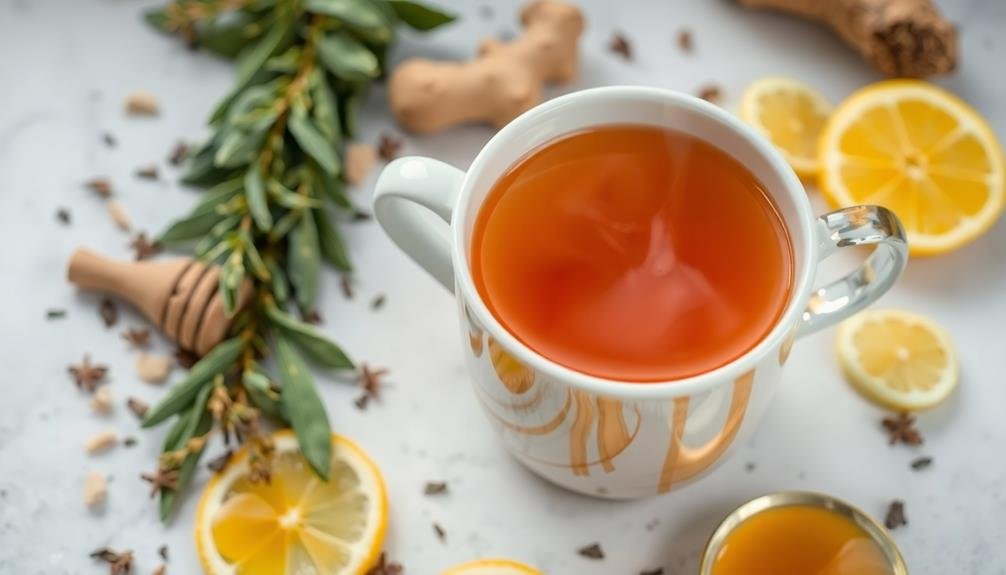
A sore throat's discomfort can range from mild irritation to severe pain. You'll typically experience a scratchy or burning sensation in your throat, which may worsen when you swallow.
Sore throats are often caused by viral infections, such as the common cold or flu, but can also result from bacterial infections like strep throat.
When you have a sore throat, you might notice other symptoms, including redness or swelling in the throat, swollen lymph nodes, and white patches on your tonsils. You may also experience fever, cough, or general body aches.
It's important to differentiate between viral and bacterial causes, as treatment approaches differ.
Viral sore throats usually resolve on their own within a week, while bacterial infections may require antibiotics. If your symptoms persist for more than a week or are accompanied by high fever, difficulty breathing, or severe pain, it's essential to consult a healthcare professional.
Understanding the cause and severity of your sore throat will help you choose the most appropriate treatment, whether it's rest and home remedies or medical intervention.
Benefits of Herbal Tea
Herbal teas offer you powerful benefits when battling a sore throat.
You'll find many varieties with natural anti-inflammatory properties that can soothe throat irritation and reduce discomfort.
Additionally, certain herbal teas can boost your immune system, helping you fight off the underlying cause of your sore throat more effectively.
Natural Anti-Inflammatory Properties
Beyond their soothing warmth, many herbal teas boast natural anti-inflammatory properties that can help alleviate sore throat discomfort. These plant-based compounds work to reduce swelling and irritation in your throat, providing relief from pain and promoting faster healing.
Some of the most effective anti-inflammatory herbs for sore throats include ginger, turmeric, and licorice root. Ginger contains gingerols and shogaols, which inhibit inflammatory pathways in your body. Turmeric's active compound, curcumin, is a powerful anti-inflammatory agent that can help reduce throat swelling. Licorice root contains glycyrrhizin, which has been shown to decrease inflammation and soothe mucous membranes.
Here's a quick comparison of these herbs and their benefits:
| Herb | Anti-Inflammatory Compound | Additional Benefits |
|---|---|---|
| Ginger | Gingerols, Shogaols | Antioxidant, Antimicrobial |
| Turmeric | Curcumin | Antioxidant, Pain Relief |
| Licorice Root | Glycyrrhizin | Antiviral, Expectorant |
| Chamomile | Chamazulene | Relaxant, Antispasmodic |
Soothing Throat Irritation
While anti-inflammatory properties offer significant relief, herbal teas excel at directly soothing throat irritation. The warm liquid itself provides immediate comfort, coating your throat and easing discomfort. Many herbs used in these teas contain natural compounds that create a protective layer on irritated tissues, reducing pain and scratchy sensations.
Marshmallow root and slippery elm are particularly effective for this purpose. They produce a mucilage that forms a gel-like substance when mixed with water, coating and lubricating your throat. Licorice root also has demulcent properties, helping to soothe and protect mucous membranes.
Honey, a common addition to herbal teas, isn't just for sweetness. It's a natural throat coater and has antibacterial properties. When you combine honey with herbs like chamomile or peppermint, you're creating a powerful soothing elixir for your sore throat.
The act of sipping warm tea also encourages you to stay hydrated, which is essential for healing. As you drink, you're not only benefiting from the herbs' properties but also keeping your throat moist, preventing further irritation and promoting faster recovery.
Boosting Immune System
A key benefit of herbal teas for sore throats lies in their ability to boost your immune system.
Many herbal ingredients contain powerful antioxidants and compounds that can strengthen your body's natural defenses. When you're fighting off a cold or infection, these teas can provide much-needed support to help you recover faster.
Several herbs commonly used in throat-soothing teas offer immune-boosting properties:
- Echinacea: Known for its ability to stimulate white blood cell production
- Elderberry: Rich in antioxidants and vitamins that combat inflammation
- Ginger: Contains gingerols and shogaols, which have antimicrobial effects
- Turmeric: Curcumin in turmeric has potent anti-inflammatory properties
Key Ingredients for Soothing
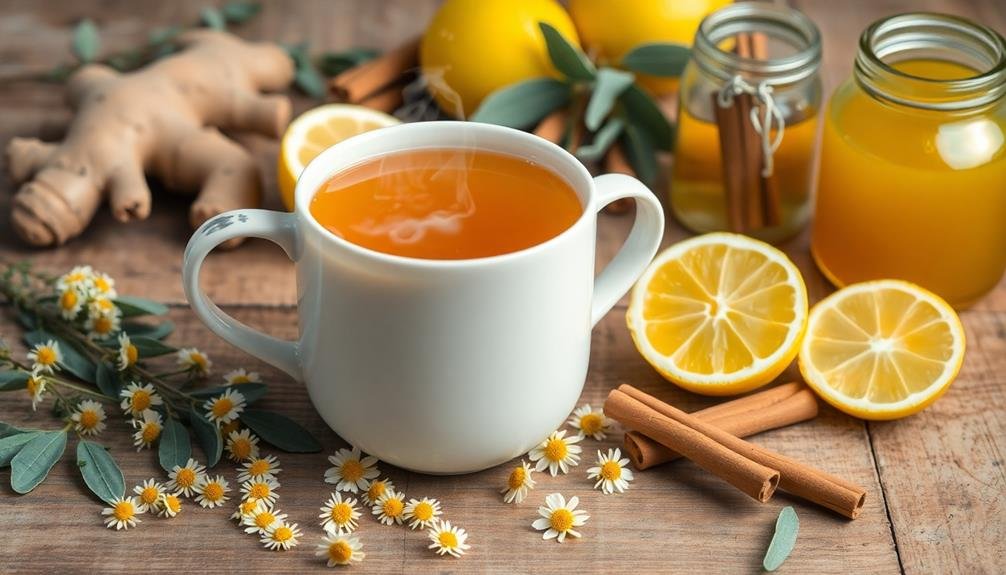
From ancient remedies to modern blends, certain herbal ingredients stand out for their throat-soothing properties. When crafting your healing tea, consider incorporating these key components:
Licorice root tops the list with its natural sweetness and potent anti-inflammatory effects. It coats your throat, providing relief from irritation and coughing.
Marshmallow root, despite its name, isn't related to the fluffy treat. This herb creates a mucilaginous coating that soothes sore throats and reduces swelling.
Slippery elm bark is another mucilage-rich ingredient that forms a protective layer on irritated tissues. It's particularly effective for dry, scratchy throats.
Honey, while not an herb, is an essential addition. Its antimicrobial properties fight infection, while its texture coats and soothes.
Don't overlook ginger and turmeric. These powerful anti-inflammatory roots reduce pain and swelling while boosting circulation.
Selecting the Right Herbs
Herbalists know that selecting the right herbs for your sore throat tea can make all the difference. When choosing herbs, consider their specific properties and how they'll work together to soothe your throat and boost your immune system.
Start with a base of soothing herbs like marshmallow root or slippery elm, known for their mucilaginous properties that coat and protect irritated tissues. Add anti-inflammatory herbs such as licorice root or turmeric to reduce swelling and discomfort. Don't forget to include antimicrobial herbs like echinacea or goldenseal to fight off infection.
When selecting herbs, keep these factors in mind:
- Potency: Choose high-quality, organic herbs for maximum effectiveness
- Flavor: Balance medicinal herbs with pleasant-tasting ones like peppermint or lemon balm
- Allergies: Be aware of any potential allergic reactions to certain herbs
- Interactions: Check for possible interactions with medications you're taking
Remember to steep your herbs properly to extract their full benefits. Use hot, not boiling, water and cover your tea while it steeps to prevent volatile oils from escaping.
With the right combination of herbs, you'll create a soothing and effective remedy for your sore throat.
Essential Equipment
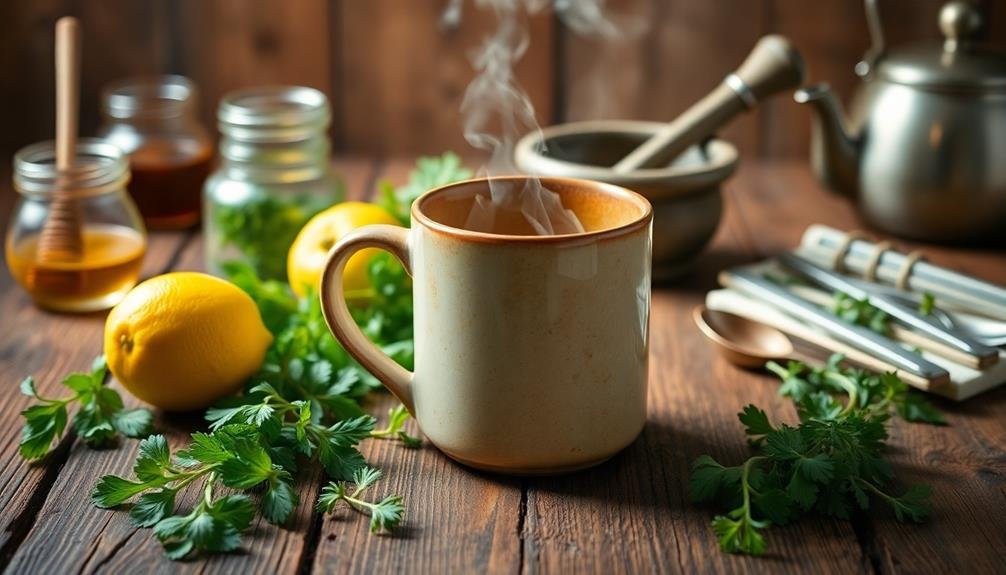
Tea-making essentials are crucial for brewing the perfect herbal remedy for your sore throat. You'll need a few key items to guarantee your herbal tea is effective and enjoyable.
Start with a quality tea kettle or pot to boil water. Choose one made of stainless steel or glass to avoid any unwanted flavors leaching into your brew.
Next, invest in a reliable tea infuser or strainer. A stainless steel mesh ball or basket infuser works well for loose herbs, allowing them to expand and release their beneficial properties. If you're using tea bags, opt for unbleached, organic ones to avoid chemicals.
A large mug or teacup is necessary for sipping your soothing concoction. Choose one that holds at least 12 ounces to confirm you're getting enough liquid.
Don't forget a spoon for stirring and a lid or saucer to cover your tea while it steeps, trapping the steam and beneficial oils.
For precise measurements, keep a set of measuring spoons handy. This will help you achieve the right balance of herbs in your blend.
Step-by-Step Brewing Instructions
Now that you have all the necessary equipment, let's explore the step-by-step process of brewing your soothing herbal tea for sore throats.
Begin by boiling fresh, filtered water in your kettle. While the water heats up, prepare your teapot or mug by rinsing it with hot water to warm it.
Next, add your chosen herbs to the tea infuser or directly into the pot. For a single serving, use about 1-2 teaspoons of dried herbs or 1 tablespoon of fresh herbs.
Once the water reaches a rolling boil, remove it from heat and let it cool for 30 seconds to 1 minute. This prevents scorching delicate herbs and guarantees ideal flavor extraction.
Pour the hot water over your herbs and cover the pot or mug to trap the steam and essential oils. Allow the tea to steep for 5-10 minutes, depending on your desired strength.
Here are some additional tips to enhance your brewing experience:
- Experiment with herb combinations to find your perfect blend
- Use a timer to guarantee consistent steeping time
- Strain the tea before drinking if you're not using an infuser
- Add a touch of honey or lemon for extra soothing properties
Sweetening Options
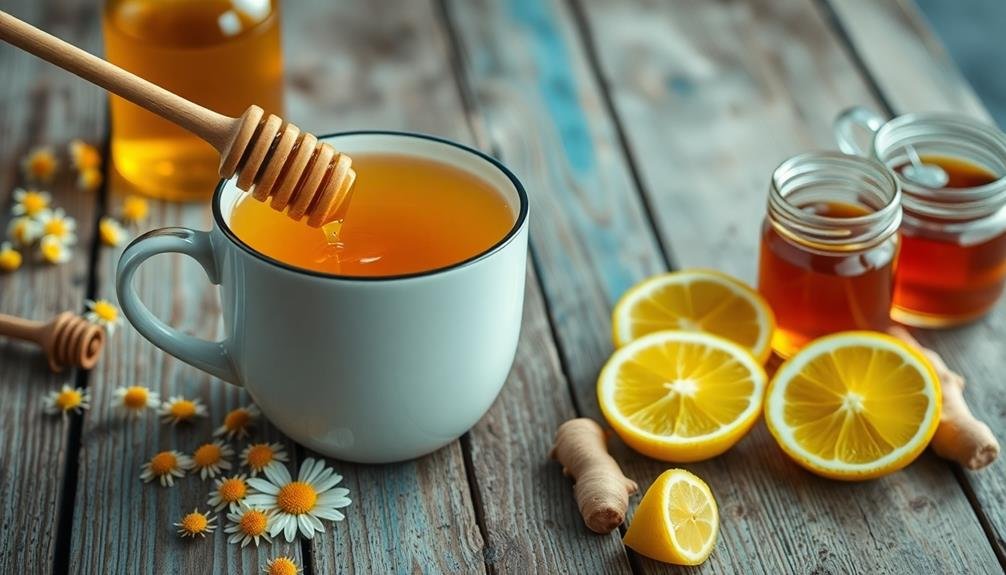
When sweetening your herbal tea, you'll face choices between natural and artificial options.
Honey stands out as a natural sweetener with additional soothing properties for your sore throat.
If you're watching your calorie intake, you might consider low-calorie alternatives like stevia or monk fruit extract.
Natural vs. Artificial Sweeteners
After brewing your herbal tea, you'll need to contemplate sweetening options. When it comes to natural vs. artificial sweeteners, you'll find pros and cons for each.
Natural sweeteners like honey, maple syrup, or stevia offer more than just sweetness; they often contain beneficial nutrients and antioxidants. Honey, in particular, has antibacterial properties that can help soothe your sore throat.
On the other hand, artificial sweeteners provide sweetness without calories, which might be preferable if you're watching your sugar intake. However, some studies suggest potential health risks associated with long-term use of artificial sweeteners.
Consider these factors when choosing between natural and artificial sweeteners:
- Taste preference
- Calorie content
- Potential health benefits
- Possible side effects
Ultimately, the choice between natural and artificial sweeteners depends on your personal health goals and taste preferences.
If you're looking for additional therapeutic benefits, opt for natural sweeteners like honey. If you're primarily concerned with reducing calorie intake, artificial sweeteners might be more suitable.
Honey's Soothing Properties
Among the natural sweeteners, honey stands out as a top choice for soothing sore throats. Its unique properties make it more than just a sweetener; it's a natural remedy. When you add honey to your herbal tea, you're not only enhancing the flavor but also boosting its healing potential.
Honey's viscous texture coats your throat, providing a protective barrier that helps reduce irritation. It's also hygroscopic, meaning it attracts and retains moisture, which can help keep your throat hydrated. The antimicrobial properties of honey can fight off bacteria that may be causing your sore throat.
To maximize honey's benefits, choose raw, unprocessed varieties. These contain more beneficial enzymes and nutrients compared to processed honey. Add a tablespoon to your warm (not hot) herbal tea to preserve its healing properties.
Low-Calorie Sweetening Alternatives
Exploring low-calorie sweetening alternatives can be beneficial if you're watching your sugar intake or managing your weight while soothing a sore throat.
These options provide sweetness without the added calories of sugar or honey, allowing you to enjoy your herbal tea guilt-free.
One popular low-calorie sweetener is stevia, derived from the leaves of the Stevia rebaudiana plant. It's much sweeter than sugar, so you'll need less to achieve the desired taste.
Another option is monk fruit sweetener, which comes from the Lo Han Guo fruit and has zero calories.
For those who prefer artificial sweeteners, there are several choices available:
- Aspartame: A common sweetener found in many diet drinks
- Sucralose: Heat-stable and suitable for hot beverages
- Saccharin: One of the oldest artificial sweeteners on the market
- Erythritol: A sugar alcohol that's nearly calorie-free
When using these alternatives, start with a small amount and adjust to taste, as they're often much sweeter than sugar.
Remember that while these options can help reduce calorie intake, moderation is key.
Always consult with your healthcare provider if you have concerns about using artificial sweeteners, especially if you have any underlying health conditions.
Serving Suggestions
To fully enjoy the soothing benefits of your herbal tea for sore throats, consider these serving suggestions. Serve the tea hot, as warm liquids help relieve throat discomfort and promote healing. Pour the tea into a large mug, allowing it to cool slightly before sipping. This prevents scalding your already sensitive throat.
Add a slice of lemon for an extra vitamin C boost and to enhance the flavor. For maximum effectiveness, sip the tea slowly throughout the day. You can prepare a larger batch and store it in a thermos to keep it warm.
If you prefer, let the tea cool to room temperature and gargle with it for additional throat relief. To make it more palatable for children, serve the tea lukewarm in a fun, colorful cup with a straw.
For a soothing nighttime routine, drink a cup of the herbal tea about an hour before bed. This allows time for the herbs to take effect and helps prevent nighttime discomfort.
You can also use the tea as a base for a comforting soup by adding some clear broth and soft, easily swallowed vegetables.
Proper Storage Methods
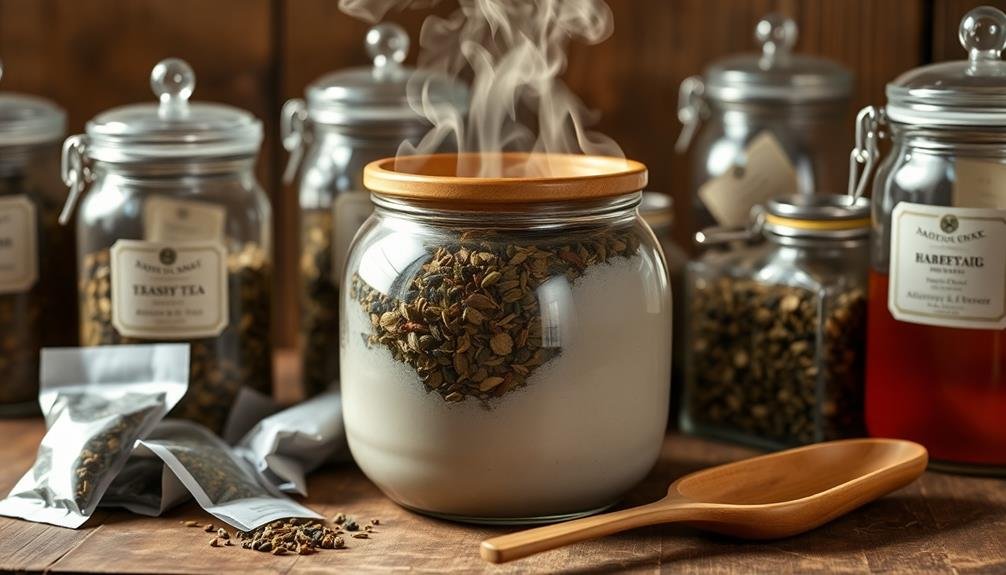
Storing your herbal tea properly helps preserve its freshness and medicinal properties. After brewing your sore throat tea, you'll want to store any leftovers correctly to maintain its effectiveness.
If you've made a large batch, let it cool to room temperature before transferring it to an airtight container. Glass jars or BPA-free plastic containers work well for this purpose.
Refrigerate your herbal tea immediately and consume it within 24-48 hours for the best results. When you're ready to drink it again, gently reheat the tea on the stove or in the microwave. Don't let it boil, as this can diminish its therapeutic qualities.
For dry herbal tea blends, proper storage is equally important. Keep your herbs in a cool, dark place away from direct sunlight and moisture.
Consider these storage tips:
- Use airtight containers like glass jars or tins
- Label containers with the tea blend name and date
- Store different herbs separately to prevent flavor mixing
- Keep herbs away from strong odors that could affect their taste
Frequency of Consumption
Now that you know how to store your herbal tea, let's consider how often you should drink it for a sore throat. Generally, you can consume herbal tea for sore throats 3-4 times a day. Start your morning with a cup to soothe overnight irritation, and have another before bed to promote healing while you sleep.
During acute sore throat symptoms, you might increase consumption to every 2-3 hours. However, don't exceed 6 cups daily, as overhydration can dilute electrolytes. Listen to your body and adjust accordingly. If symptoms persist beyond a week, consult your healthcare provider.
For prevention, drink 1-2 cups daily during cold and flu season. This helps boost your immune system and maintain throat health.
Remember to let your tea cool slightly before drinking to avoid further irritation. Sip slowly to maximize contact time with your throat.
If you're using herbal tea alongside other treatments, space them out by at least 30 minutes to an hour. This guarantees each remedy has time to work effectively without interference. Always follow any specific instructions provided by your healthcare professional or herbalist.
Potential Side Effects

While herbal teas are generally safe, they can occasionally cause side effects. It's important to be aware of potential risks, especially if you're pregnant, nursing, or taking medications. Some herbs may interact with certain drugs or exacerbate existing health conditions.
Common side effects of herbal teas include:
- Allergic reactions: You might experience itching, hives, or difficulty breathing
- Digestive issues: Nausea, vomiting, or diarrhea can occur with some herbs
- Drowsiness: Certain herbs have sedative properties that may cause sleepiness
- Headaches: Some people report headaches after consuming specific herbal teas
If you're new to herbal teas, start with small amounts to test your tolerance. Pay attention to how your body reacts and discontinue use if you experience any adverse effects.
It's also wise to consult your healthcare provider before incorporating herbal teas into your routine, particularly if you have chronic health conditions or are taking prescription medications.
Remember that natural doesn't always mean safe, and moderation is key. By being informed and cautious, you can enjoy the benefits of herbal teas while minimizing potential risks.
Variations for Different Tastes
Herbal teas for sore throats come in countless variations to suit different tastes and preferences. You can easily customize your brew to make it more enjoyable while still reaping the soothing benefits.
If you find the basic recipe too bland, try adding a teaspoon of raw honey for sweetness and additional antibacterial properties. For a zesty kick, squeeze in some fresh lemon juice, which also provides a boost of vitamin C.
If you're not a fan of ginger's spiciness, substitute it with chamomile flowers for a milder, floral flavor that still offers anti-inflammatory effects. Alternatively, add a cinnamon stick to your brew for a warm, comforting taste and its natural antimicrobial properties.
For those who enjoy a minty freshness, toss in a few peppermint leaves, which can help relieve congestion and provide a cooling sensation.
You can also experiment with different herb combinations. Try mixing licorice root with marshmallow root for a naturally sweet, mucilage-rich tea.
Or, blend echinacea with elderberry for an immune-boosting concoction. Remember to start with small amounts when trying new ingredients and adjust to your taste preferences.
Combining With Other Remedies
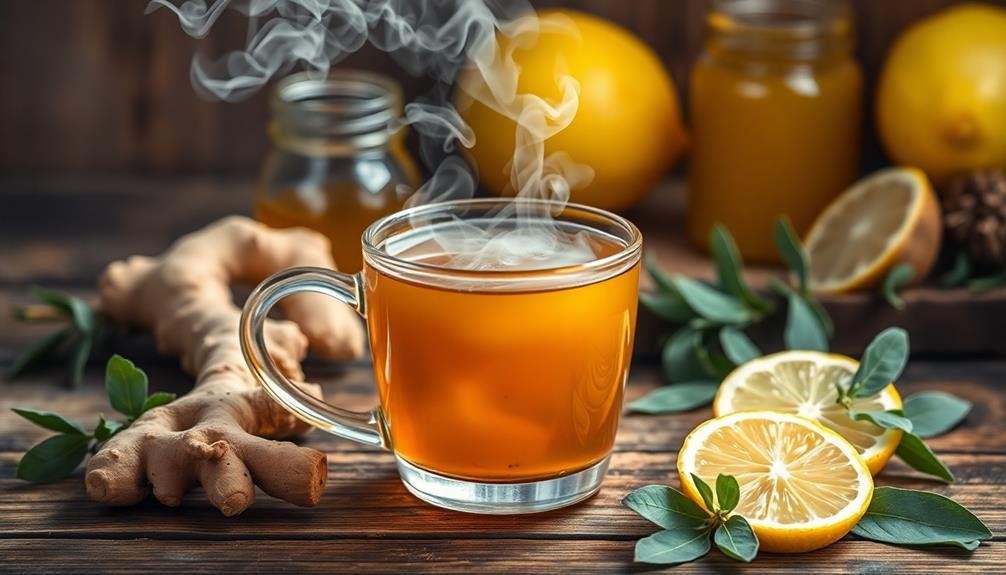
Combining herbal teas with other remedies can enhance their effectiveness in soothing sore throats. You'll find that pairing your tea with complementary treatments can provide faster relief and address multiple symptoms simultaneously.
Consider adding honey to your herbal tea for its natural antibacterial properties and soothing effect on irritated tissues. You might also gargle with salt water before drinking your tea to reduce inflammation and kill bacteria.
For a more thorough approach, try combining your herbal tea routine with these additional remedies:
- Use a humidifier to add moisture to the air, which can help ease throat discomfort
- Suck on throat lozenges containing menthol or eucalyptus between tea sessions
- Apply a warm compress to your neck to increase blood circulation and reduce pain
- Try over-the-counter pain relievers like ibuprofen or acetaminophen for severe discomfort
Remember to stay hydrated by drinking plenty of water throughout the day, in addition to your herbal tea.
If your sore throat persists for more than a week or is accompanied by fever, difficulty swallowing, or swollen lymph nodes, consult your healthcare provider for proper diagnosis and treatment.
Frequently Asked Questions
Can Children Drink This Herbal Tea for Sore Throats?
You should consult your child's pediatrician before giving them herbal tea for sore throats. Some herbs may not be safe for children. If approved, make certain you're using child-safe ingredients and serving it at an appropriate temperature.
How Long Does It Take for the Tea to Start Working?
You'll likely feel relief within 15-30 minutes after drinking the tea. It's working as soon as you sip it, soothing your throat. For best results, drink it slowly and let it coat your throat.
Is This Tea Safe to Consume During Pregnancy or While Breastfeeding?
You should always consult your healthcare provider before consuming any herbal teas during pregnancy or while breastfeeding. Some herbs can affect your baby or milk supply, so it's best to get professional advice first.
Can I Make a Large Batch and Refrigerate It for Later Use?
Yes, you can make a large batch and refrigerate it. You'll want to store it in an airtight container and consume it within 3-5 days. Remember to reheat or enjoy it cold when you're ready to drink.
Are There Any Medications That Might Interact With the Herbal Tea Ingredients?
You should be cautious about potential interactions between herbal teas and medications. It's best to consult your doctor or pharmacist before consuming any herbal remedies, as they can affect how certain drugs work in your body.
In Summary
You've now got the knowledge to brew your own healing herbal tea for sore throats. Remember to choose your herbs wisely, use the right equipment, and drink in moderation. Don't forget to explore different flavors and consider combining with other remedies. While this tea can provide relief, be aware of potential side effects. With this simple recipe, you're well-equipped to soothe your throat naturally. Give it a try and feel the difference!


Leave a Reply