
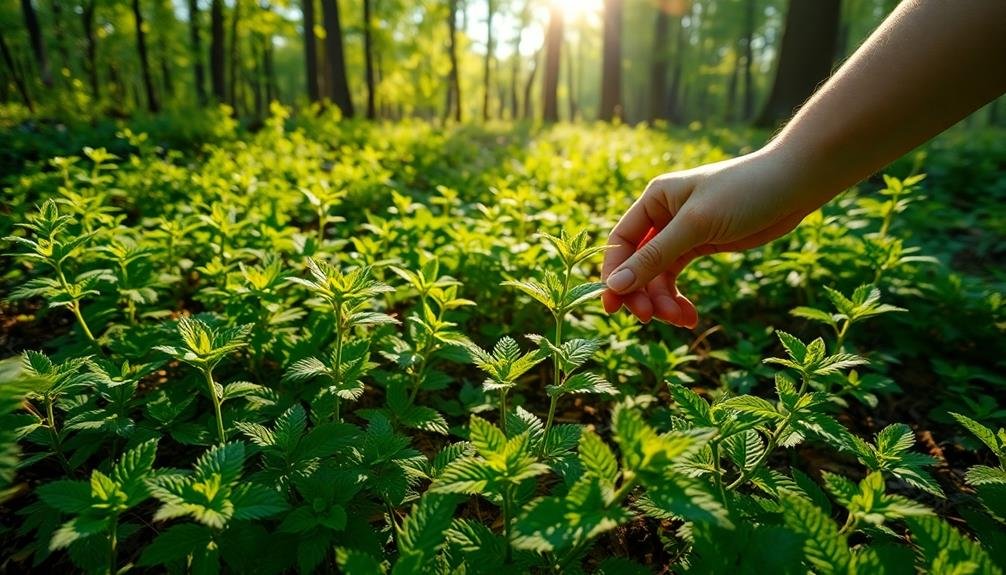
Foraging wild mint for flavorful tea is a delightful experience. Start by identifying locations like moist meadows or riverbanks, especially in late spring or early summer for the best taste. Gather essential tools such as sharp scissors and a reusable bag. Recognize edible varieties like peppermint and spearmint by their distinct aromas and square stems. Harvest responsibly, leaving enough for the plants to thrive. Once you've collected your mint, rinse the leaves and prepare them for steeping. Finally, enjoy the soothing aroma and vibrant flavor of your brew. There's much more to explore about this invigorating adventure.
Identify Wild Mint Locations
Where can you find wild mint? Look for it in moist, shaded areas, often near water sources like streams, rivers, or ponds.
You'll typically spot it in meadows, wetlands, and along the edges of wooded areas. Wild mint thrives in rich, loamy soil, so check places with plenty of organic matter and good drainage.
Pay attention to the scent; if you disturb the leaves, the fresh, minty aroma should immediately hit you. This distinctive smell is a great indicator you're on the right track.
Additionally, wild mint often grows in clumps, with square stems and serrated leaves, making it easier to identify among other plants.
The time of year also matters. Late spring to early summer is prime for foraging, as the plants are lush and vibrant.
However, you might find wild mint year-round, especially in milder climates.
Don't forget to check local regulations before foraging, ensuring you're allowed to collect from the areas you choose.
With these tips, you'll be well on your way to locating wild mint for your next flavorful tea!
Gather Essential Foraging Tools
Equipping yourself with the right foraging tools can make your wild mint gathering experience much smoother and more enjoyable.
Before heading out, make certain you've got the essentials to make the process efficient and pleasant.
Here's a quick list of must-have foraging tools:
- Sharp Scissors or Pruners: You'll need these for cutting mint stems cleanly without damaging the plant. A sharp edge makes all the difference.
- Reusable Bags or Baskets: Use these to collect the mint you gather. They're eco-friendly and allow your herbs to breathe, preventing wilting.
- Field Guide or App: A reliable resource helps you identify wild mint and other plants, guaranteeing you only harvest what you intend to.
- Water Bottle: Staying hydrated while foraging is vital. Bringing enough water keeps your energy up and helps you stay focused.
Having these tools on hand not only enhances your foraging experience but also assures that you gather the best mint for your flavorful tea.
Choose the Right Season
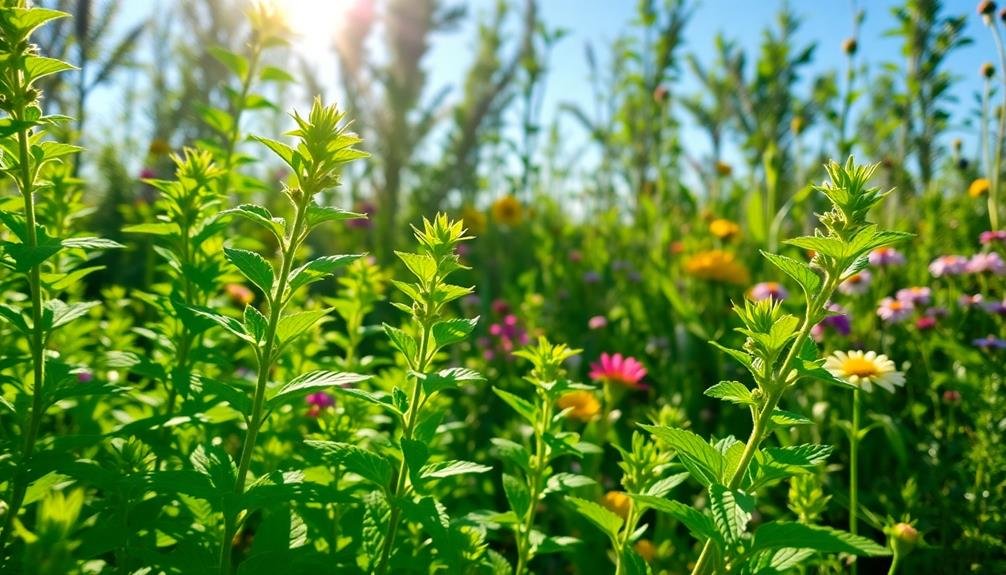
Choosing the right season for foraging wild mint is essential for ensuring the best flavor and quality. The ideal time to hunt for this aromatic herb is during late spring to early summer, when the plants are vibrant and their oils are at peak potency. During this period, you'll find the leaves lush and packed with flavor, making them perfect for brewing a revitalizing tea.
If you venture out too early in the spring, the mint may still be establishing itself and mightn't have developed the robust taste you're after. On the other hand, waiting too long into the summer can lead to flowers blooming, which can alter the flavor profile and make the leaves tougher.
Keep an eye on the weather, too; a bit of rain can boost the mint's flavor, while excessive heat can diminish it.
Recognize Edible Mint Varieties
When foraging for mint, it's crucial to recognize the common species you'll encounter.
Look for unique characteristics, like leaf shape and scent, to help identify which varieties are edible.
Knowing these details not only enhances your tea but also guarantees your safety while foraging.
Common Mint Species
Mint is a versatile herb with many species that you can easily recognize and use for tea. Each type offers unique flavors and aromas, making your foraging adventures exciting.
Here are four common mint species you should look out for:
- Peppermint (Mentha × piperita): This hybrid has a strong, invigorating flavor and is perfect for a robust tea.
- Spearmint (Mentha spicata): Known for its sweet and mild taste, spearmint is commonly used in beverages and culinary dishes.
- Apple Mint (Mentha suaveolens): With its fruity aroma, apple mint adds a unique twist to your tea, offering a subtle sweetness.
- Chocolate Mint (Mentha × piperita 'Chocolate'): This variety has a delightful chocolate scent, making it an intriguing choice for a dessert-like tea experience.
When foraging, familiarize yourself with these common mint species.
Identification can help you create delicious and aromatic teas while enjoying the bounty of nature.
Remember to always forage responsibly and sustainably!
Identifying Unique Characteristics
Understanding the unique characteristics of edible mint varieties can enhance your foraging experience. When you're out in nature, keep an eye out for the distinct features that separate the edible types from their non-edible counterparts. One key trait is the scent—edible mints, like peppermint and spearmint, have a strong, pleasant aroma. If the leaves smell bland or off, it's best to avoid them.
Next, observe the leaves. Edible mint varieties typically have serrated edges and a bright green color. Take note of their shape; spearmint leaves tend to be more elongated, while peppermint leaves are often broader and darker. You can also check the stems; edible mints usually have square stems, a telltale sign of the mint family.
Additionally, consider the growth habit. Mints often spread aggressively and can form dense patches. If you spot a plant that resembles mint but lacks the characteristic aroma or leaf shape, steer clear.
Harvest Sustainably and Responsibly
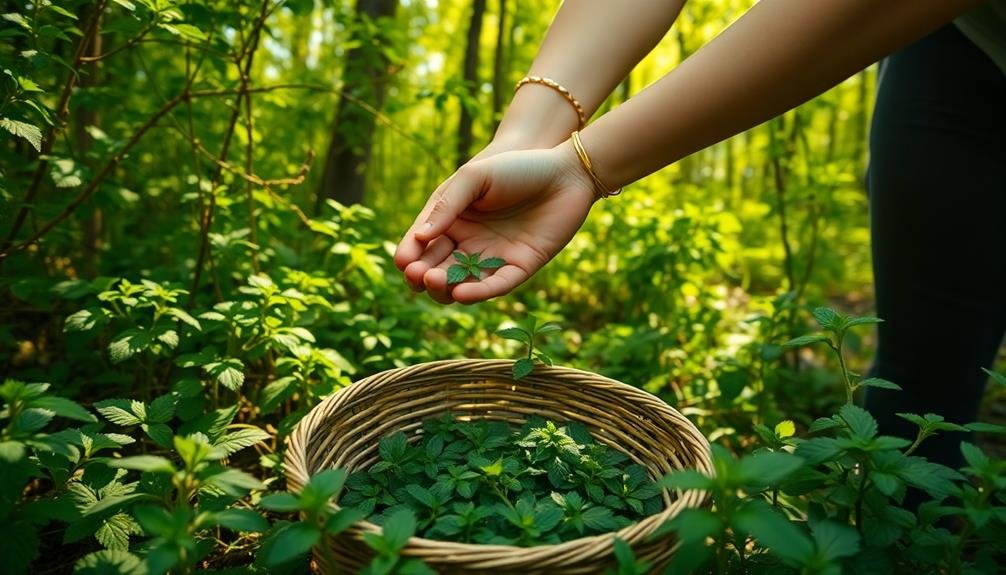
When you're foraging for wild mint, remember to practice ethical foraging methods to protect the environment.
Take only what you need and leave enough for the plants to regenerate, ensuring that natural habitats remain intact.
Ethical Foraging Practices
Foraging for wild mint can be a rewarding experience, but it's essential to do so with care and respect for nature. By practicing ethical foraging, you guarantee that these plants continue to thrive for future generations.
Here are some key principles to follow:
- Know the Regulations: Familiarize yourself with local laws regarding foraging. Some areas may have restrictions on harvesting wild plants.
- Harvest Sparingly: Only take what you need. Avoid stripping entire patches; leave enough for wildlife and to allow the plant to regenerate.
- Use Proper Techniques: Cut mint stems rather than pulling them out by the roots. This helps the plant to grow back healthy and strong.
- Be Mindful of Your Surroundings: Avoid foraging in areas that may be contaminated, such as roadsides or industrial sites. Choose clean, natural environments to guarantee your mint is safe to consume.
Preserve Natural Habitats
Preserving natural habitats is essential for ensuring that wild mint and other plants can continue to flourish in their ecosystems. When foraging, you should focus on sustainable practices that protect these crucial environments.
Always harvest in moderation, taking only what you need and leaving enough for the plant to regenerate. This approach helps maintain the population of wild mint and supports local wildlife that depends on it.
It's also important to familiarize yourself with the specific areas you forage. Disturbing sensitive ecosystems can lead to degradation, so choose locations that are abundant and healthy.
Avoid overharvesting in one spot; instead, rotate your foraging locations to give plants time to recover.
When you're out in nature, be mindful of your surroundings. Stick to established paths to minimize soil compaction and avoid trampling other plants.
If you come across invasive species, consider removing them, but do so carefully to avoid harming native flora.
Prepare Mint for Tea
After gathering your fresh wild mint, the next step is to prepare it for tea. Start by rinsing the mint leaves under cold water to remove any dirt or insects.
Once cleaned, gently pat them dry with a paper towel or cheesecloth. This helps retain the essential oils that give mint its vibrant flavor.
Now, follow these steps to prepare your mint:
- Remove the Leaves: Pluck the leaves from the stems. The stems can be tough and don't add much flavor to your tea.
- Tear or Chop: Tear the leaves into smaller pieces or chop them roughly. This increases the surface area, releasing more flavor into your brew.
- Measure the Quantity: Use about 1 tablespoon of fresh mint leaves for every cup of water. Adjust to your taste preference.
- Add to Your Teapot: Place the prepared mint leaves in your teapot or infuser.
Once you've completed these steps, you'll be ready to steep your mint and enjoy a revitalizing cup of tea.
Preparing your mint properly guarantees you capture the best flavor!
Enjoying Your Herbal Brew
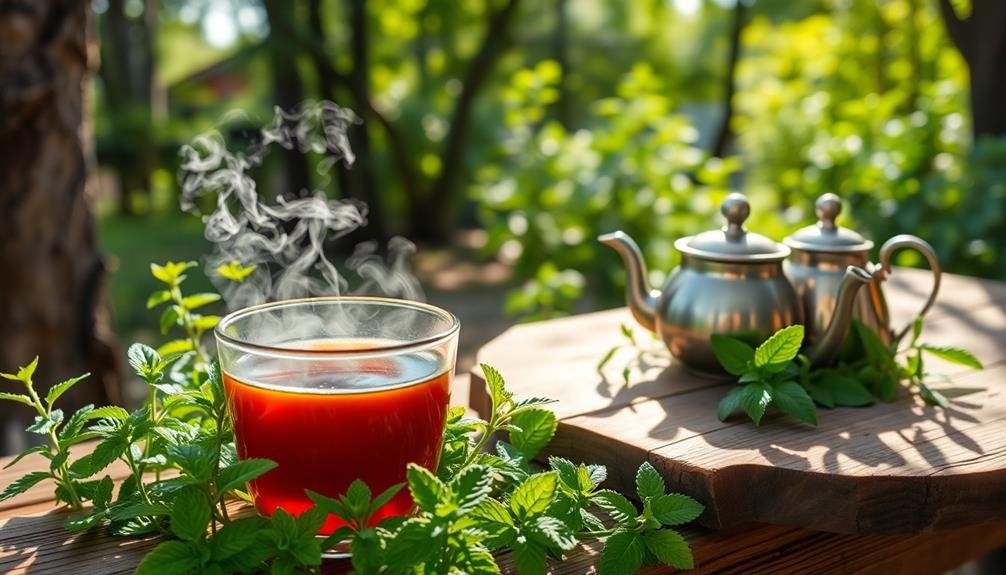
Now that you've prepared your fresh wild mint, it's time to savor the delightful experience of enjoying your herbal brew.
Start by pouring the steaming tea into your favorite mug. Take a moment to appreciate the aromatic steam rising from the surface; the invigorating scent is just a hint of the revitalizing taste to come.
As you take your first sip, notice the natural sweetness and vibrant flavor of the mint. If you prefer, you can enhance your brew with a touch of honey or a slice of lemon—these additions can elevate the taste while complementing the mint's freshness.
While you're sipping, consider the environment where you foraged the mint. Reflect on the tranquility of the woods or fields, and let that peaceful energy enrich your tea-drinking experience.
Frequently Asked Questions
Can Wild Mint Be Used in Cooking as Well?
Absolutely, you can use wild mint in cooking! It adds a rejuvenating flavor to dishes, enhances salads, and complements meats. Just remember to use it sparingly, as its potent taste can easily overpower other ingredients.
Are There Any Poisonous Plants That Resemble Wild Mint?
Yes, some plants resemble wild mint and can be harmful. You should watch out for plants like catnip or certain varieties of deadnettle, which may look similar but aren't safe for consumption. Always verify before using.
How Can I Store Harvested Wild Mint Long-Term?
To store harvested wild mint long-term, you can dry the leaves by hanging them upside down in a cool, dark place. Alternatively, freeze the leaves in ice cube trays for easy access later.
Is Foraging for Wild Mint Legal in All Areas?
Foraging for wild mint isn't legal everywhere. You should check local regulations, as some areas have restrictions on harvesting plants. Always respect nature and follow guidelines to guarantee you're foraging responsibly and legally.
What Are the Health Benefits of Drinking Wild Mint Tea?
Drinking wild mint tea boosts digestion, freshens breath, and soothes headaches. It's rich in antioxidants, which can enhance your immune system. Plus, its calming aroma can reduce stress and promote relaxation, making it a delightful choice.
In Summary
Now that you know how to forage wild mint, it's time to put your skills into action. Explore local areas, gather your tools, and keep an eye out for the right season. Remember to identify edible varieties and harvest responsibly. With freshly picked mint, you can easily prepare a delightful herbal tea that's not only flavorful but also rewarding. So, grab your gear and enjoy the adventure of foraging—your perfect cup of mint tea awaits!



Leave a Reply